Part 1

|
Text: |
Urs Schnyder |
|
Pictures: |
Urs Schnyder & Michael E. Fader |


Fouga CM170 Magister, F-AZZP (Picture courtesy Urs Schnyder)
Fpuga CM175 Zéphyr F-AZPF, (Picture courtesy Urs Schnyder)
This years edition of Air Legends will be remembered as the one with the historic jets. There were seven Fouga Magisters and one Fouga Zéphyr which is the navalised version of the Magister. Six of these aircraft took part in the flying program.


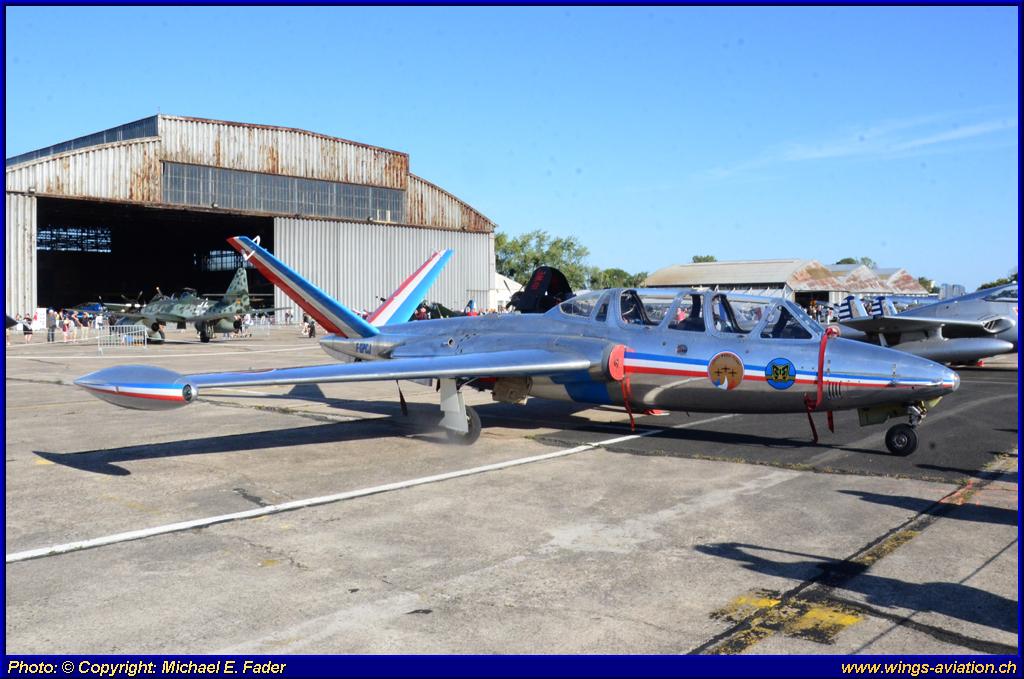
Fouga CM170 Magister, F-HDND (Picture courtesy Michael E. Fader)
Fouga CM170 Magister, F-AZQC (Picture courtesy Michael E. Fader)
Fouga CM170 Magister, F-AZQC (Picture courtesy Urs Schnyder)
Fouga CM170 Magister, F-GPCJ (Picture courtesy Urs Schnyder)
Fouga CM170 Magister, F-GPCJ (Picture courtesy Michael E. Fader)
In addition there were also the Morane Saulnier MS760 Paris as well as a De Havilland DH 100 Vampire and a Canadair CT-33. The Vampire is in fact an ex Swiss Air Force machine. The giveaway is the pointed nose, whereas the normal Vampires had a rounded nose. Also present was the Messerschmitt Me 262. Like many airshows this year military presence was smaller than usual or even cancelled, due to operational reasons in connection with the political situation in Europe. There were still enough participants in the flying program however. In addition to that the weather was indeed fantastic on both days, even if on Sunday late afternoon clouds started to gather. A strange thing was the short appearance o the Avro Anson. Although it featured in the program, it only arrived on Saturday evening and left again on Sunday morning for Duxford. This brings us to the question if it wouldn’t be a good thing for the bigger airshows like Villaroche, Duxford and others to coordinate their dates. That way more historic aircraft would be available for each and the operators could generate more income. There were a total of 26’000 people visiting the airshow on both days
Morning program
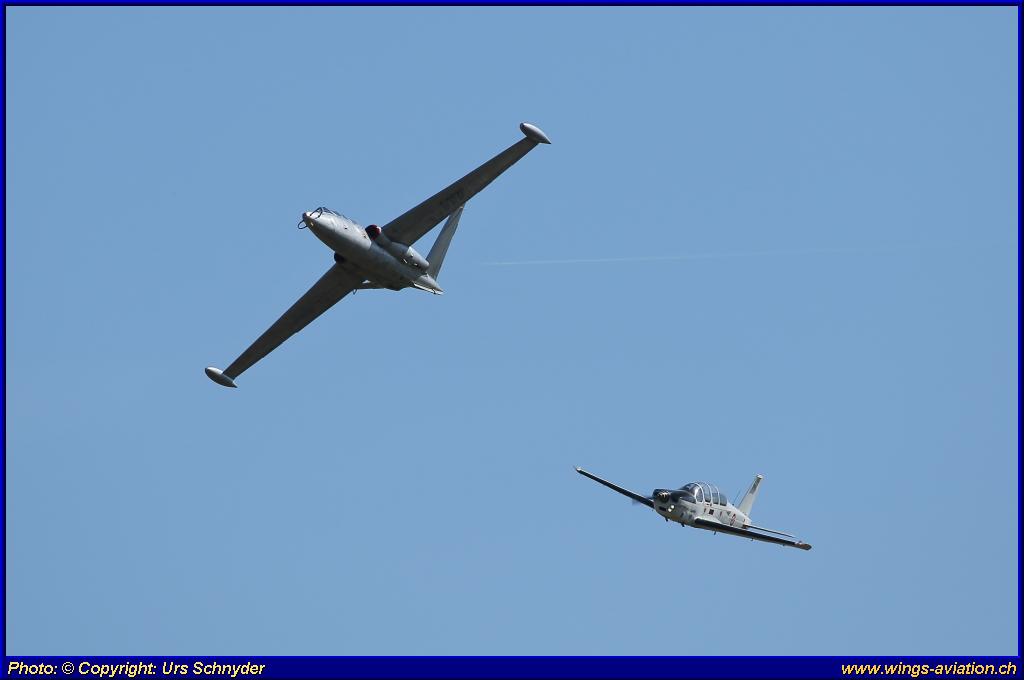
As in previous years there were displays by various aircraft before the lunch break. A Fouga Magister and a Socata TB-30 Epsilon displayed solo and flying in formation with each other. While flying in formation, the Magister had its speed brakes deployed all the time, in order not to loose the Epsilon.
The T-6 “Texan” or “Harvard” was used as an advanced pilot trainer. More than 15’000 were produced and most allied pilots received part of their training on them. They were still used for a considerable time after the war by many Air Forces.
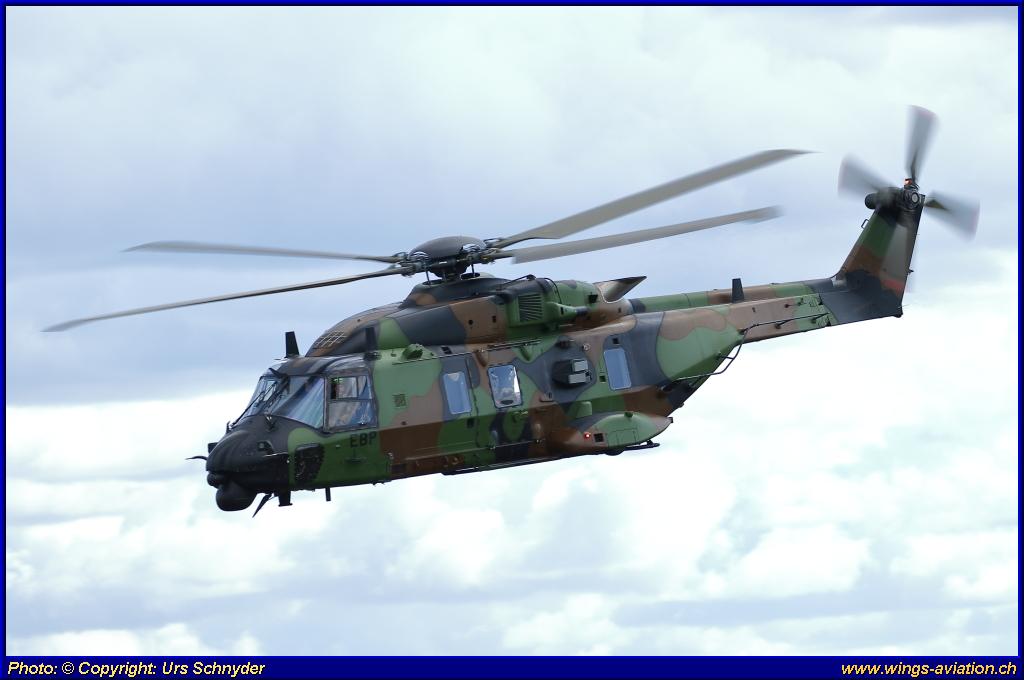
The NH90 Caiman is the standard tactical transport helicopter of the army. With a range of 240 km and highly manoeuvrable, it is able to operate in difficult weather conditions during day and night. Since 2011 they are also operated by the Marine Nationale.



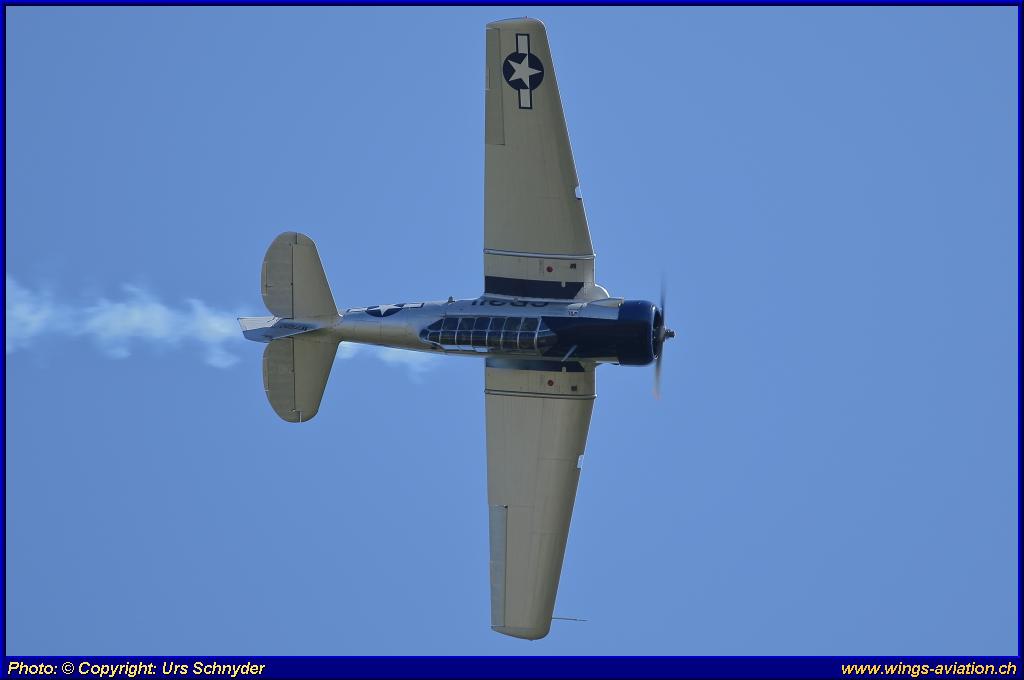



North American AT-6B Texan F-AZTL (Picture courtesy Urs Schnyder)
North American AT-6B Texan F-AZTL (Picture courtesy Urs Schnyder)
North American AT-6B Texan F-AZTL (Picture courtesy Michael E. Fader) r)
NHIndustries NH90-TTH Caiman F-MEBP (Picture courtesy Urs Schnyder)
NHIndustries NH90-TTH Caiman F-MEBP (Picture courtesy Urs Schnyder)
The Airbus EC120B Calliope is a light helicopter used by the Army for pilot training. It entered service in 1998. Compared with other helicopters it is rather quiet.
Another aircraft made by Socata, the TBM700 powered by a Pratt & Whitney turboprop is one of the fastest aircraft in its class. Taken into service in 1990 with the light aviation of the Army, it is use for liaison and the French special forces.


NHIndustries NH90-TTH Caiman F-MEBP (Picture courtesy Urs Schnyder)
NHIndustries NH90-TTH Caiman F-MEBP (Picture courtesy Urs Schnyder)
Eurocopter EC120B Calliope F-HBKN (Picture courtesy Michael E. Fader)
Eurocopter EC120B Calliope F-HBKN (Picture courtesy Michael E. Fader)
Eurocopter EC120B Calliope F-HBKN (Picture courtesy Urs Schnyder)


Socata TBM700 (Picture courtesy Urs Schnyder)
Socata TBM700 (Picture courtesy Urs Schnyder)
Socata TBM700 (Picture courtesy Michael E. Fader)
Gendarmerie
Starting the afternoon program were the five parachutists of the Gendarmerie Nationale, the French federal police. They were carried aloft in a Pilatus PC-6, which must have been a tight squeeze as they not only carried their main and safety parachutes, but each also had a big pack tied to their legs.


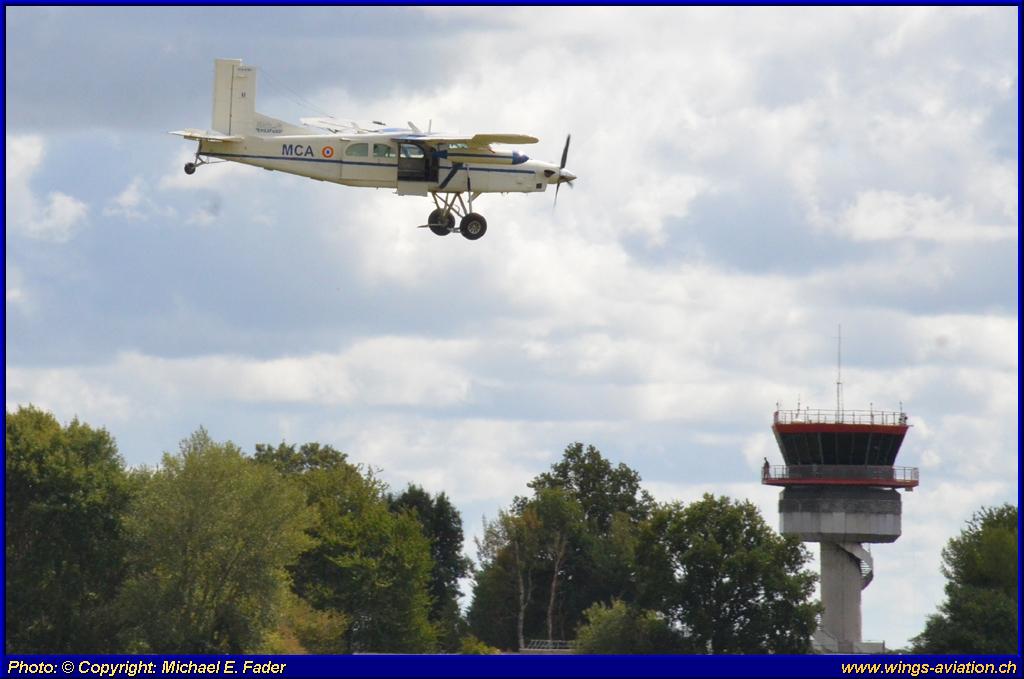
(Picture courtesy Urs Schnyder)
(Picture courtesy Urs Schnyder)
(Picture courtesy Urs Schnyder)
(Picture courtesy Michael E. Fader)
(Picture courtesy Michael E. Fader)
Stearman
Another American trainer, this time the Stearman, that was used for basic training by both the U.S. Army Air Force and the U.S. Navy. More than 10’000 examples were built and it proved very popular on the civilian market, once they were taken out of the military service. A lot of them were used as crop dusters after the war or just for fun flying, one of the reasons why so many still survive.


(Picture courtesy Urs Schnyder)
(Picture courtesy Urs Schnyder)
(Picture courtesy Urs Schnyder)
(Picture courtesy Urs Schnyder)
(Picture courtesy Urs Schnyder)


(Picture courtesy Urs Schnyder)
(Picture courtesy Michael E. Fader)
(Picture courtesy Michael E. Fader)
(Picture courtesy Urs Schnyder)
(Picture courtesy Michael E. Fader)
Fly & Fun
Flying the L-39 Albatros, the Fly & Fun team is actually part of a company that operate three L-39. The founder Michel Soutiran was the first pilot in France to fly an L-39. Based at the Reims-Prunay airfield the company offers flights in the Albatros including solo flights and flights in formation. In addition they also have a school to train pilots on the L-39. In addition to these activities they also do demonstration flights as seen at the airshow.


Aero L-39 Albatros (Picture courtesy Urs Schnyder)
Aero L-39 Albatros (Picture courtesy Urs Schnyder)
Aero L-39 Albatros (Picture courtesy Michael E. Fader)
Aero L-39 Albatros (Picture courtesy Urs Schnyder)
Aero L-39 Albatros (Picture courtesy Urs Schnyder)


Aero L-39 Albatros (Picture courtesy Urs Schnyder)
Aero L-39 Albatros (Picture courtesy Urs Schnyder)
Aero L-39 Albatros (Picture courtesy Urs Schnyder)
Aero L-39 Albatros (Picture courtesy Urs Schnyder)
Aero L-39 Albatros (Picture courtesy Michael E. Fader)
Early executive aircraft
The Beech Staggerwing and the Spartan 7W Executive were in their day what are todays Learjets and Falcons. The Beech first flew in 1932 and its distinctive negative stagger of the wings gave it its name. During the war it was used by the allied air forces, and it continued in production until 1949, after 785 had been produced. The Spartan 7W Executie was produced by the Spartan company. It was intended for the rich and featured a luxurious interior with soundproofing and comfortable seats with ashtrays. It could be configured for four of five passengers. A proposed military variant with two machine guns and bomb racks under the wings came to nothing.


Beechcraft Staggerwing, F-AZJP & Spartan Executive, N47W (Picture courtesy Urs Schnyder)
Beechcraft Staggerwing, F-AZJP & Spartan Executive, N47W (Picture courtesy Urs Schnyder)
Beechcraft Staggerwing, F-AZJP & Spartan Executive, N47W (Picture courtesy Urs Schnyder)
Beechcraft Staggerwing, F-AZJP & Spartan Executive, N47W (Picture courtesy Urs Schnyder)
Beechcraft Staggerwing, F-AZJP & Spartan Executive, N47W (Picture courtesy Urs Schnyder)
Tigre
The Eurocopter EC665 Tigre is the main attack helicopter of the French Army. With a range of 800 km and a speed of 290 km/h it is armed with a 30mm cannon and Mistral missiles. Besides attack, it is also used for reconnaissance and interception by day and night.


Eurocopter EC665 Tigre F-MBIF (Picture courtesy Urs Schnyder)
Eurocopter EC665 Tigre F-MBIF (Picture courtesy Urs Schnyder)
Eurocopter EC665 Tigre F-MBIF (Picture courtesy Michael E. Fader)


Eurocopter EC665 Tigre F-MBIF (Picture courtesy Urs Schnyder)
Eurocopter EC665 Tigre F-MBIF (Picture courtesy Urs Schnyder)
Eurocopter EC665 Tigre F-MBIF (Picture courtesy Urs Schnyder)
Eurocopter EC665 Tigre F-MBIF (Picture courtesy Michael E. Fader)
Eurocopter EC665 Tigre F-MBIF (Picture courtesy Urs Schnyder)
Classic Formation
Hugo Mathys is the owner of all the four aircraft. When it first appeared it was a novel idea, using twin engined historic aircraft to create a formation display team. Each aircraft flies about 30 to 50 hours each year. Hugo Mathys finances the whole operation of these aircraft as well as the training and on type training of all the pilots. He is current on the DC-3 and Beech 18 and normally flies the red Beech 18 in the formation. He has a flight experience of over 2000 hours.
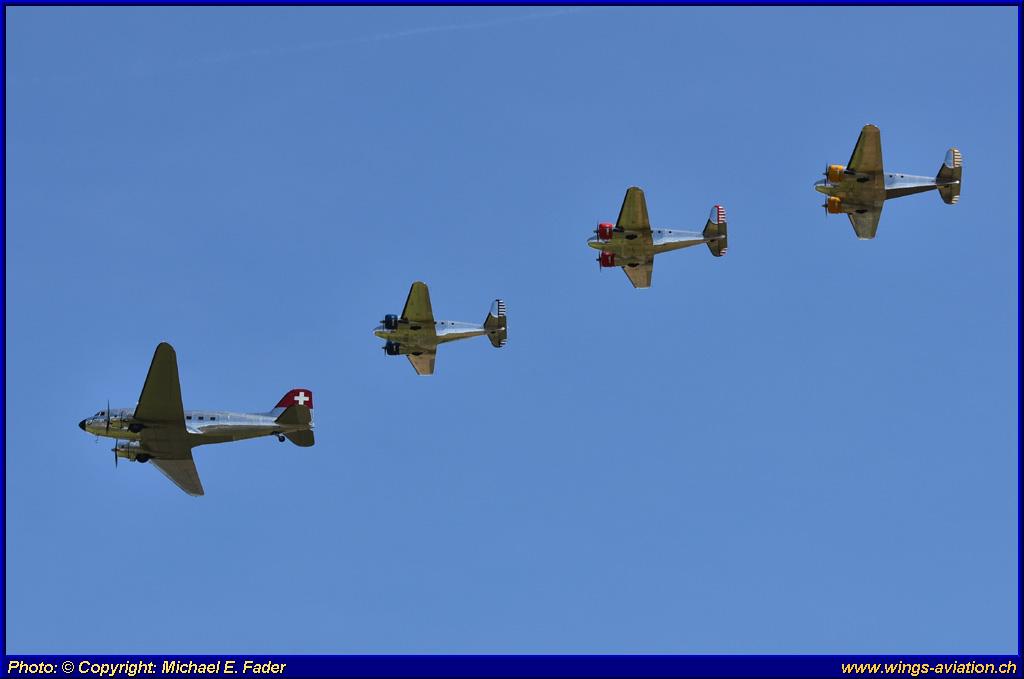


(Picture courtesy Michael E. Fader)
(Picture courtesy Michael E. Fader)
(Picture courtesy Urs Schnyder)
(Picture courtesy Urs Schnyder)
(Picture courtesy Urs Schnyder)


(Picture courtesy Urs Schnyder)
(Picture courtesy Urs Schnyder)
(Picture courtesy Urs Schnyder)
(Picture courtesy Urs Schnyder)
(Picture courtesy Urs Schnyder)
Jet Pitts
Richard Goodwin was quite active with his Jet Pitts this year as we saw him on different airshows already. This Pitts is of course unique as in addition to a modified airframe and wings it also has two jet engines. However, if you study the picture taken in the static park closely you will notice that there were no jet engines installed in it. For whatever reason, they were removed. This lack did not show noticeably in Richards flying program, as he flew the same program as always. There seemed no noticeable difference in performance, except for the hovering sequences.


Pitts S-2E Special (Picture courtesy Urs Schnyder)
Pitts S-2E Special (Picture courtesy Michael E. Fader)
Pitts S-2E Special (Picture courtesy Urs Schnyder)
Pitts S-2E Special (Picture courtesy Urs Schnyder)
Pitts S-2E Special (Picture courtesy Urs Schnyder)


Pitts S-2E Special (Picture courtesy Urs Schnyder)
Pitts S-2E Special (Picture courtesy Urs Schnyder)
Pitts S-2E Special (Picture courtesy Urs Schnyder)
Pitts S-2E Special (Picture courtesy Michael E. Fader)
Pitts S-2E Special (Picture courtesy Urs Schnyder)
