Lockheed T-1 Sea Star
Military Aircraft of the World
Entwicklung
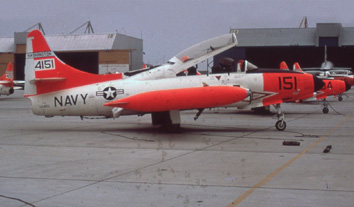
The Lockheed T2V- SeaStar is
a carrier-capable jet trainer for the U.S. Navy that entered service in
May 1957. Developed from the Lockheed T-33A, itself derived from the
Lockheed P-80 Shooting Star, it was powered by one Allison J33 engine.
Starting in 1949, the U.S.
Navy used the Lockheed T-33A, first named TO-2 then TV-2 in Navy service,
for land-based jet aircraft training. However, the TV-2 was not suitable
for operation from aircraft carriers. The persisting need for a
carrier-compatible trainer led to a further, more advanced design
development. Lockheed's demonstrator L-245 first flew on 16. December
1953 and production deliveries to the U.S. Navy began in 1956.
The T2V-1 was almost totally re-engineered for carrier landings and
at-sea operations with a redesigned tail, naval standard avionics, a
strengthened undercarriage and lower fuselage, with a arrestor hook,
power-operated leading-edge flaps to allow carrier launches and
recoveries, and an elevated rear seat for improved instructor vision,
among other changes.
Die Lockheed T2V- SeaStar ist
ein trägertauglicher Jet-Trainer für die U.S. Navy , der im Mai 1957 in
Dienst gestellt wurde. Er wurde aus der Lockheed T-33A entwickelt, die
wiederum von der Lockheed P-80 Shooting Star abstammt, und wurde von einem
Allison J33-Triebwerk angetrieben.
Ab 1949 setzte die U.S. Navy die Lockheed T-33A, zuerst TO-2 und dann TV-2
im Marinedienst genan-nt, für die Ausbildung landgestützter Jetflugzeuge
ein. Die TV-2 war jedoch nicht für den Betrieb von Flugzeugträgern aus
geeignet. Der anhaltende Bedarf an einem trägerkompatiblen Trainer führte zu
einer weiteren, fortschrittlicheren Design. Lockheeds Demonstrator L-245
flog erstmals am 16. Dezember 1953 und die Serienlieferungen an die U.S.
Navy begannen 1956.
Der T2V-1 wurde fast vollständig für Trägerlandung-en und Operationen auf
See überarbeitet, mit einem neu gestalteten Heck, Marinestandard-Avionik,
einem verstärkten Fahrwerk und einem, mit einem Fanghaken und
kraftbetriebenen Lande-klappen, um Trägerstarts und -landungen zu
ermöglichen sowie ein erhöhter Rücksitz für eine verbesserte Sicht des
Ausbilders, neben anderen Änderungen.
Versionen
T2V-1
151 planes
T2V-1
151 Maschinen
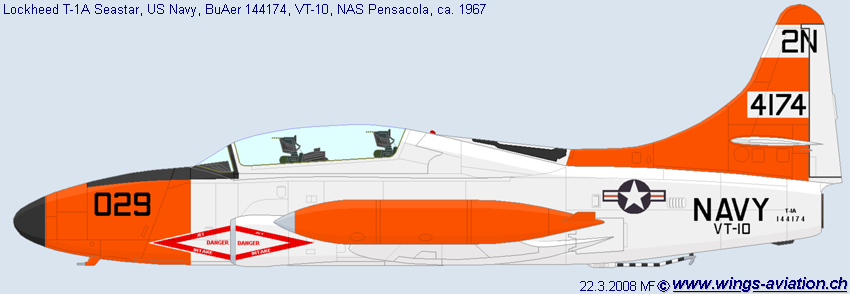
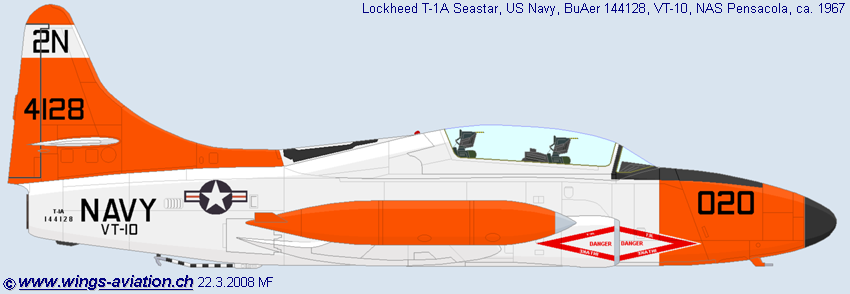
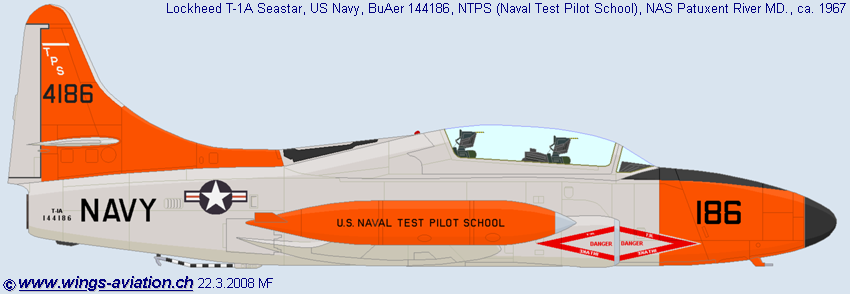
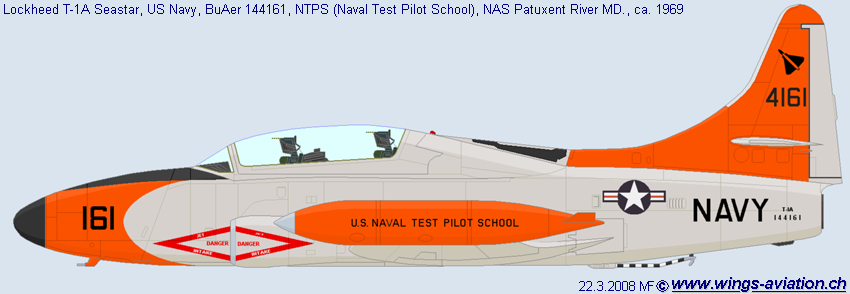
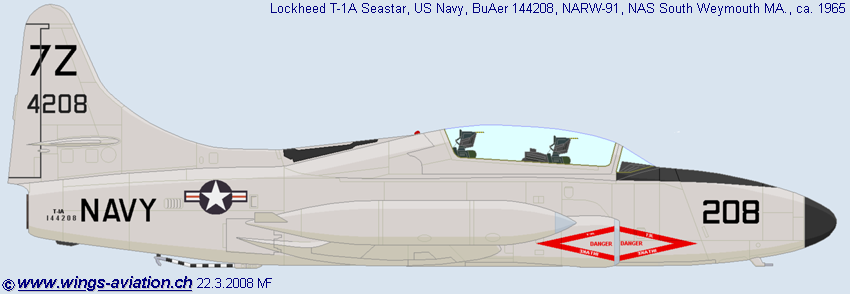
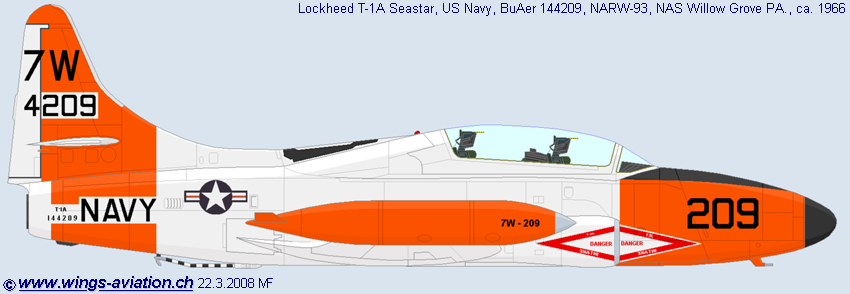
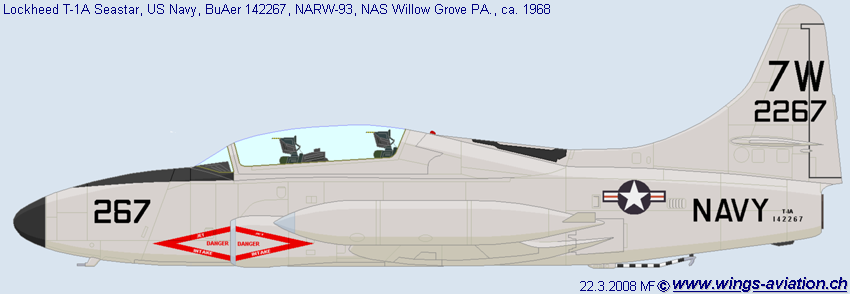
Profiles
Profile


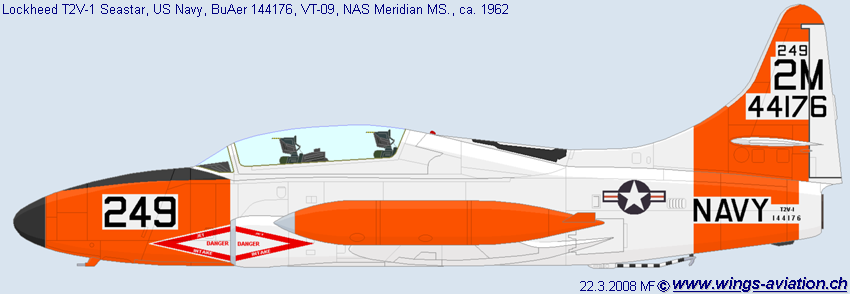
U.S. Navy
U.S. Navy
U.S. Navy
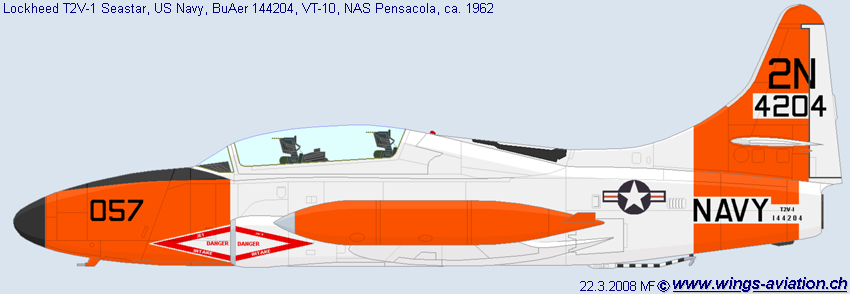
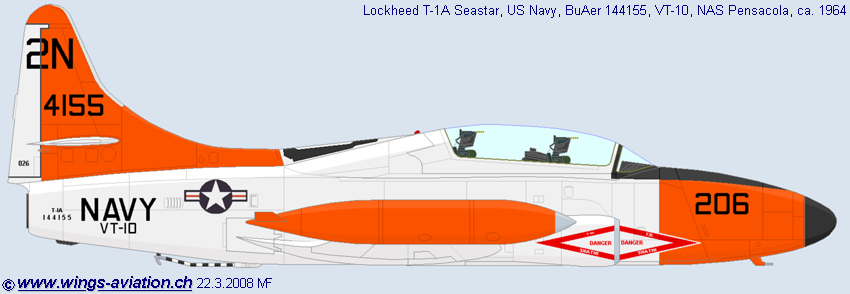
U.S. Navy
U.S. Navy
U.S. Navy
U.S. Navy
U.S. Navy
U.S. Navy
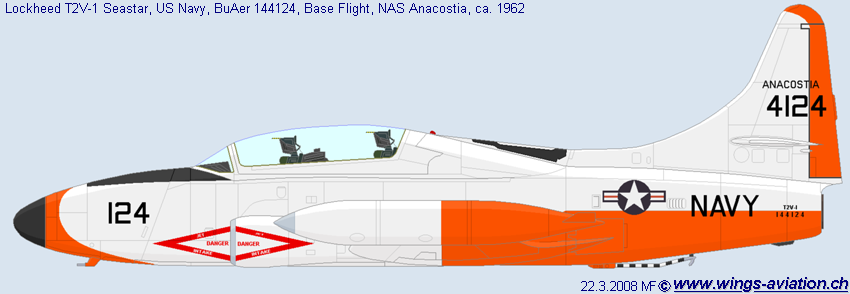
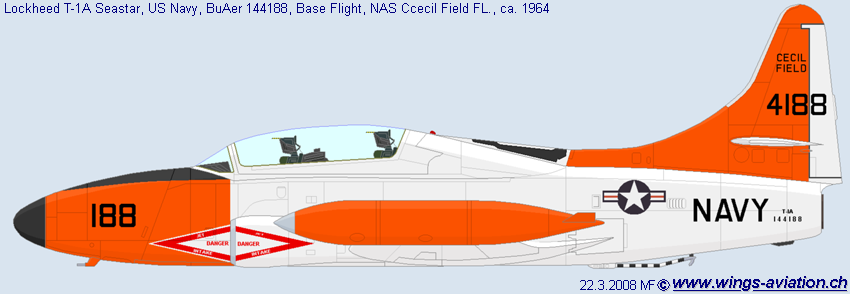
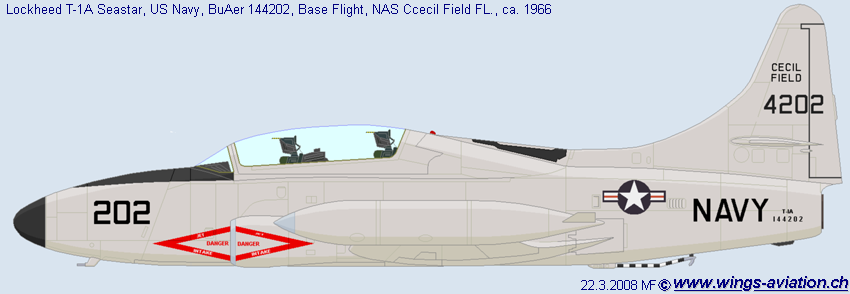
U.S. Navy
U.S. Navy
U.S. Navy
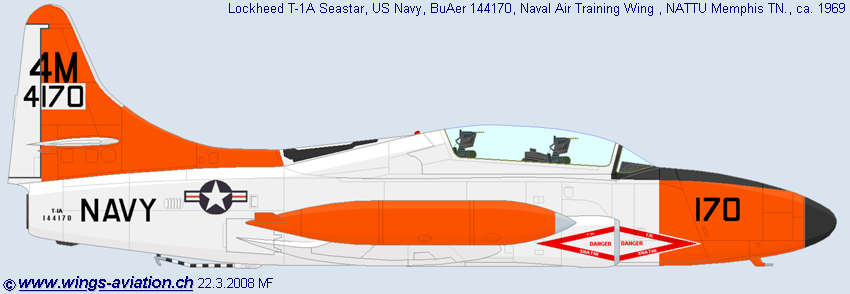
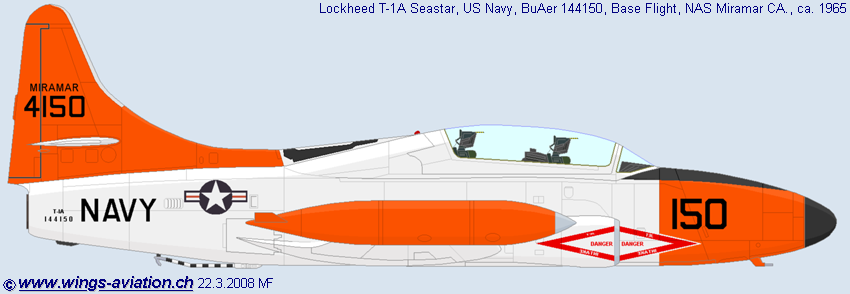
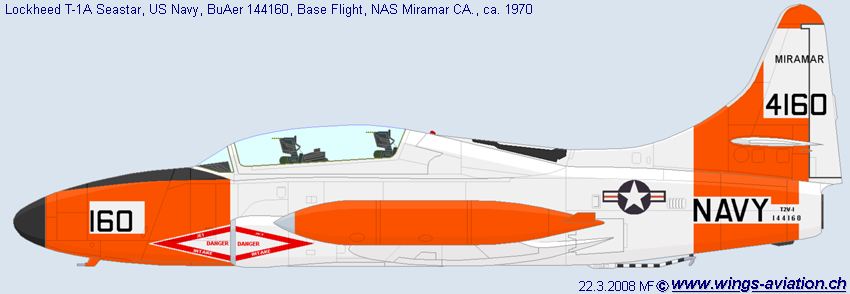
U.S. Navy
U.S. Navy
U.S. Navy
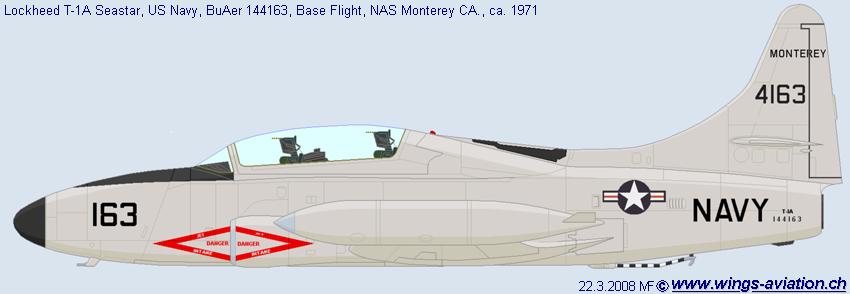
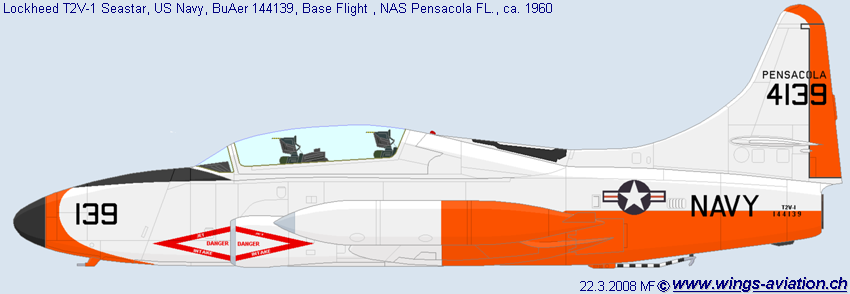
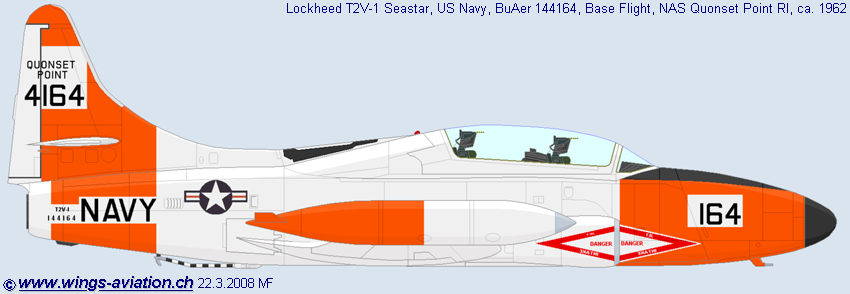
U.S. Navy
U.S. Navy
U.S. Navy
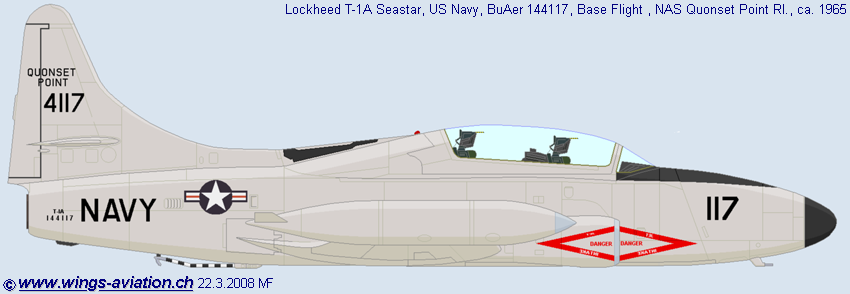
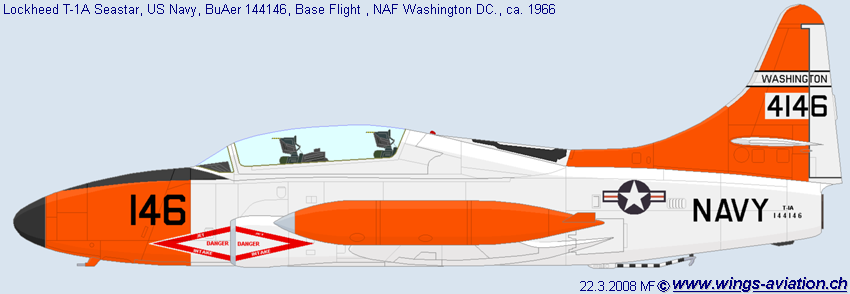
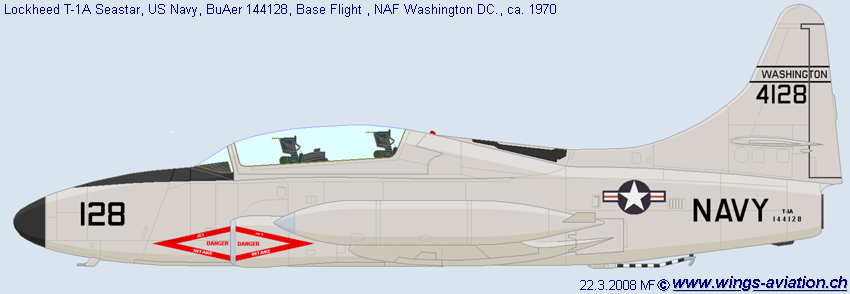
U.S. Navy
U.S. Navy
U.S. Navy
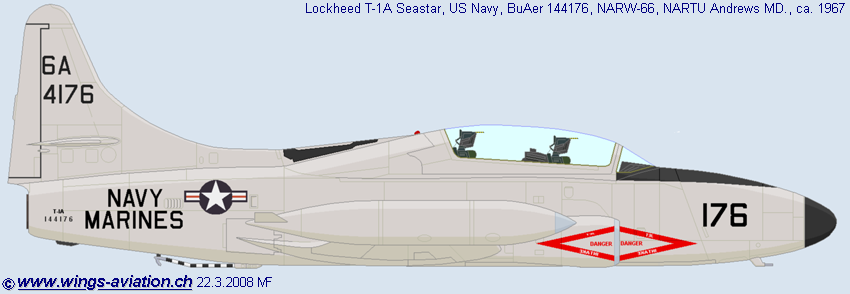
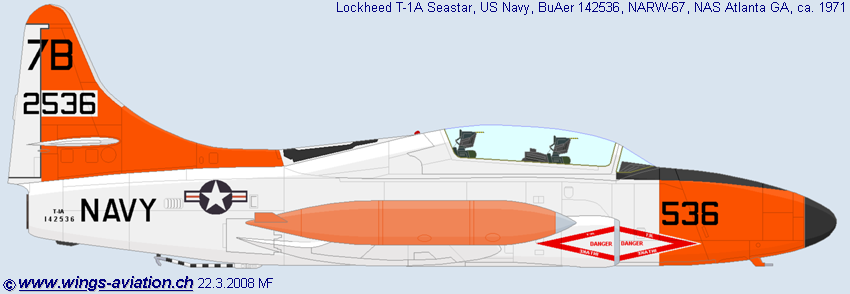
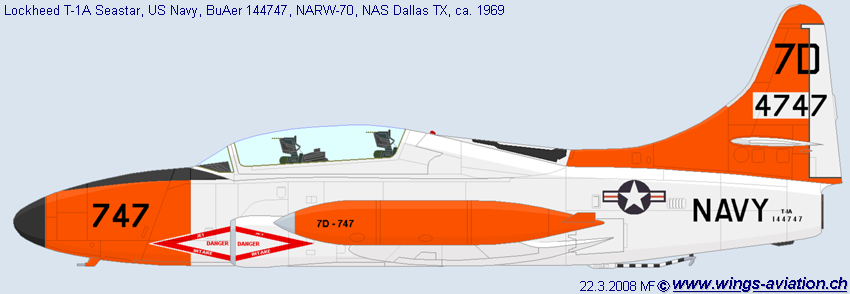
U.S. Navy
U.S. Navy
U.S. Navy
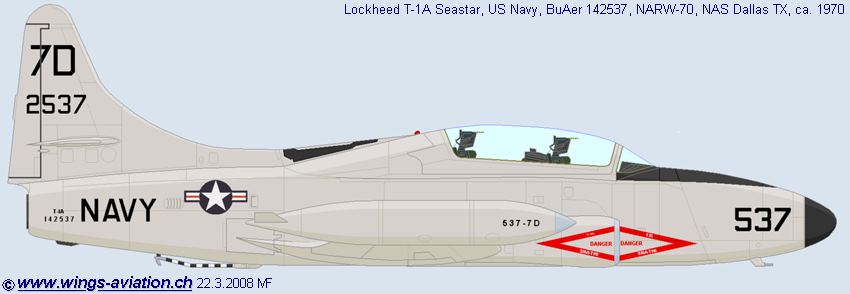
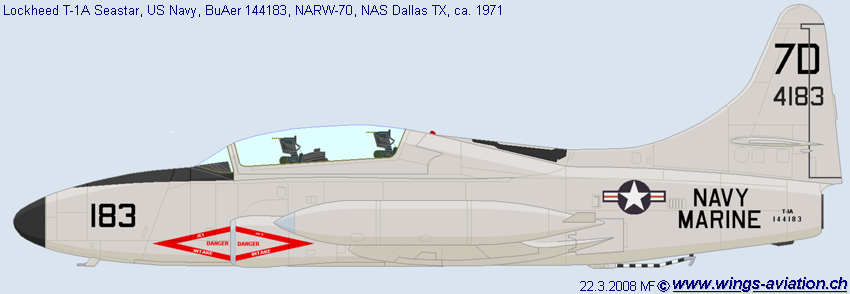
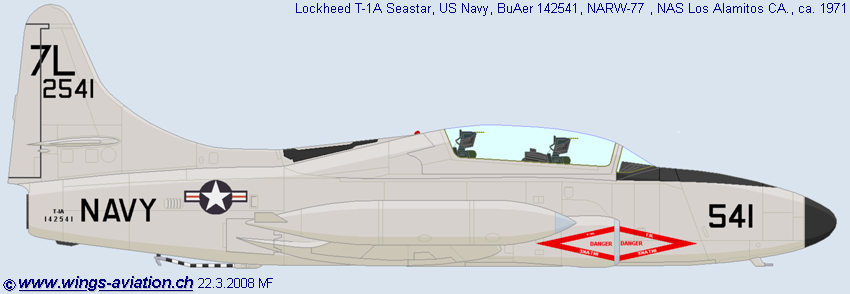
U.S. Navy
U.S. Navy
U.S. Navy
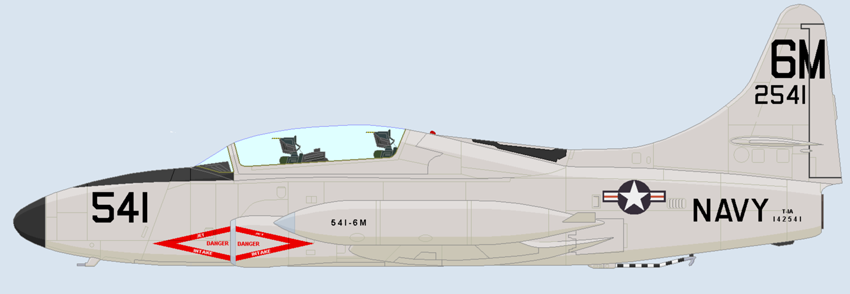
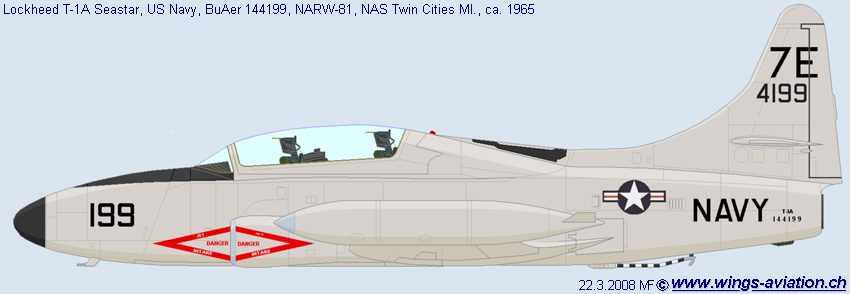
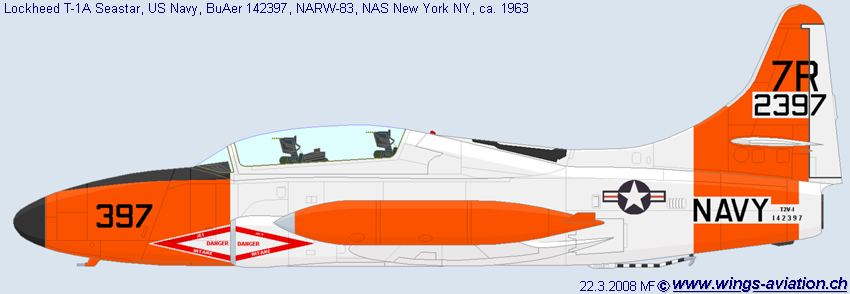
U.S. Navy
U.S. Navy
U.S. Navy
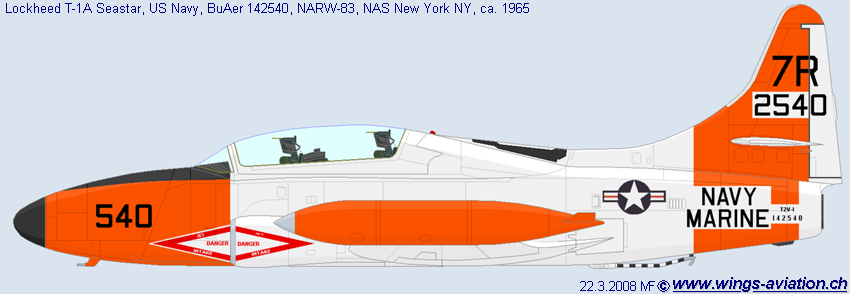
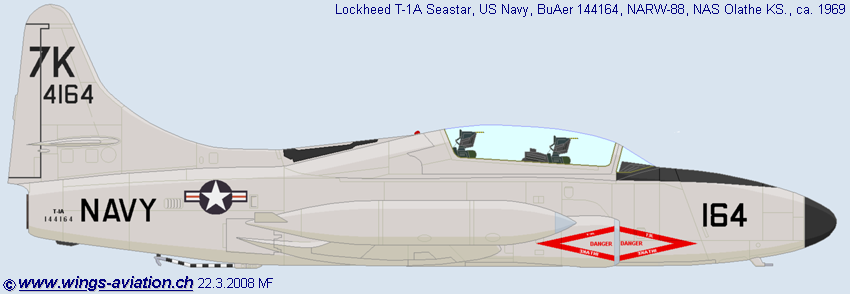
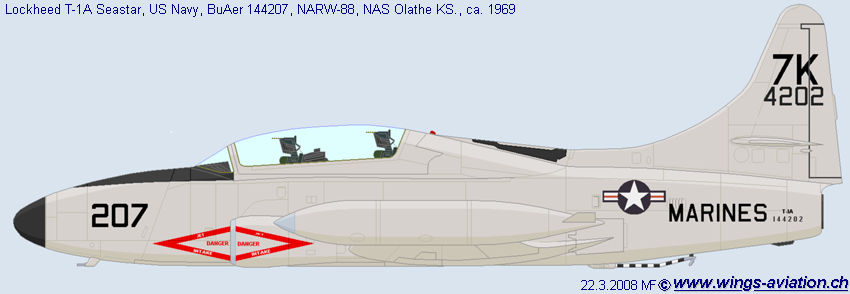
U.S. Navy
U.S. Navy
U.S. Navy
U.S. Navy
U.S. Navy
U.S. Navy


U.S. Marines
U.S. Marines
U.S. Marines


U.S. Marines
U.S. Marines
U.S. Marines


U.S. Marines
U.S. Marines
U.S. Marines


U.S. Marines
U.S. Marines
U.S. Marines


U.S. Marines
U.S. Marines
U.S. Marines
| Specifications | T2V-1 | |
|
Wingspan |
Spannweite |
15.24 m |
|
Length |
Länge |
12.58 m |
|
Height |
Höhe |
3.68 m |
| Wing area | Flügelfläche |
37.00 m² |
|
Engine |
Motor |
Allison XT-40-A-2 |
|
Maximum speed |
Höchstgeschwindigkeit |
813 km/h |
|
Empty weight |
Leergewicht |
5,864 kg |
|
Loaded weight |
Startgewicht |
10,436 kg |
|
Climb Rate |
Steigrate |
37 m/s |
|
Service ceiling |
Gipfelhöhe |
14,664 m |
|
Range |
Reichweite |
3,520 km |
|
Armament |
Bewaffnung |
none |
|
Capacity |
Zuladung |
Crew 2 |
|
Text: |
- |
|
Drawings: |
Michael E. Fader |