Lockheed PV-1 Ventura / PV-2 Harpoon
Military Aircraft of the World
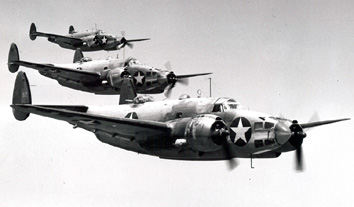
Entwicklung
The Ventura was very similar to its predecessor, the Lockheed Hudson. The primary difference was not in layout; rather, the Ventura was larger and heavier than the Hudson. The maximum fuel capacity of the PV-1 was increased to 6,082 l, to increase its range; the forward defensive armament was also reduced for this reason. The most important addition was of an ASD-1 search radar.
Late production PV-1s dispensed with this bombardier position and replaced it with a pack with three 12.7 mm machine guns underneath the nose. These aircraft could also carry eight 127 mm HVAR rockets on launchers underneath the wings.
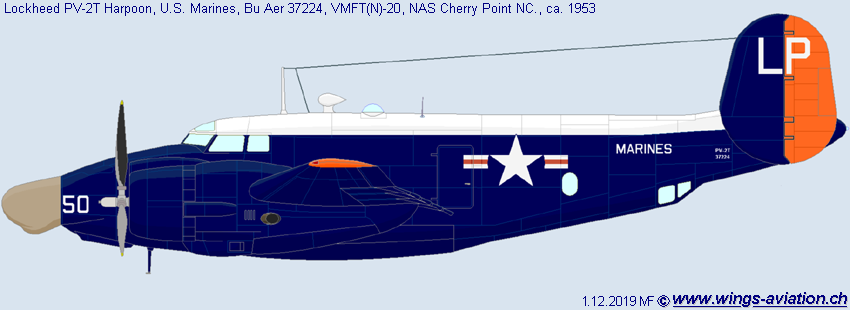
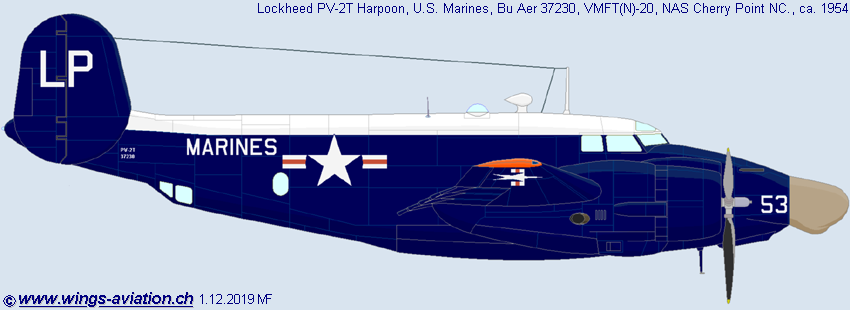
The PV-2 Harpoon was a major redesign of the Ventura with the wing area increased from 51.2 m² to 63.7 m² giving an increased load-carrying capability. While the PV-2 was expected to have increased range and better takeoff, the anticipated speed statistics were projected lower than those of the PV-1, due to the use of the same engines but an increase in weight. The Navy ordered 500 examples, designating them with the popular name Harpoon.
Die Ventura
war ihrem Vorgänger, der Lockheed Hudson, sehr ähnlich. Der wesentliche
Unterschied war nicht das
Layout, sondern die Ventura was größer und schwerer als die Hudson. Die
maximale Tankkapazität der PV-1 wurde auf 6.082 l erhöht
um die Reichweite zu erhöhen, die nach vorne gerichtete
verteidigungs-Bewaffnung wurde auch aus diesem Grund auch reduziert. Die
wichtigste Neuerung war ein ASD-1 Suchradar.
Die späte PV-1 Serienmaschinen hatten keine Platz für den Bombenschützen und
hatten an dieser Stelle eine Packung mit drei 12,7 mm Maschinengewehren
unter dem Bug. Diese Flugzeuge konnten auch acht HVAR Raketen
unter den Flügeln tragen.
Die PV-2 Harpoon war eine gössere Überarbeitung der Ventura mit einer vergrößerten Tragfläche von 51,2 m² auf 63,7 m² und einer höheren Zuladung. Es wurde erwartet, dass die PV-2 eine erhöhte Reichweite und bessere Starteigenschaften haben würde und eine höhere Geschwindigkeit mit den gleichen Motoren. Die Navy bestellte 500 Maschinen und bezeichnete sie mit dem populären Namen Harpoon.
Versionen
United States Navy version of the B-34 with ASD-1 radar, 1600 build
navalisierte B-34 für die U.S. Navy mit erhöhter Treibstoffzuladung und ASD-1-Radar, 1.600 wurden gebaut.
PV-1s fitted with a camera installation
Version mit zusätzlicher Kamerainstallation
Updated model with larger fin and wing area, 470 built
Verbesserte Version mit grösserer Flügelfläche und Steitenleitwerk
Modified version of the PV-2 used for training, 30 built.
Umgebaute Version der PV-2 benutzt als Trainer.
Same as PV-2 but with eight 12,7 mm nose guns, 35 built
Ähnlich der PV-2 mit acht 12,7 mm Maschinengewehren in der Nase, 35 gebaut
Designation for PV-2s used for crew training
Bezeichnung von PV-2 die alas unbewaffnete Trainer verwendet wurden
Twenty-seven former RAF Ventura IIs requisitioned by the USN
27 von der U.S. Navy übernommene Ventura II.
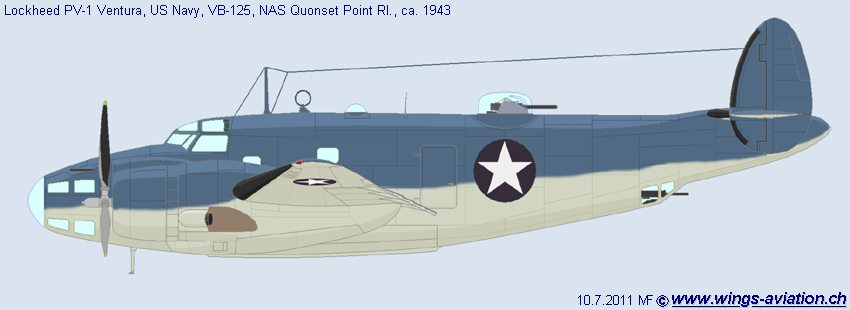
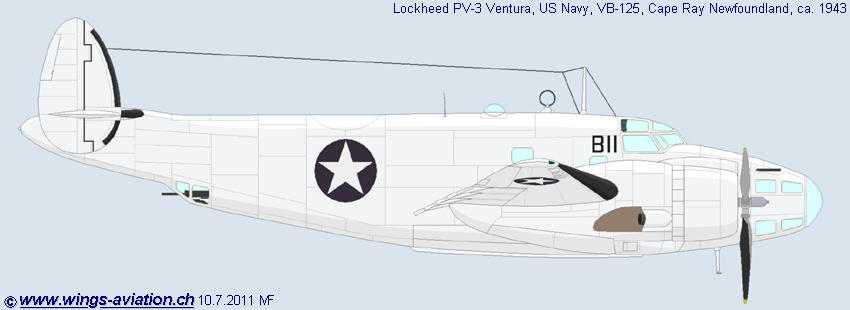
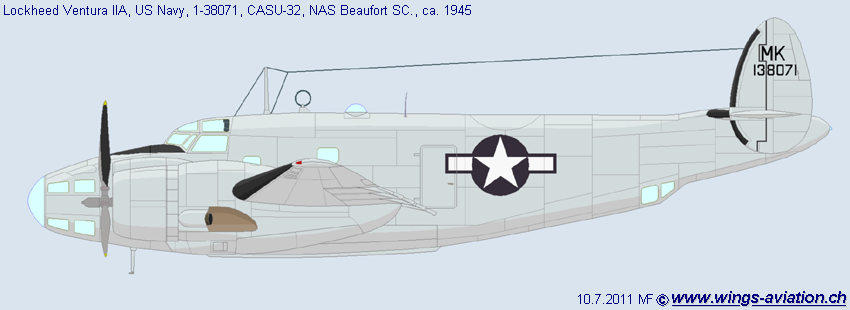
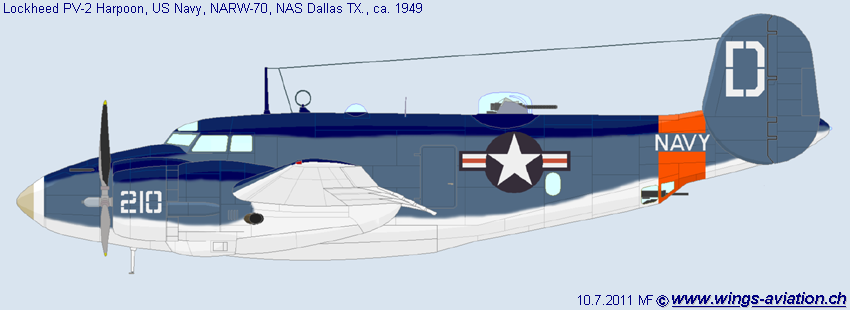
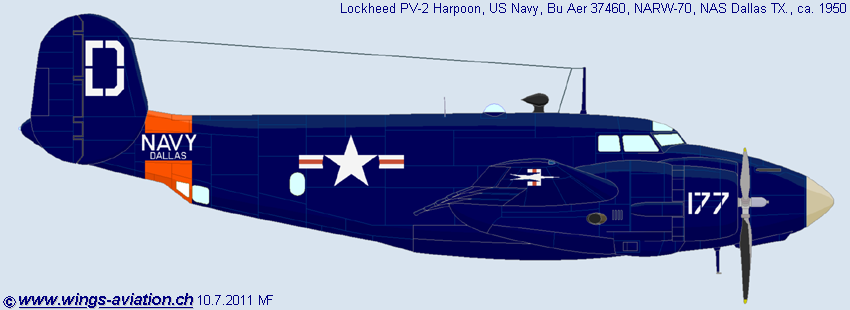
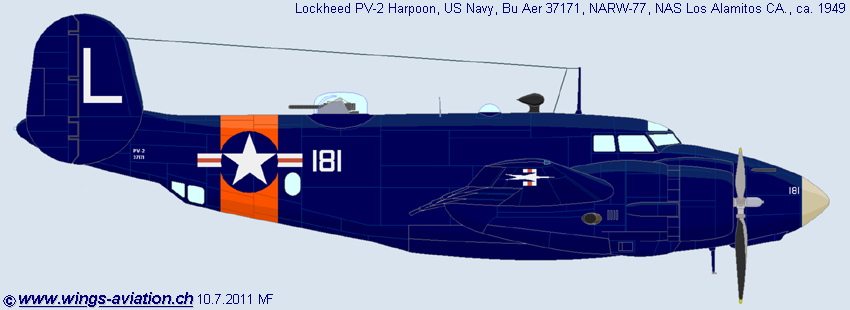
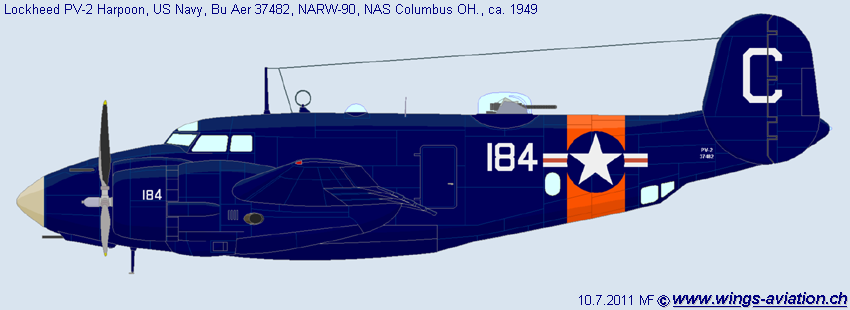
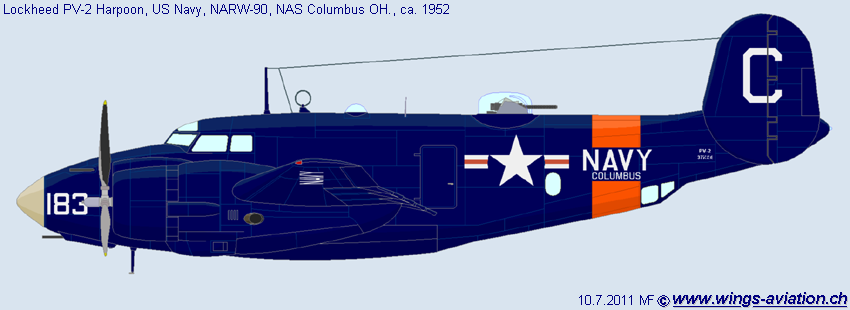
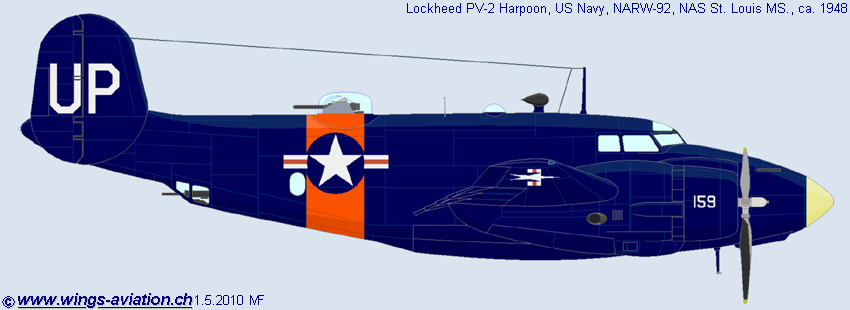
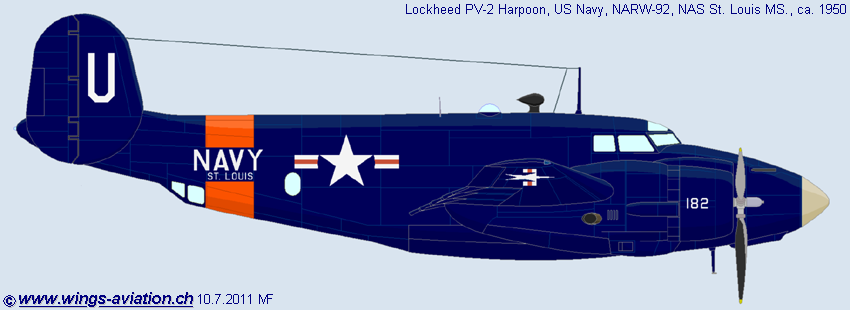
Profiles
Profile
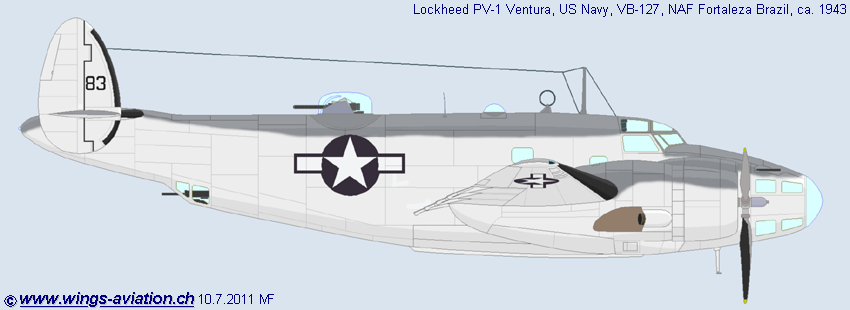
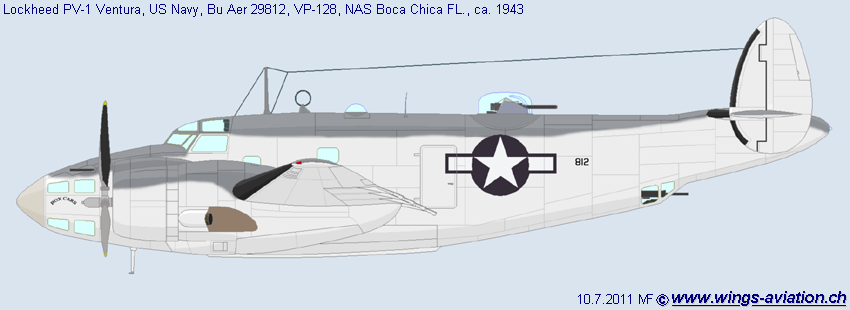
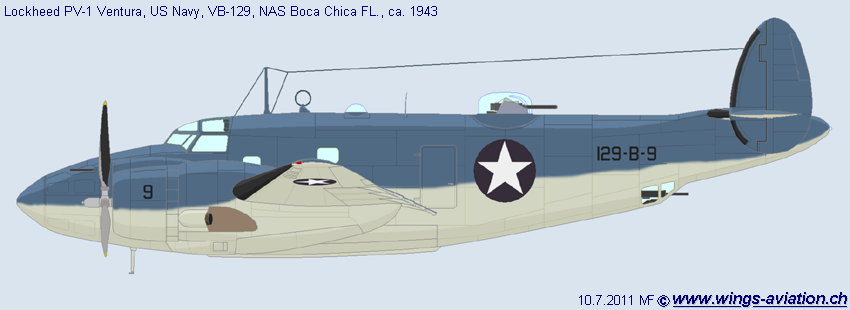
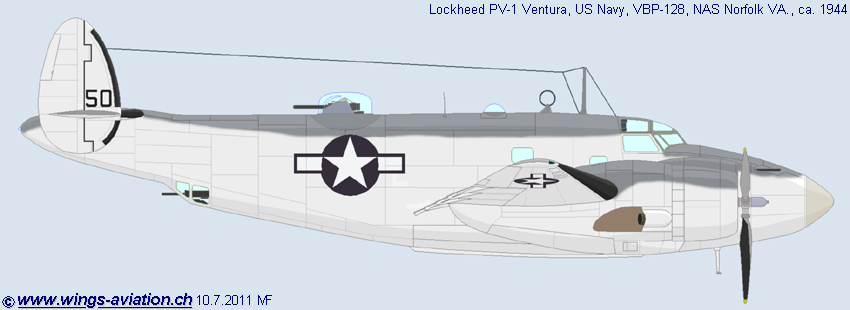


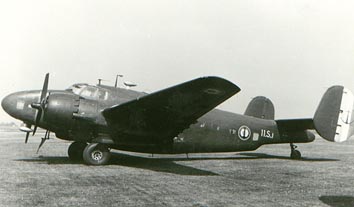
Aéronavale


Aéronavale
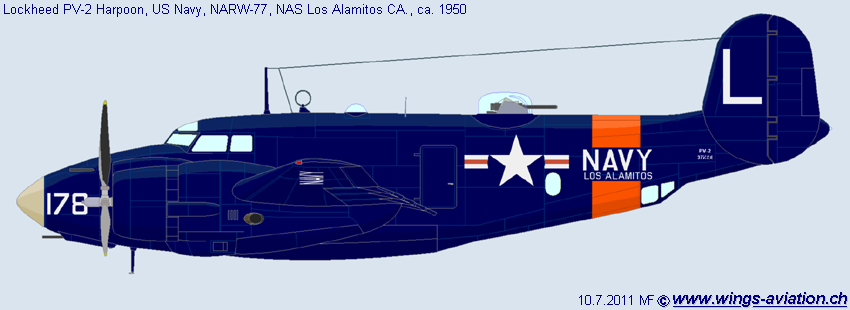
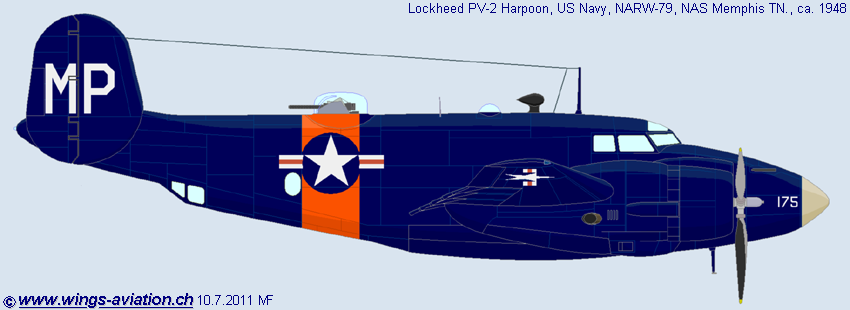
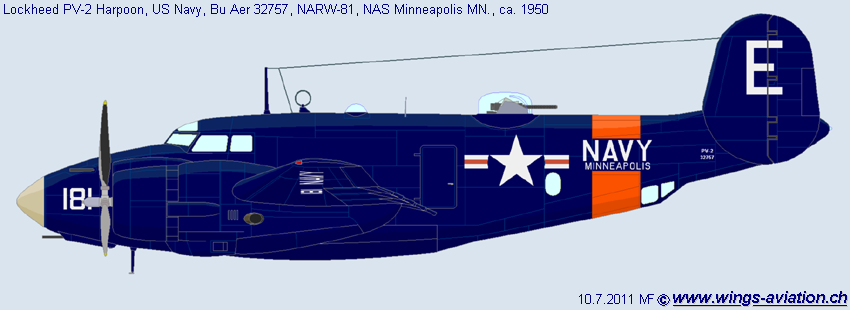
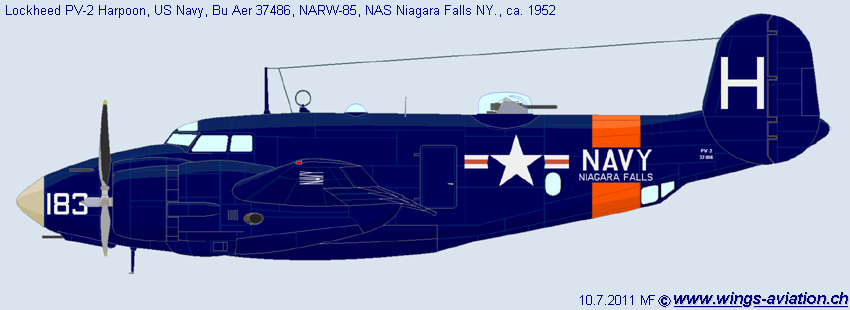
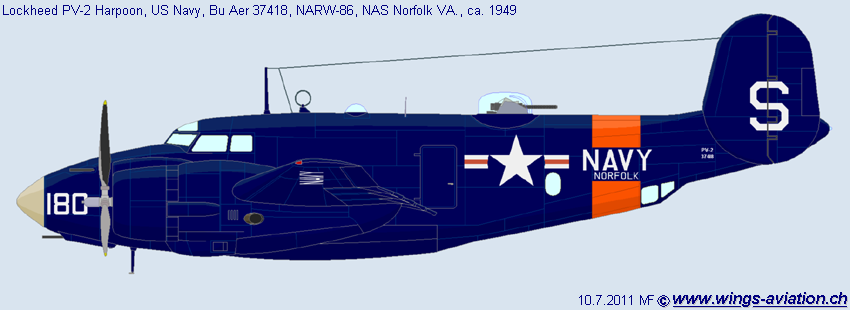
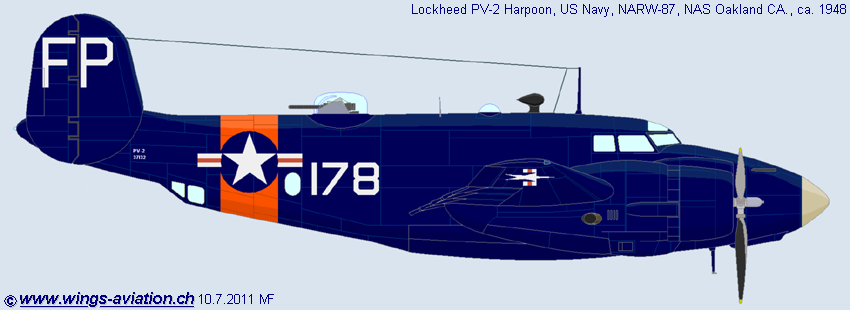
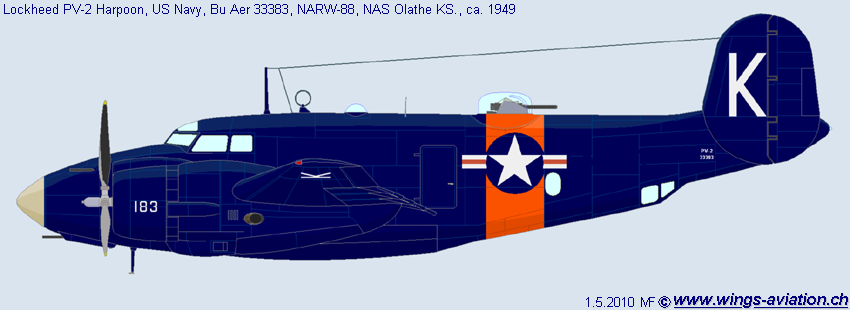
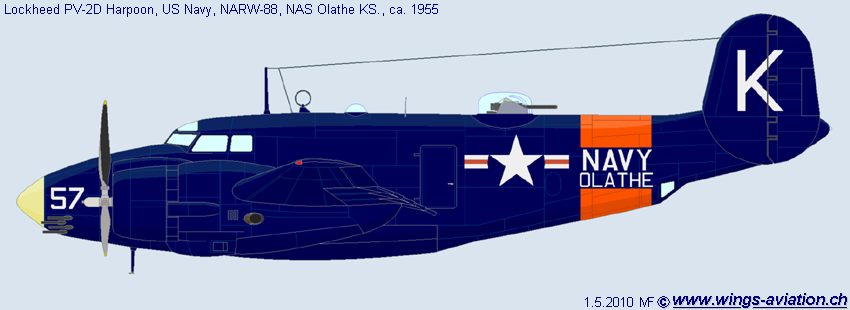


| Specifications | PV-1 | PV-2 | |
|
Wingspan |
Spannweite |
19.96 m | 22,84 m |
|
Length |
Länge |
15.77 m | 15,98 m |
|
Height |
Höhe |
3.60 m | 3,63 m |
| Wing area | Flügelfläche | 51.20 m² | ? |
|
Engine |
Motor |
2× Pratt & Whitney R-2800 radial engines, 2,000 PS each | 2× Pratt & Whitney R-2800 radial engines, 2,000 PS each |
|
Maximum speed |
Höchstgeschwindigkeit |
518 km/h | 454 km/h |
|
Empty weight |
Leergewicht |
9,160 kg | 9.538 kg |
|
Loaded weight |
Startgewicht |
15,000 kg | 16.330 kg |
|
Climb Rate |
Steigrate |
15.4 m/s | ? |
|
Service ceiling |
Gipfelhöhe |
8,020 m | 7.285 m |
|
Range |
Reichweite |
2,670 km | 2.880 km |
|
Armament |
Bewaffnung |
4 × 12.7 mm machine guns 2 × 7.62 mm machine guns 1,400 kg of Bombs |
5 × 12.7 mm machine guns 1,400 kg of Bombs |
|
Text: |
Michael E. Fader |
|
Drawings: |
Michael E. Fader |