

|
Text: |
Michael E. Fader |
|
Pictures: |
Urs Schnyder & Michael E. Fader |

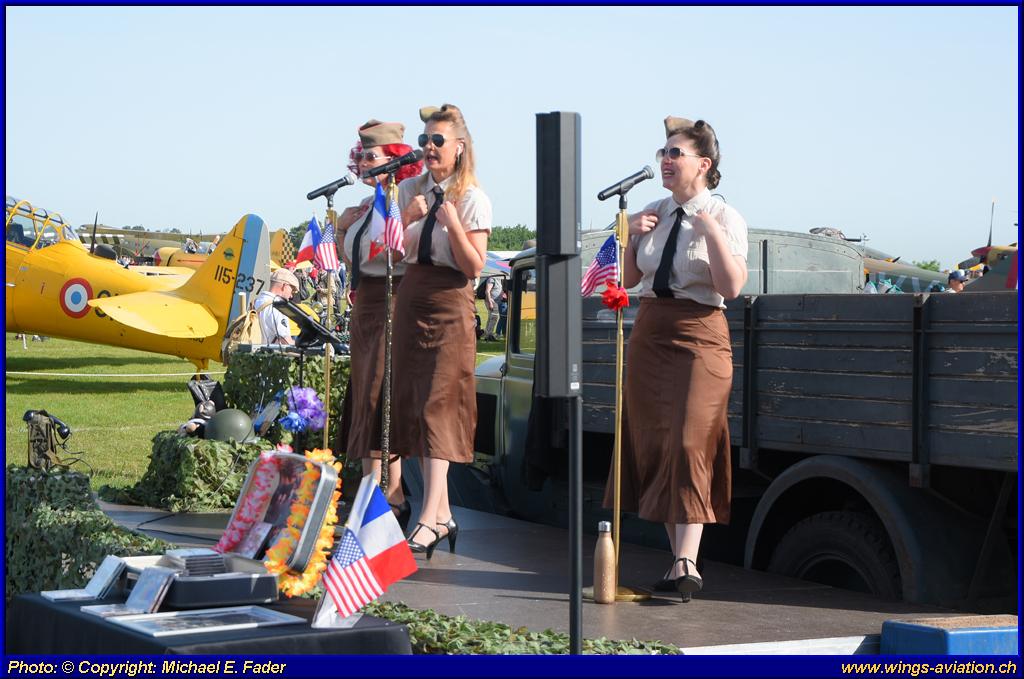
The Satin Doll Sisters (Picture courtesy Michael E. Fader)
(Picture courtesy Michael E. Fader)
The 2026 edition of the meeting in La Ferté-Alais was a resounding success. Large crowds flocked to the Cerny plateau on the two flying days, 23 and 24 May 2026.
The weather was at its best: sunshine and a light breeze provided ideal conditions, which were particularly beneficial for the early aircraft. The programme was engaging, varied and entertaining, and was presented superbly.
As in previous years, the aircraft were presented and explained within their historical context. The displays can certainly be seen as a living history lesson. In this report, we would like to highlight some of the key moments of this impressive event.



(Picture courtesy Michael E. Fader)
(Picture courtesy Michael E. Fader)
EKW D-3801 (Morane-Saulnier MS-406 HB-RCF) (Picture courtesy Michael E. Fader)
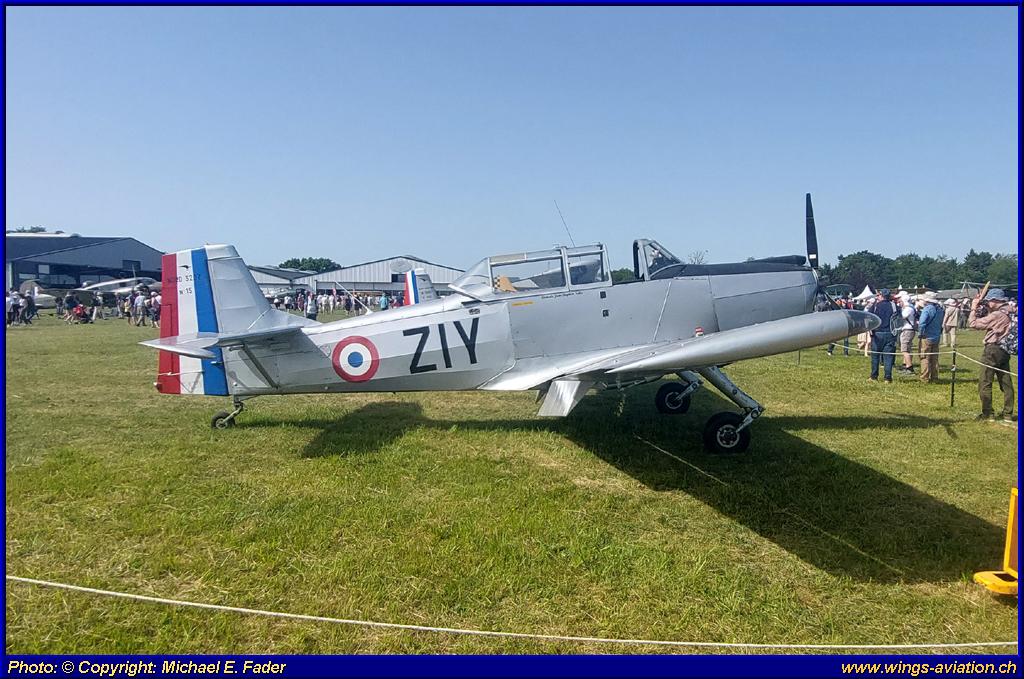
Nord 3202 (F-AZIY) (Picture courtesy Michael E. Fader)
Messerschmitt Bf 109 E-4 (D-FEML) (Picture courtesy Urs Schnyder)
Équipe Phénix
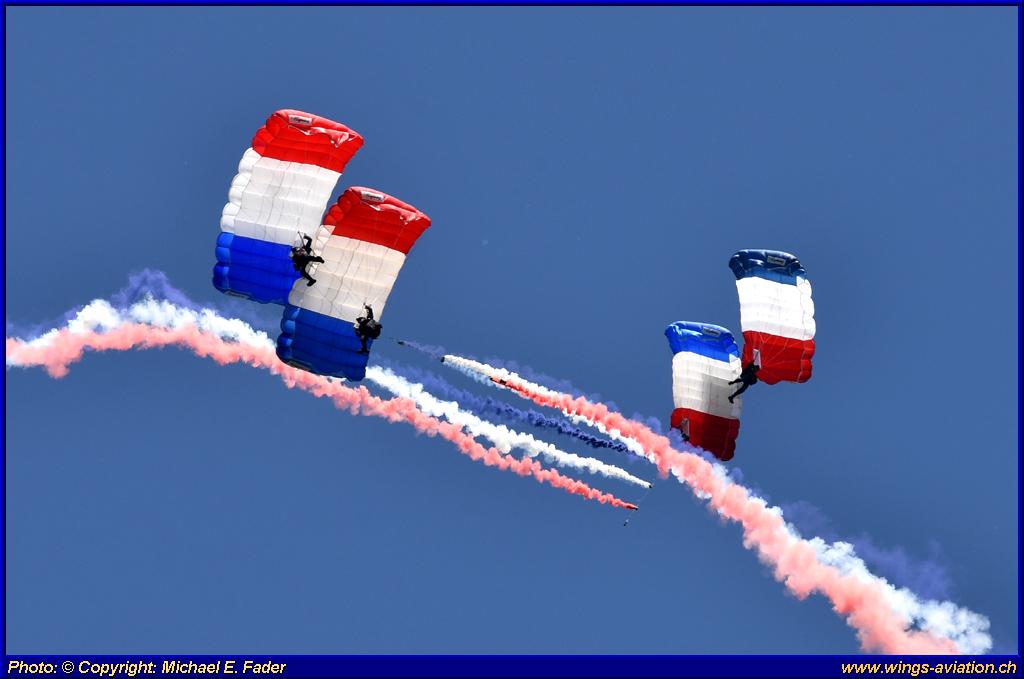
This year, the opening ceremony was performed by four skydivers from the Armée de l’Air et de l’Espace’s “Équipe Phénix”. They jumped from a height of 2,000 metres from the North American OV-10B Bronco (F-AZKM).
It was already known from specialist literature that the Bronco can be used to drop skydivers thanks to its small cargo compartment behind the cockpit. However, photographic or video evidence of this had been virtually impossible to find until now. This made it all the more impressive to be able to witness this rare type of operation live. For the jump, the tail cone is removed so that the jumpers can exit the aircraft rearwards between the tailplane struts.
The Armée de l’Air et de l’Espace’s “Équipe Phénix” is based at BA-123 Orléans-Bricy and comprises 18 skydivers and three instructors. The team sees itself as an ambassador for skydiving within the French Air Force and does not carry out any combat missions.

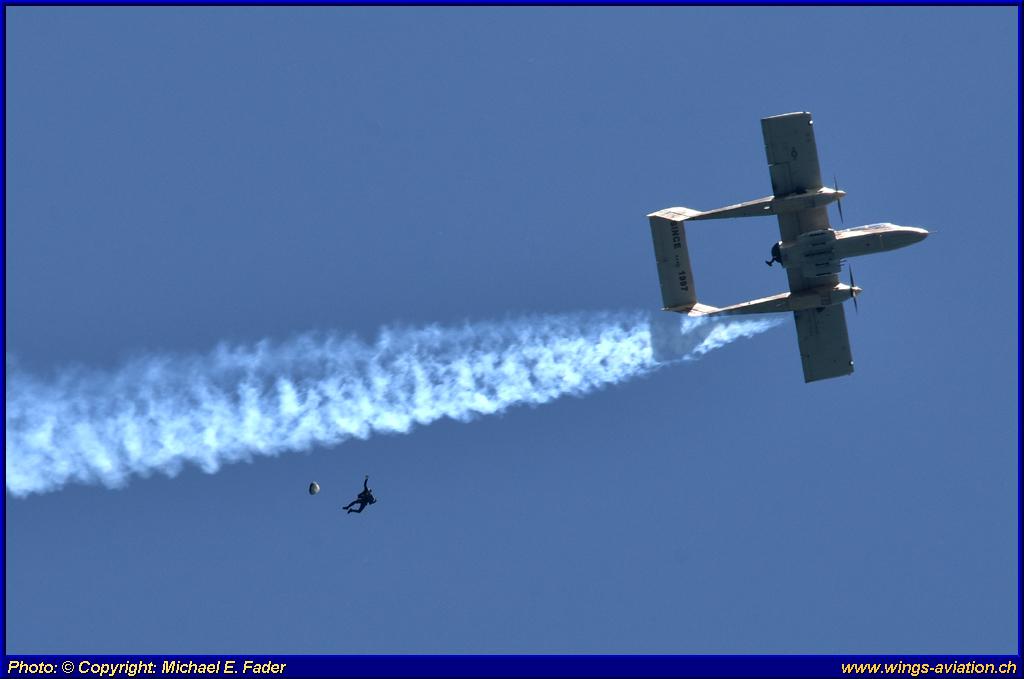


North American OV-10B Bronco (F-AZKM) (Picture courtesy Michael E. Fader)
North American OV-10B Bronco (F-AZKM) (Picture courtesy Michael E. Fader)
(Picture courtesy Michael E. Fader)
(Picture courtesy Michael E. Fader)
(Picture courtesy Urs Schnyder )


(Picture courtesy Urs Schnyder )
(Picture courtesy Michael E. Fader)
(Picture courtesy Urs Schnyder )
(Picture courtesy Michael E. Fader)
(Picture courtesy Michael E. Fader)
Les faucheurs de Marguerites
“Les Faucheurs de
Marguerites” – in English, “The Daisy Mowers” – is the affectionate name
given to the very early aircraft traditionally showcased at La
Ferté-Alais.
Although the Caudron G.III could not be demonstrated on this occasion,
the Morane H (F-AZMS) and the Blériot XI² (F-AZPG) were on display.
These pioneering aircraft, with their underpowered engines, rely on
conditions with as little wind as possible in order to fly safely.


Blériot XI² (F-AZPG) (Picture courtesy Urs Schnyder )
Blériot XI² (F-AZPG) (Picture courtesy Urs Schnyder )
Morane H (F-AZMS) (Picture courtesy Michael E. Fader)
Blériot XI² (F-AZPG) (Picture courtesy Michael E. Fader)
Morane H (F-AZMS) (Picture courtesy Michael E. Fader)


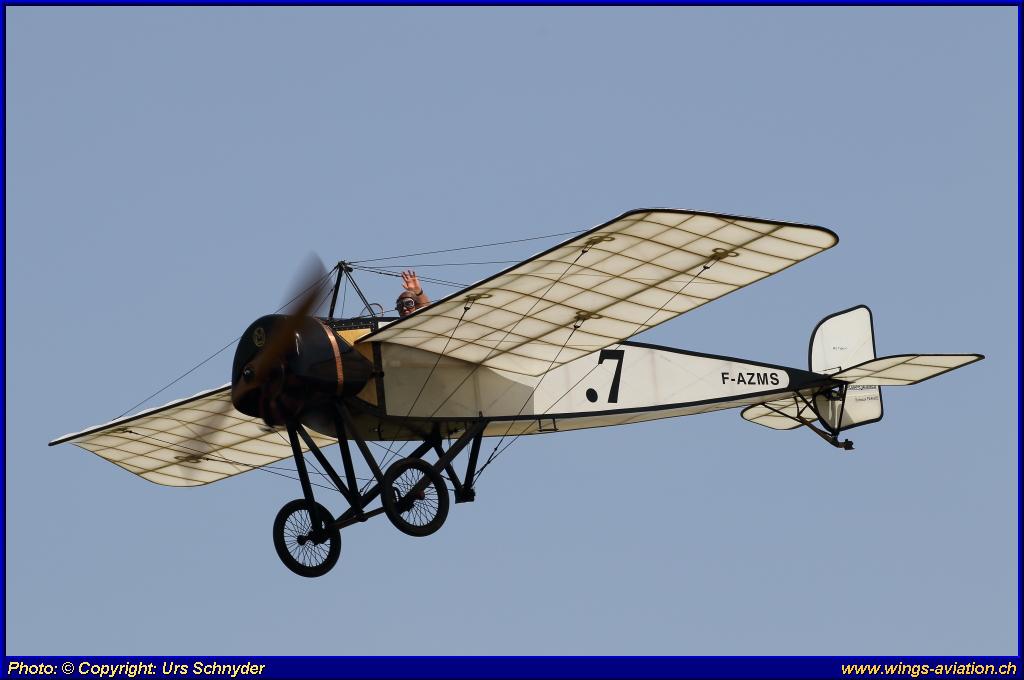

Blériot & Morane (Picture courtesy Urs Schnyder )
Blériot & Morane (Picture courtesy Michael E. Fader)
Blériot XI² (F-AZPG) (Picture courtesy Michael E. Fader)
Morane H (F-AZMS) (Picture courtesy Urs Schnyder)
Blériot XI² (F-AZPG) (Picture courtesy Michael E. Fader)
The great War
Although more aircraft had been announced than actually took to the skies in the end, this proved by no means to be a disadvantage. On the contrary: it made the simulated dogfight much easier to follow.
The German side was represented by the Fokker Dr.I triplane (F-AYDR). The aircraft was built in the USA in 2011 and was initially registered as N425CR. In 2014, it was taken over by the AJBS.
The British side was represented by a Royal Aircraft Factory S.E.5 (F-AZCY). This, too, is a replica built in 1983 for the film *L’As des As*. Strictly speaking, however, the aircraft is not a complete replica but a conversion of an SV4 Stampe, which is why it is only comparable to the historical original to a limited extent.
The third aircraft was an exceptionally detailed replica of a Royal Aircraft Factory BE.2f (F-AZZN), built in New Zealand in 2009 by The Vintage Aviator Ltd. The aircraft bears the colours of No. 52 Squadron of the Royal Flying Corps.


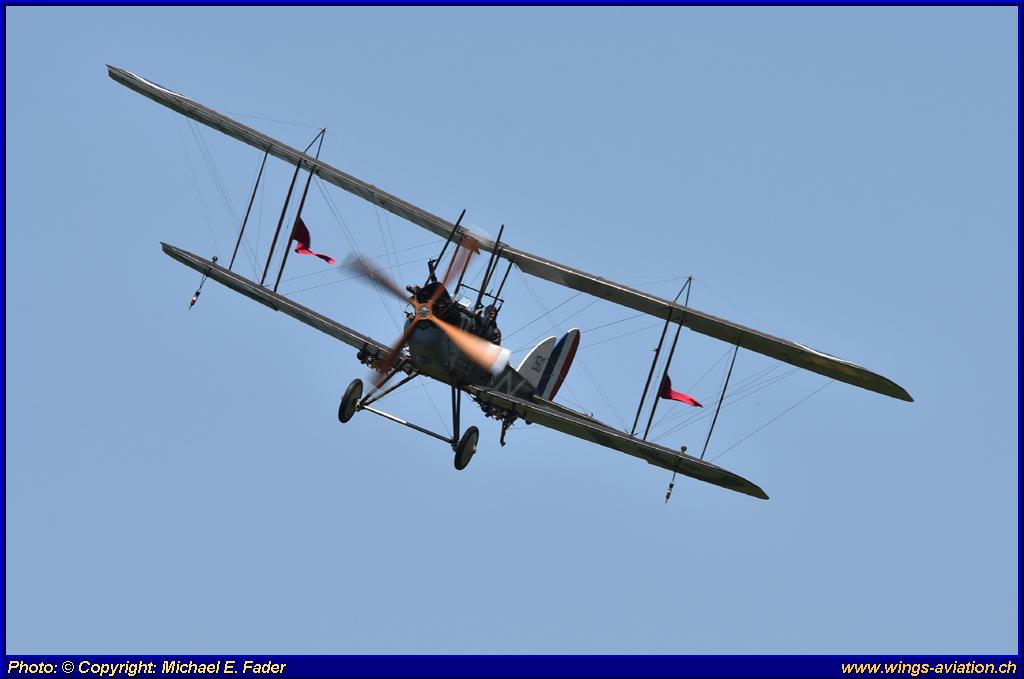

Royal Aircraft Factory BE.2f (F-AZZN) ((Picture courtesy Urs Schnyder )
Royal Aircraft Factory BE.2f (F-AZZN) (Picture courtesy Michael E. Fader)
Royal Aircraft Factory BE.2f (F-AZZN) ((Picture courtesy Urs Schnyder )
Royal Aircraft Factory BE.2f (F-AZZN) (Picture courtesy Michael E. Fader)
Royal Aircraft Factory BE.2f (F-AZZN) (Picture courtesy Michael E. Fader)


RAF SE-5 & BE.2f (Picture courtesy Michael E. Fader)
Royal Aircraft Factory S.E.5 (F-AZCY) (Picture courtesy Michael E. Fader)
Fokker Dr.I Dreidecker (F-AYDR) (Picture courtesy Urs Schnyder )
Fokker Dr.I Dreidecker (F-AYDR) (Picture courtesy Urs Schnyder)
RAF SE-5 & Fokker Dr.I (Picture courtesy Urs Schnyder )


RAF SE-5 & Fokker Dr.I (Picture courtesy Michael E. Fader)
RAF SE-5 & Fokker Dr.I (Picture courtesy Michael E. Fader)
Royal Aircraft Factory S.E.5 (F-AZCY) (Picture courtesy Urs Schnyder )
Royal Aircraft Factory S.E.5 (F-AZCY) (Picture courtesy Michael E. Fader)
Royal Aircraft Factory S.E.5 (F-AZCY) (Picture courtesy Michael E. Fader)
Nord Aviation
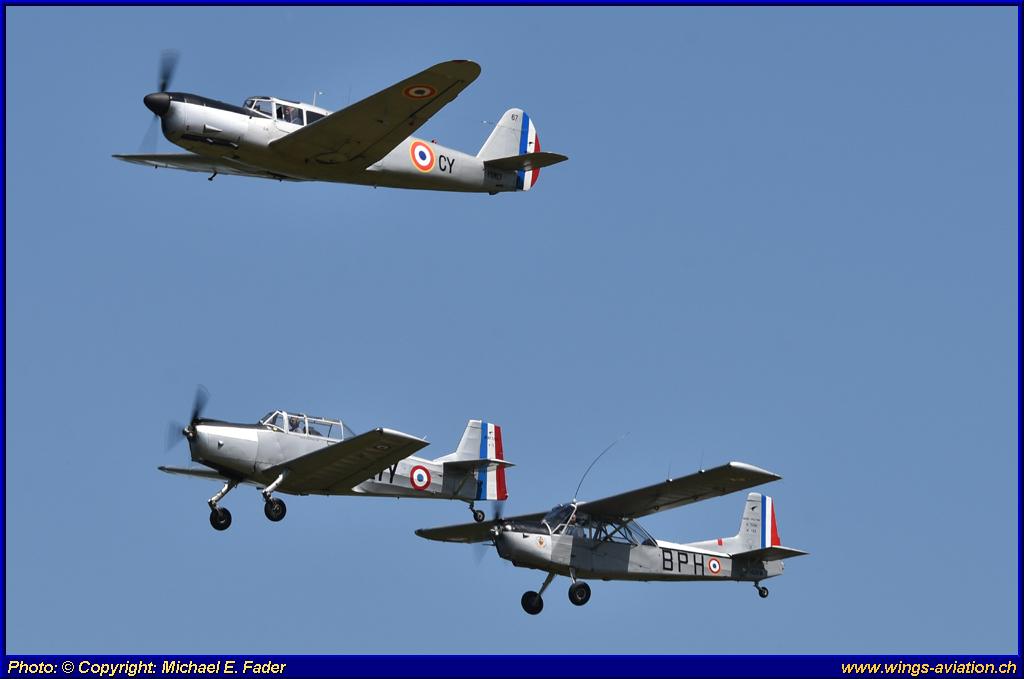
This year, a small formation of Nord aircraft was assembled and demonstrated alongside other French aircraft.
Particularly noteworthy was the Nord 3400 Norbarbe (F-AZFM), a light two-seater observation and liaison aircraft of the French Army. The aircraft now belongs to Fana Air Rétro in La Ferté-Alais and was presented for the first time at this event.
Also part of the formation were the Nord 3202 (F-AZIY) and the Nord 1101 Noralpha (F-GMCY), which was originally a Messerschmitt Me 208. The display was complemented by a Salmson D7 Cricri (F-AZAB) and a Morane-Saulnier MS-317 (F-BCNL).

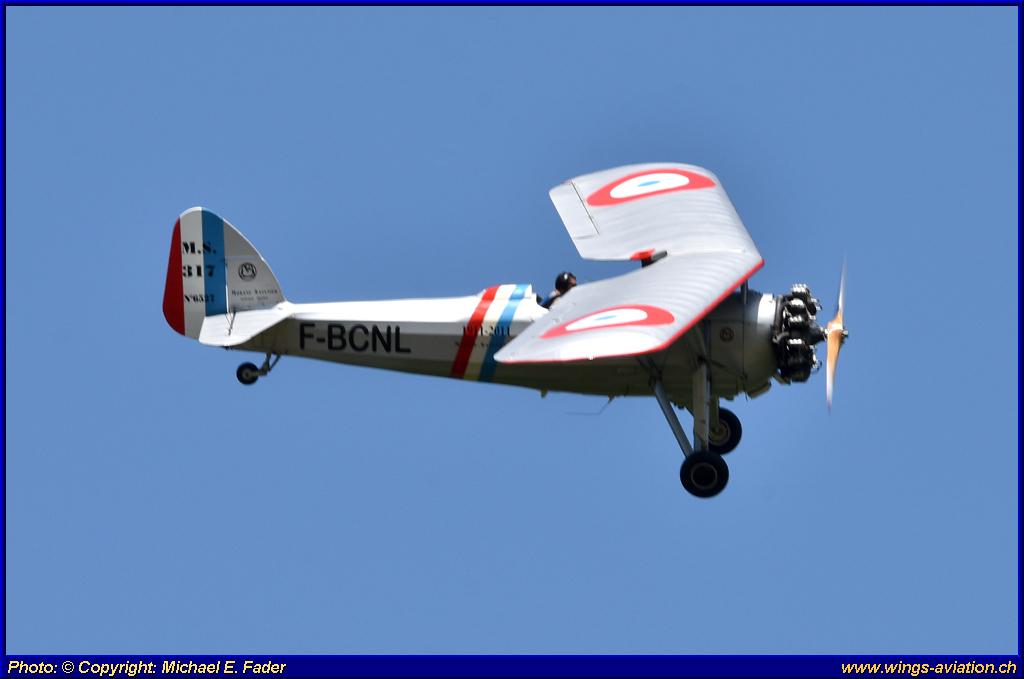
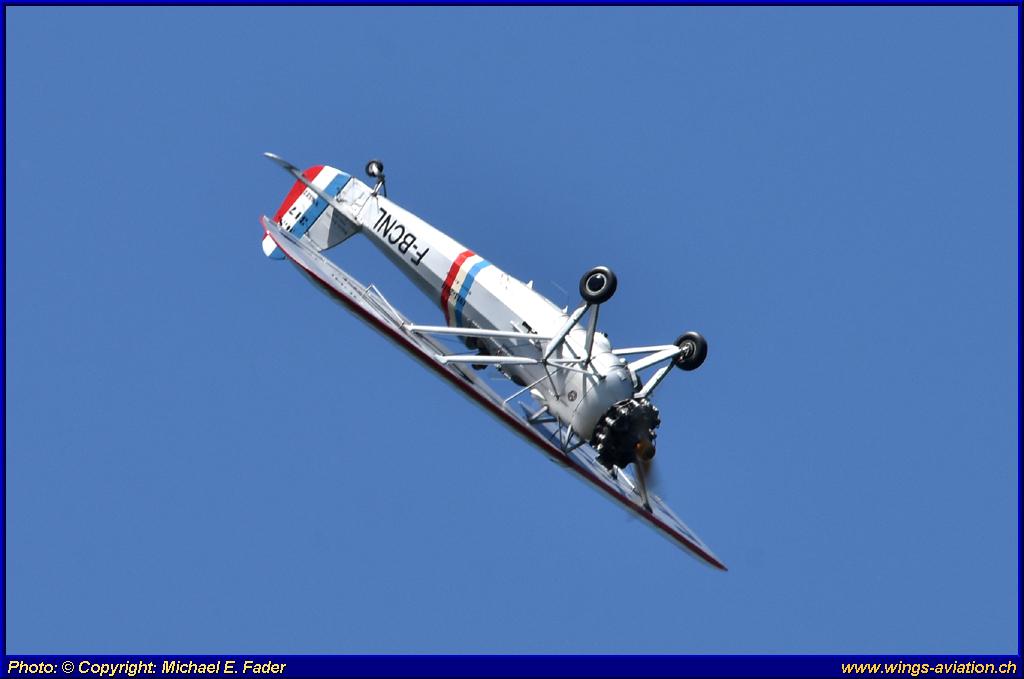


Morane-Saulnier MS-317 (F-BCNL) (Picture courtesy Michael E. Fader)
Morane-Saulnier MS-317 (F-BCNL) (Picture courtesy Michael E. Fader)
Morane-Saulnier MS-317 (F-BCNL) (Picture courtesy Michael E. Fader)
Salmson D7 Cricri (F-AZAB) (Picture courtesy Urs Schnyder )
Salmson D7 Cricri (F-AZAB) (Picture courtesy Urs Schnyder )
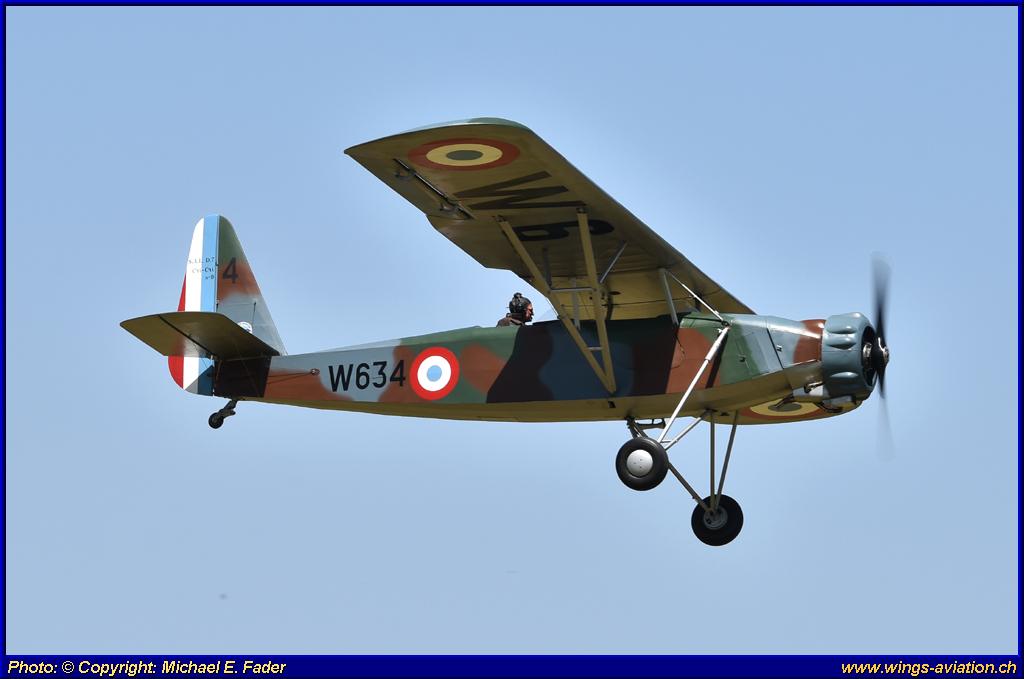


Salmson D7 Cricri (F-AZAB) (Picture courtesy Michael E. Fader)
Salmson D7 Cricri (F-AZAB) (Picture courtesy Michael E. Fader)
Nord 1101, 3202 & 3400 (Picture courtesy Urs Schnyder)
Nord 1101, 3202 & 3400 (Picture courtesy Michael E. Fader)
Nord 1101, 3202 & 3400 (Picture courtesy Michael E. Fader)


Nord 1101 Noralpha (F-GMCY) (Picture courtesy Urs Schnyder)
Nord 3202 (F-AZIY) (Picture courtesy Urs Schnyder)
Nord 3400 Norbarbe (F-AZFM) (Picture courtesy Urs Schnyder)
Nord 3400 Norbarbe (F-AZFM) (Picture courtesy Michael E. Fader)
Nord 1101 Noralpha (F-GMCY) (Picture courtesy Michael E. Fader)
Turbulent Display Team
As early as 2023, the British Turbulent Display Team wowed the crowds with its four small Druine D.31 Turbulent aircraft featuring open cockpits. In 2026, the team once again provided top-class entertainment.
Pilots Dave Hall, Alex Reynier, Adam Parnell and Richard Meredith presented a display that was as unusual as it was spectacular: they flew through a gate set up on the ground, threw bags of flour at targets on the ground and burst balloons with their propellers.
The team had travelled with five aircraft for the performance, but only four were actually used.


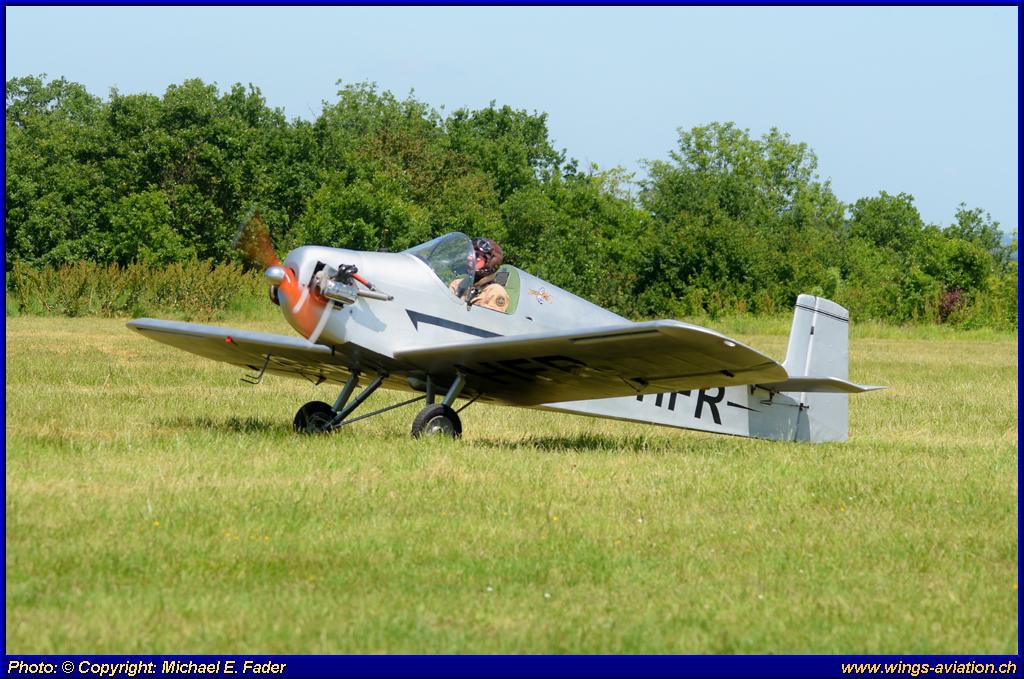


Druine D.31 Turbulent (G- (Picture courtesy Michael E. Fader)
(Picture courtesy Michael E. Fader)
(Picture courtesy Michael E. Fader)
(Picture courtesy Michael E. Fader)
(Picture courtesy Michael E. Fader)


(Picture courtesy Urs Schnyder )
(Picture courtesy Michael E. Fader)
(Picture courtesy Urs Schnyder )
The Gate (Picture courtesy Michael E. Fader)
(Picture courtesy Michael E. Fader)


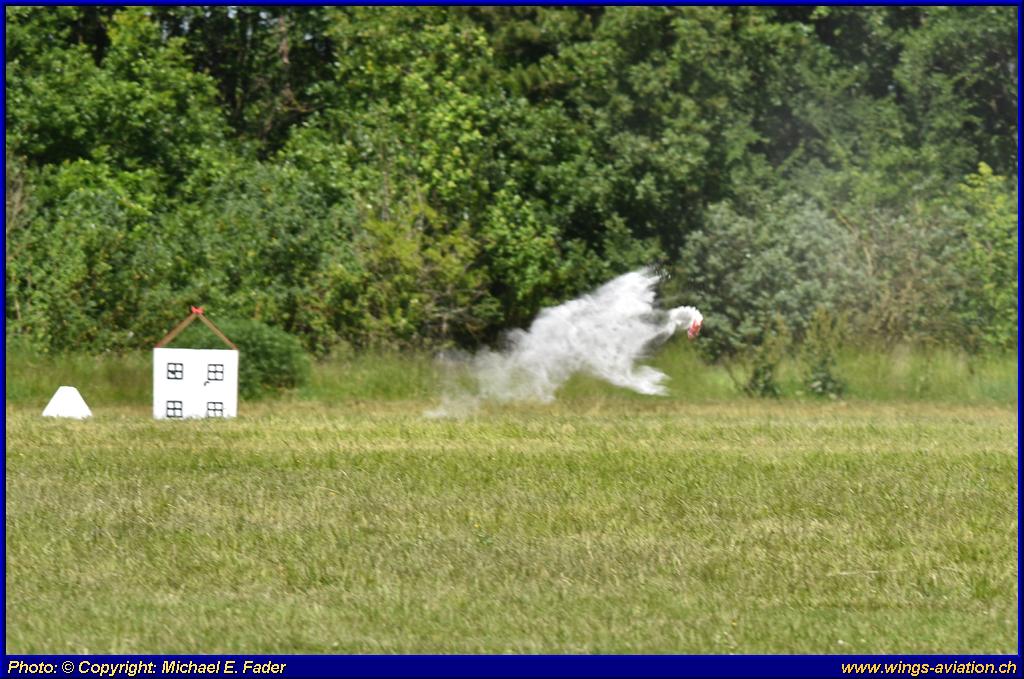

(Picture courtesy Michael E. Fader)
(Picture courtesy Urs Schnyder )
(Picture courtesy Michael E. Fader)
Near miss (Picture courtesy Michael E. Fader)
(Picture courtesy Urs Schnyder )


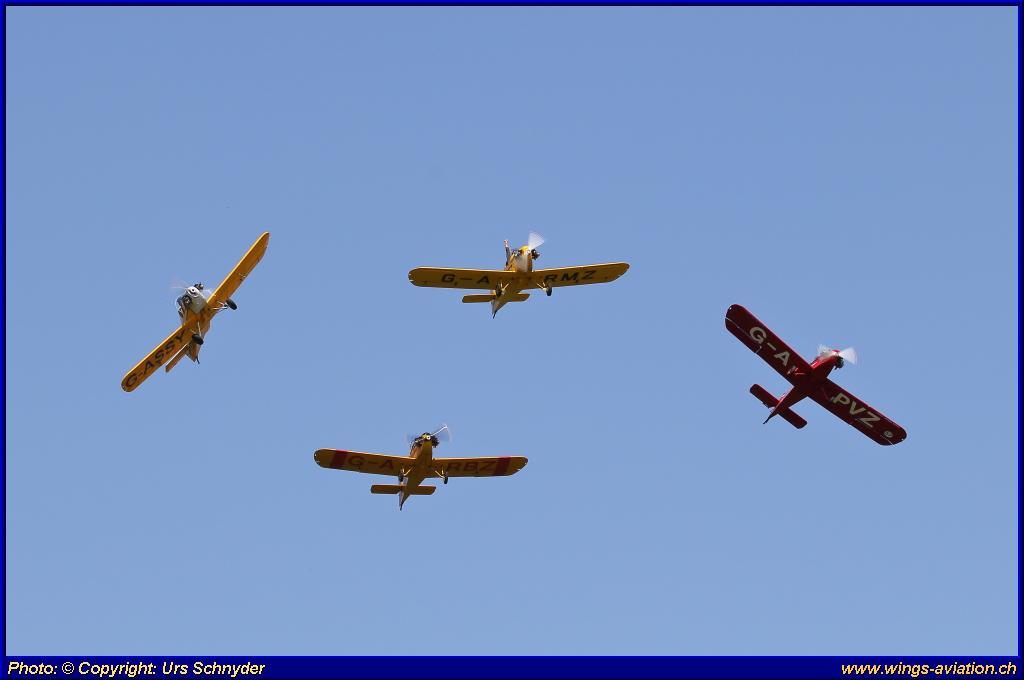


(Picture courtesy Michael E. Fader)
(Picture courtesy Michael E. Fader)
(Picture courtesy Urs Schnyder)
(Picture courtesy Urs Schnyder)
(Picture courtesy Michael E. Fader)
Patrouille Aéroclub de france
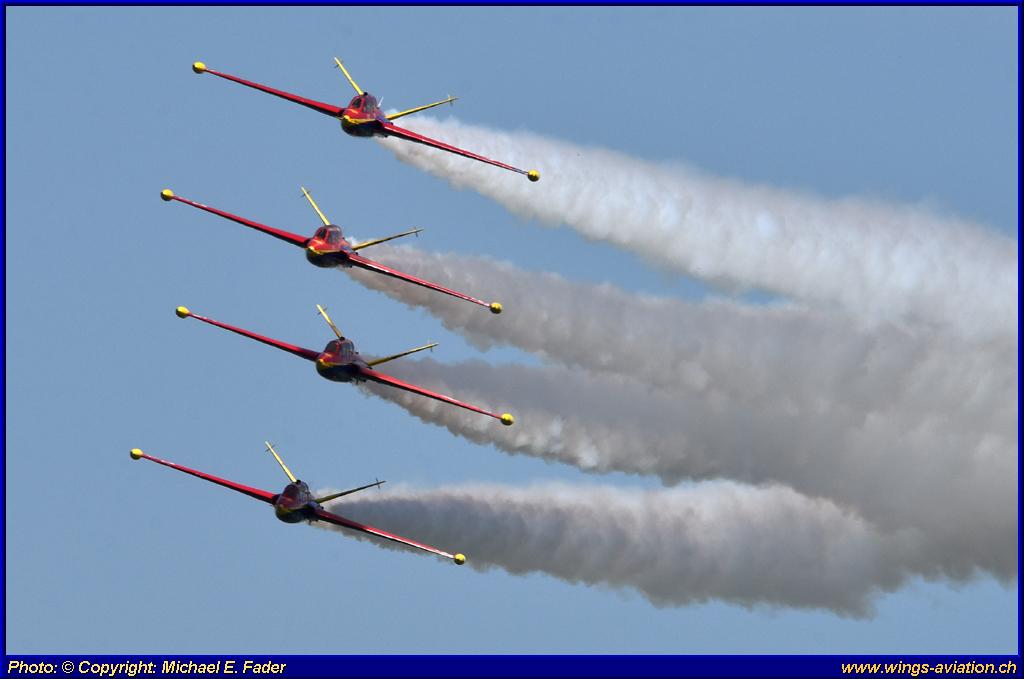
The Aéro-Club de France put on a display that was as unusual as it was captivating. Four aerobatic aircraft flew alongside four Fouga CM-170 Magister jets from the Patrouille Tranchant, led by Jack Krine, who, at the age of 82, still puts on an impressive show at the controls.
The aerobatic pilots demonstrated their skills in short solo displays on their high-performance aircraft. Particular mention must be made of Catherine Maunoury in her Extra 300 LP (F-HCSA). She won the World Aerobatic Championships in 1988 and 2000 and is one of France’s most prominent female aerobatic pilots.
The display featured the Fouga CM-170 Magister (F-GKYF, F-GSYD, F-AZZD and F-HDND), the Pitts S-2B (F-HBOB), the Extra 300 (F-HCSA), the Extra NG (F-HNIX) and the CAP 222 (F-HHEV).


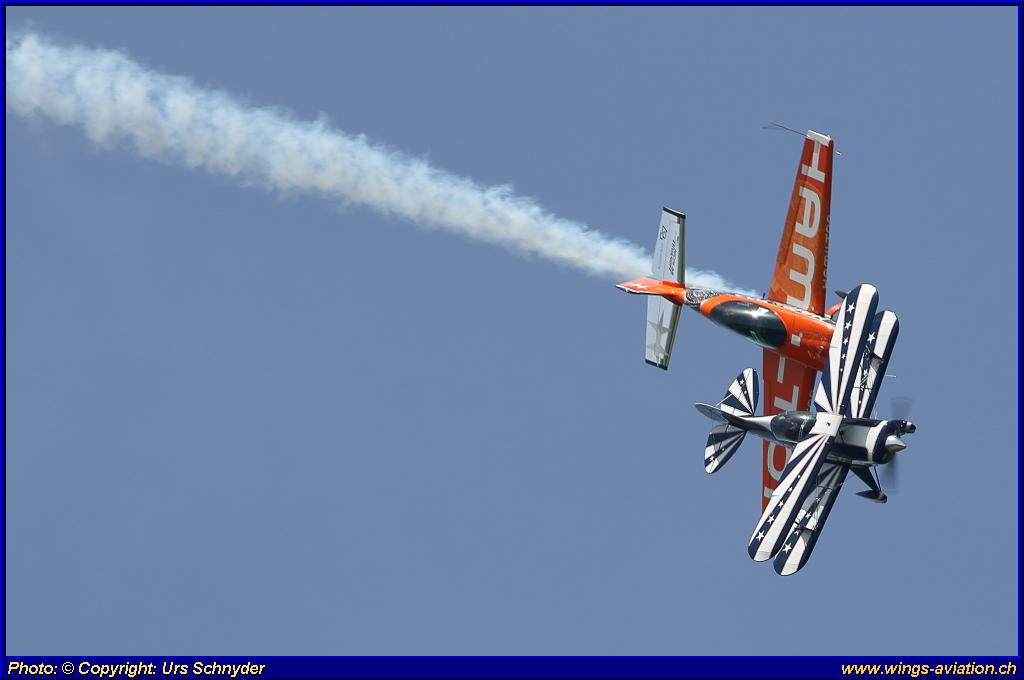
(Picture courtesy Michael E. Fader)
(Picture courtesy Urs Schnyder )
Pitts S-2B (F-HBOB (Picture courtesy Urs Schnyder)
Extra NG (F-HNIX) (Picture courtesy Michael E. Fader)
Extra NG & Pitts S-2B (Picture courtesy Urs Schnyder)


Extra NG (F-HNIX) (Picture courtesy Michael E. Fader)
Extra NG & Pitts S-2B (Picture courtesy Urs Schnyder)
CAP 222 (F-HHEV). (Picture courtesy Michael E. Fader)
Extra NG (F-HNIX) (Picture courtesy Urs Schnyder)
EXTRA 300 (F-HCSA) (Picture courtesy Michael E. Fader)


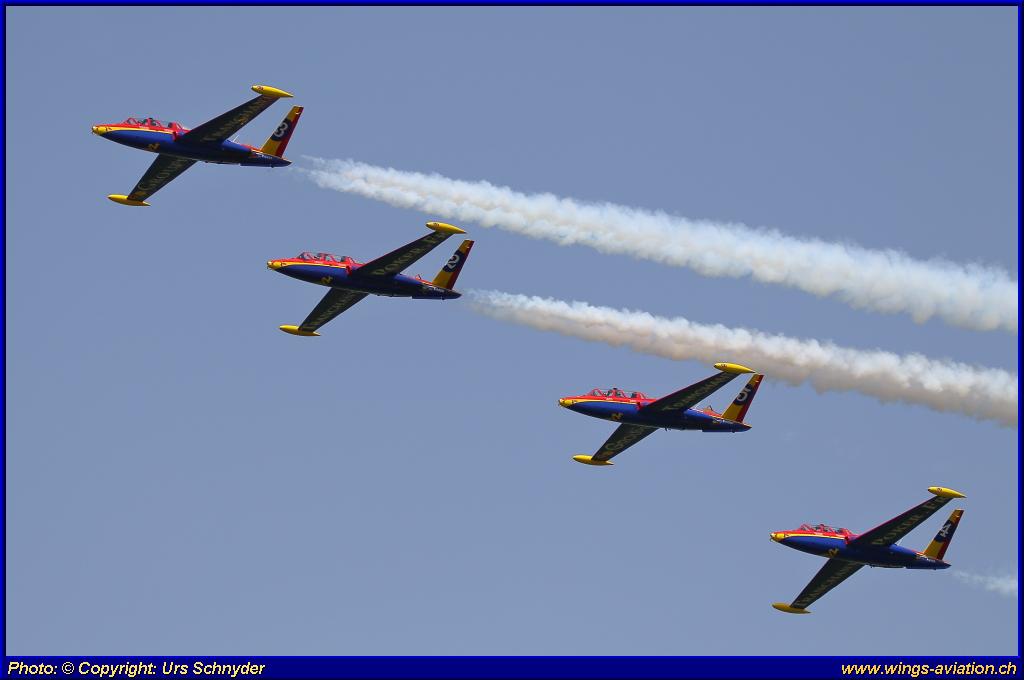

EXTRA 300 (F-HCSA) (Picture courtesy Michael E. Fader)
Catherine Maunoury in her EXTRA 300 (F-HCSA) (Picture courtesy Michael E. Fader)
(Picture courtesy Michael E. Fader)
Patrouille Tranchant (Picture courtesy Urs Schnyder)
Patrouille Tranchant (Picture courtesy Urs Schnyder)

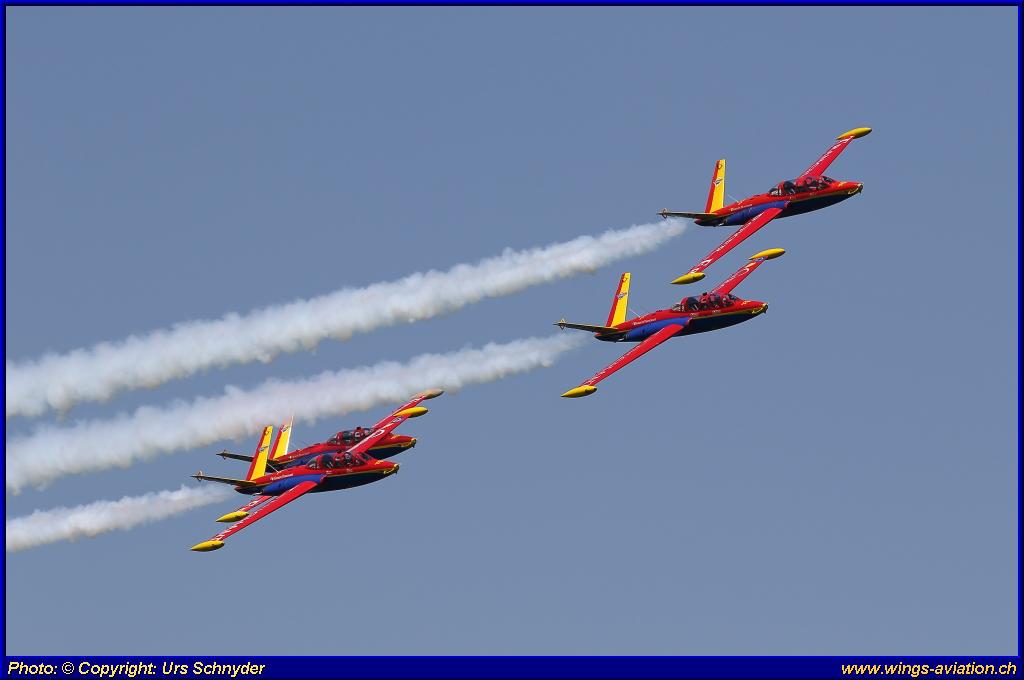


Patrouille Tranchant (Picture courtesy Michael E. Fader)
Patrouille Tranchant (Picture courtesy Michael E. Fader)
Patrouille Tranchant (Picture courtesy Urs Schnyder)
Patrouille Tranchant (Picture courtesy Urs Schnyder)
Jack Krine (Picture courtesy Michael E. Fader)
Planeur Pilatus
Gliders are rarely seen at the La Ferté-Alais air show. It was therefore all the more surprising that a comparatively rare model was presented at the 2026 event: a Swiss-built Pilatus B-4, also known as the PC-11. By the end of the 1970s, only 232 of these gliders had been built.
The aircraft was flown by Denis Hartmann, who won two medals in the Advanced category at the 2008 European Glider Aerobatics Championships in Rothenburg (Germany).


Socata Rallye 235 E #43-DF (F-HFDF) (Picture courtesy Michael E. Fader)
Socata Rallye towing the Pilatur B4-PC-11AF (Picture courtesy Urs Schnyder)
Pilatus B4-PC11AF (F-CMAX) (Picture courtesy Urs Schnyder)
Pilatus B4-PC11AF (F-CMAX) (Picture courtesy Michael E. Fader)
Pilatus B4-PC11AF (F-CMAX) (Picture courtesy Urs Schnyder)
Patrouille de France
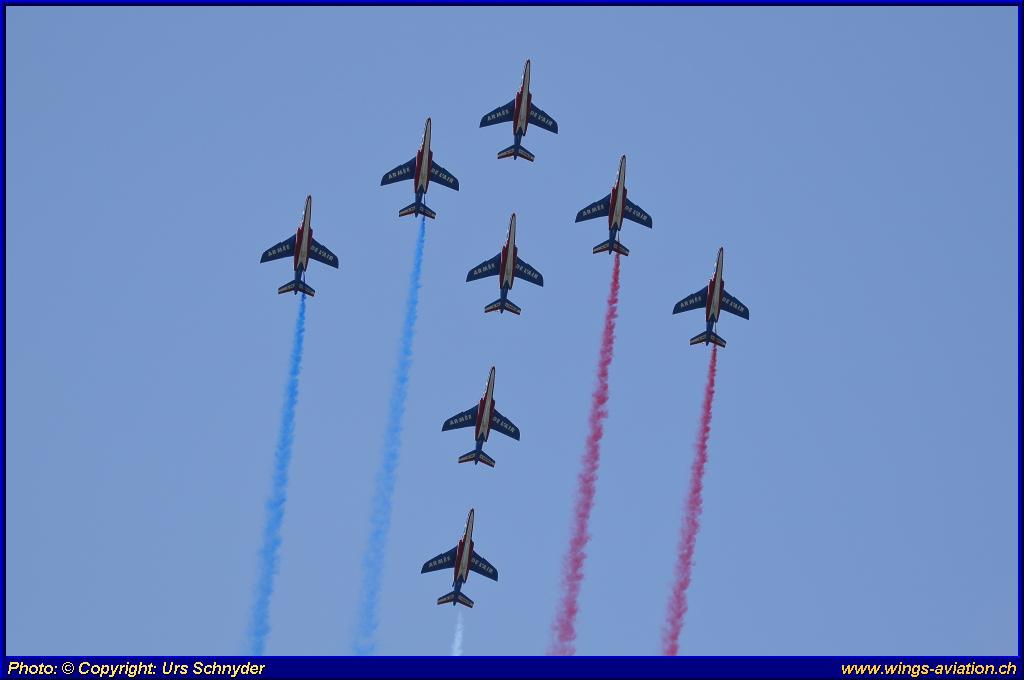
Since the beginning of May, the tail fins of the Alpha Jets have been adorned with a special livery to mark the 250th anniversary of American independence. The aerobatic team will set off for the United States on 3 June and return on 9 July, before taking part in the parade on 14 July 2026.
During their stay in the USA, three major air shows are on the programme: the Air Dot Show Ocean City (13–14 June 2026), the NAS Patuxent River Air Expo (20–21 June 2026) and Maryland Fleet Week & Flyover Baltimore (27–28 June 2026).
Before departing for the USA, the Patrouille de France once again demonstrated its skills in the skies above Cerny on both days.



(Picture courtesy Michael E. Fader)
(Picture courtesy Urs Schnyder )
(Picture courtesy Michael E. Fader)
(Picture courtesy Michael E. Fader)
(Picture courtesy Urs Schnyder )


(Picture courtesy Urs Schnyder )
(Picture courtesy Urs Schnyder )
(Picture courtesy Michael E. Fader)
(Picture courtesy Urs Schnyder )
(Picture courtesy Michael E. Fader)


(Picture courtesy Urs Schnyder )
(Picture courtesy Urs Schnyder )
(Picture courtesy Michael E. Fader)
(Picture courtesy Michael E. Fader)
(Picture courtesy Michael E. Fader)
Tora Tora Tora
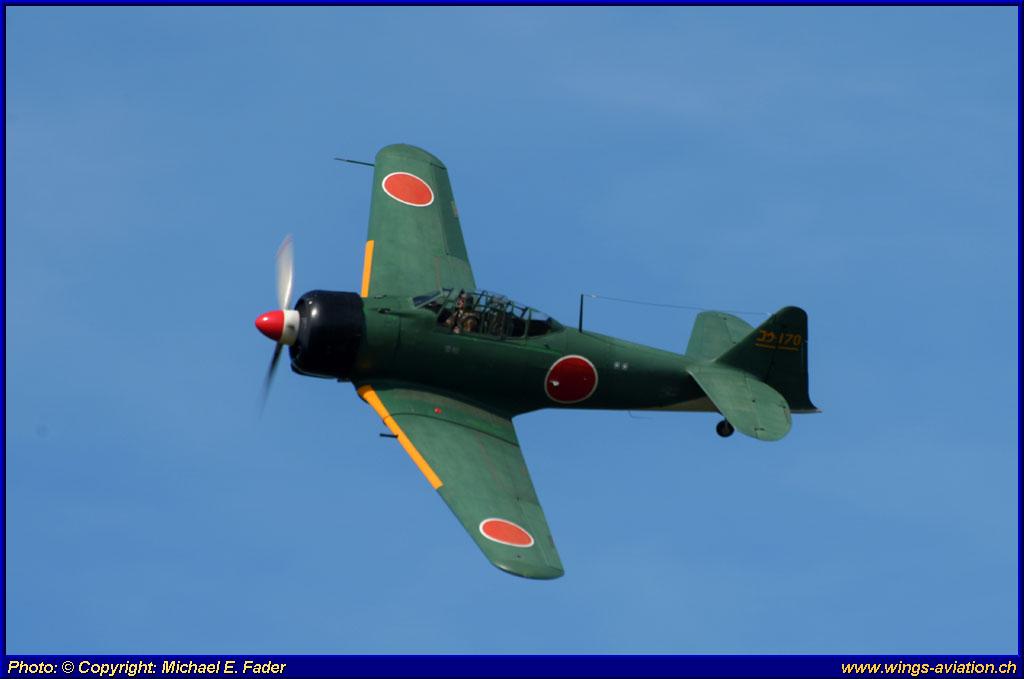
If there is one thing that is an integral part of the La Ferté-Alais air show, it is “Tora! Tora! Tora!” – the re-enactment of the Japanese attack on the US fleet at Pearl Harbor. The event is based on the 1970 film of the same name, with scenes from it being recreated in minute detail. Among other things, the display shows how Cornelia Fort was taken by surprise by the Japanese over Hawaii in a training aircraft.
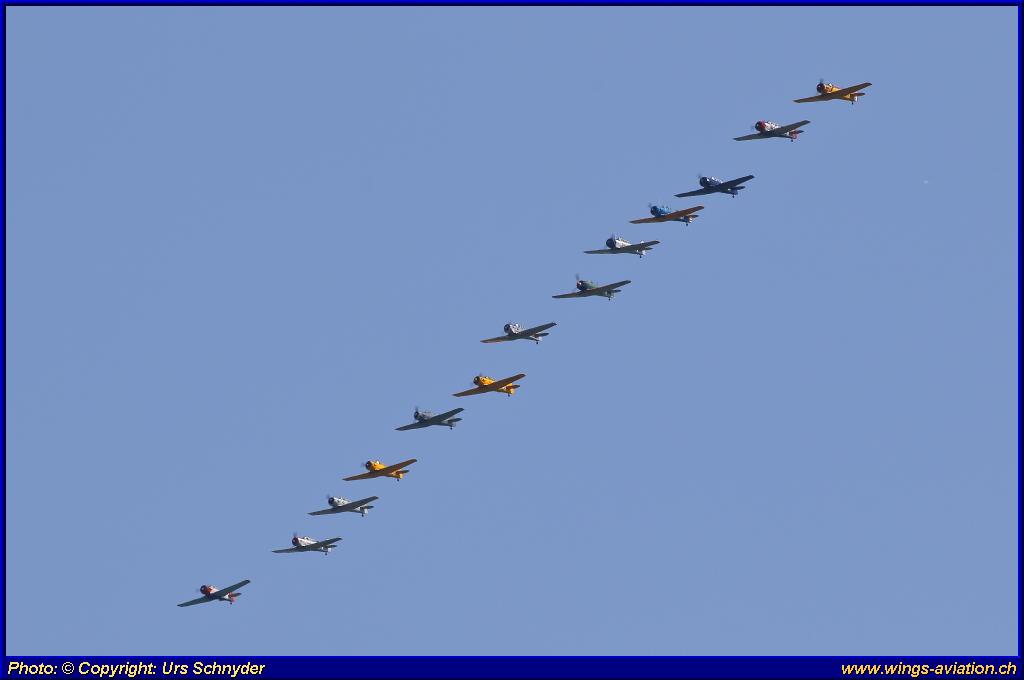
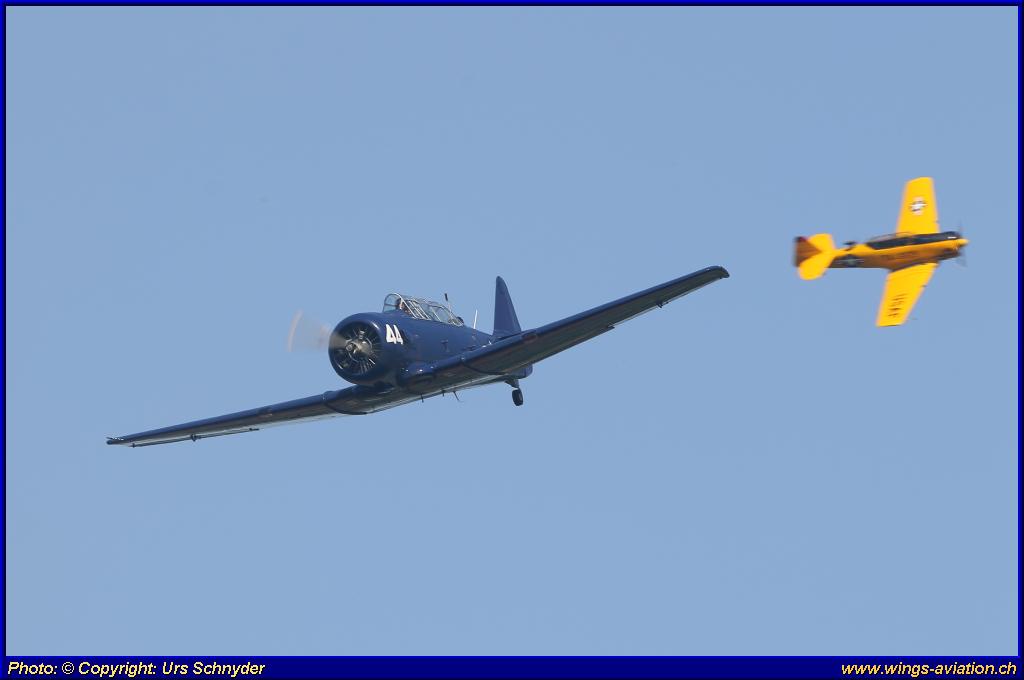
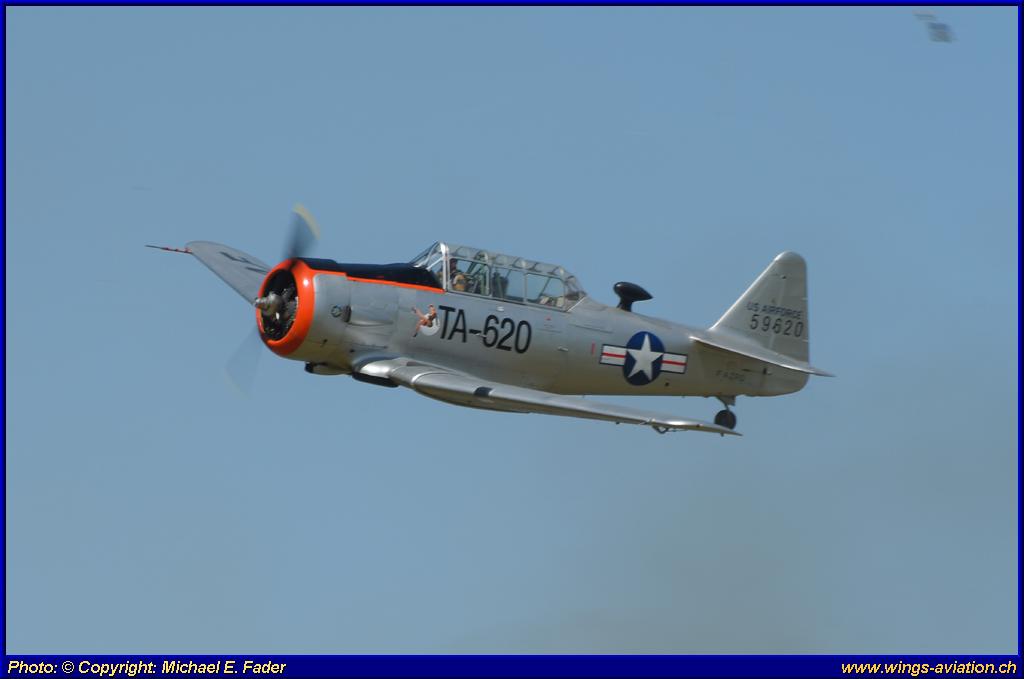
This year, the actual “attack” was simulated by 13 North American T-6 Texans, which flew an impressive opening formation. Particularly spectacular and extremely popular with the audience is the pyrotechnic display featuring explosions on the ground, as well as the simulated anti-aircraft fire, which adds a striking element to the spectacle.
In previous years, a Curtiss P-40 Warhawk was used to represent the USAAF. For the past few years, this role has been taken over by a North American T-6 Texan. As the F-AZZM is the only aircraft available to represent a Japanese Zero – a machine converted from a North American AT-16 Harvard – the flight performance of both types is very similar. As a result, the simulated dogfight now appears significantly more realistic and dynamic.


(Picture courtesy Urs Schnyder )
Boeing PT-13D Kaydet (F-AZJR) (Picture courtesy Urs Schnyder )
(Picture courtesy Urs Schnyder )
North American AT-16 Harvard F-AZZM (Picture courtesy Michael E. Fader)
(Picture courtesy Urs Schnyder )




(Picture courtesy Michael E. Fader)
(Picture courtesy Urs Schnyder )
(Picture courtesy Urs Schnyder )
(Picture courtesy Michael E. Fader)
North American T-6G (F-HLEA) (Picture courtesy Michael E. Fader)



(Picture courtesy Urs Schnyder )
North American T-6G Texan (F-AZCQ) (Picture courtesy Michael E. Fader)
North American AT-16 Harvard F-AZZM (Picture courtesy Michael E. Fader)
North American Harvard MK III (F-AZRD) (Picture courtesy Michael E. Fader)
North American AT-16 Harvard F-AZZM (Picture courtesy Michael E. Fader)


