
|
Text: |
Urs Schnyder |
|
Pictures: |
Urs Schnyder & Michael E. Fader |

(Picture courtesy Michael E. Fader)
(Picture courtesy Michael E. Fader)
Mercury Engines
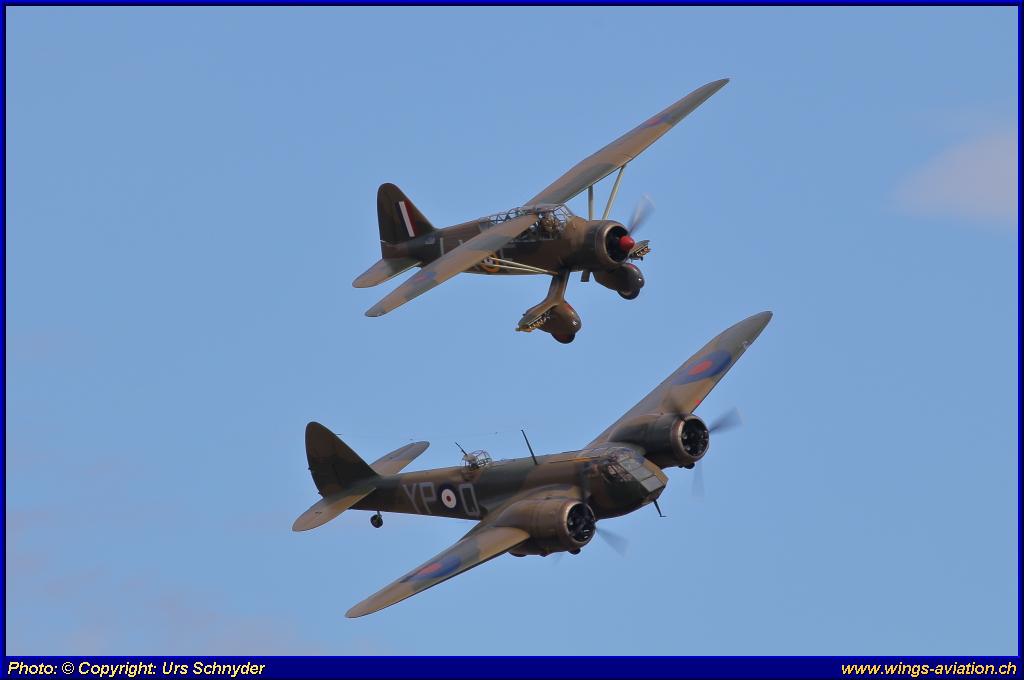
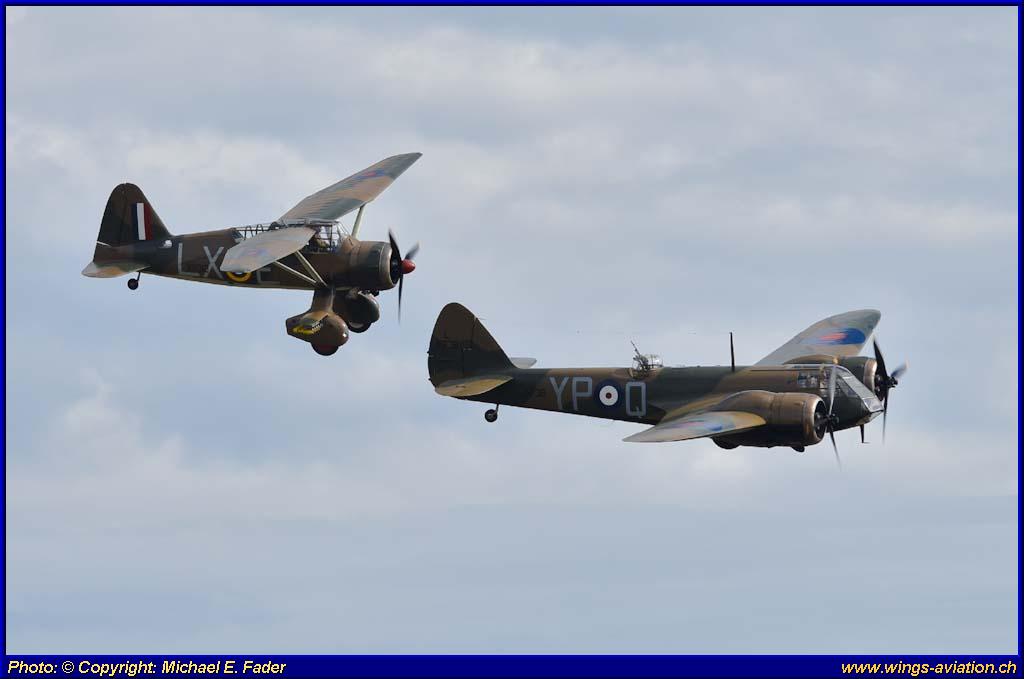
At the beginning of the war the Bristol Blenheim was the most numerous aircraft in the RAF inventory. Despite being top class when designed, by the time war started, it was outclassed by the new German fighter the Messerschmitt Bf.109 with its superior speed and 20 mm cannon armament. Predictably, losses were high but there were no alternatives. After the Canadians decided not to restore their Bolingbroke to flying status, this will remain the only airworthy Blenheim in the world.
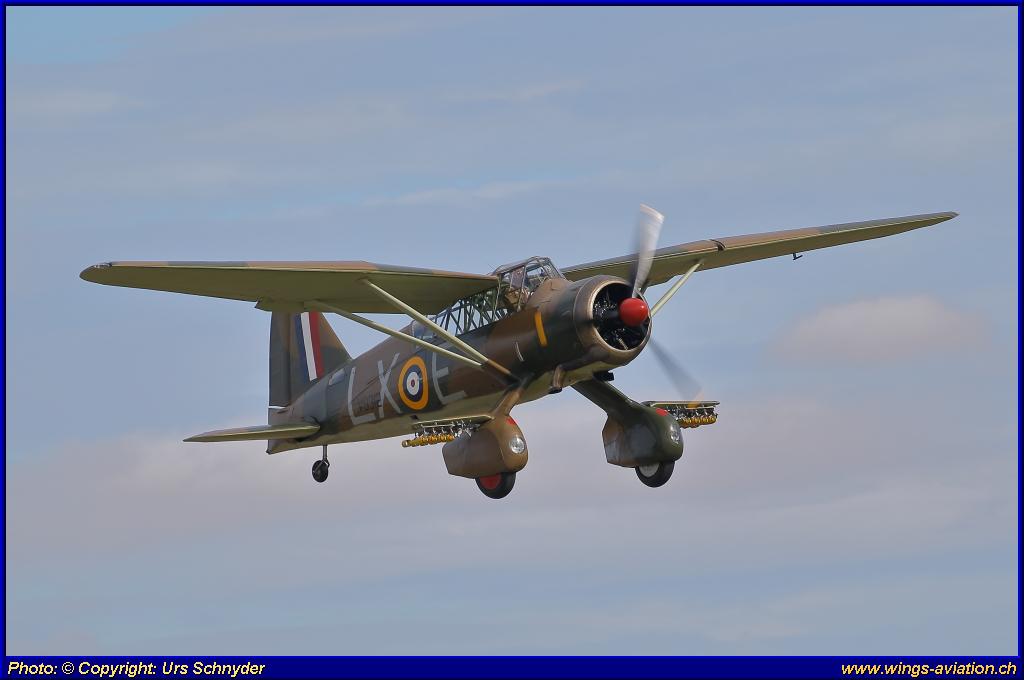
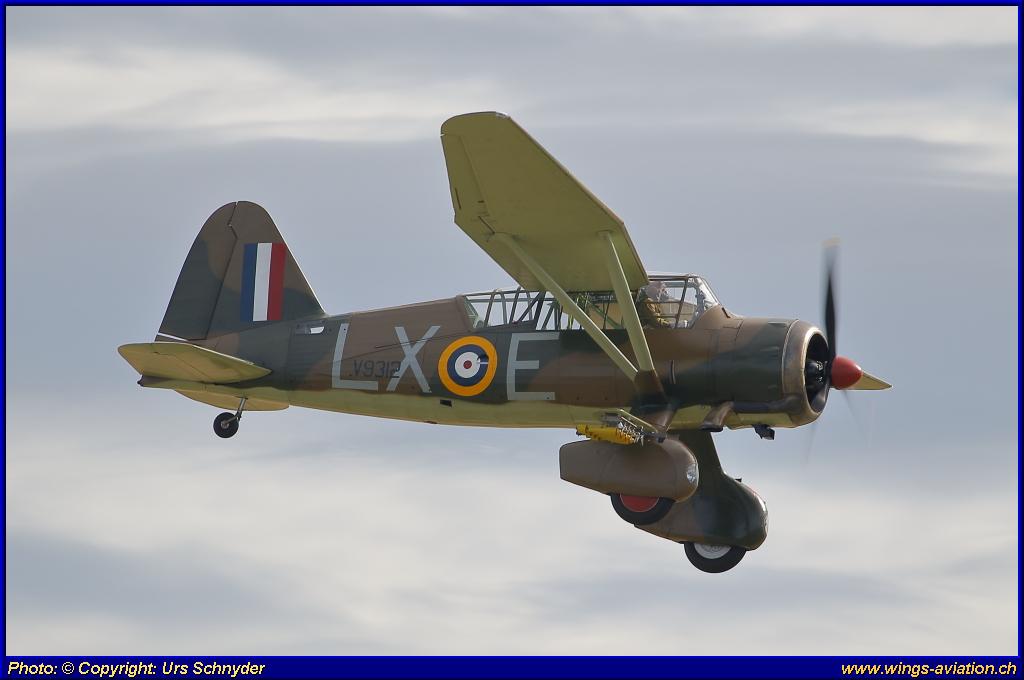
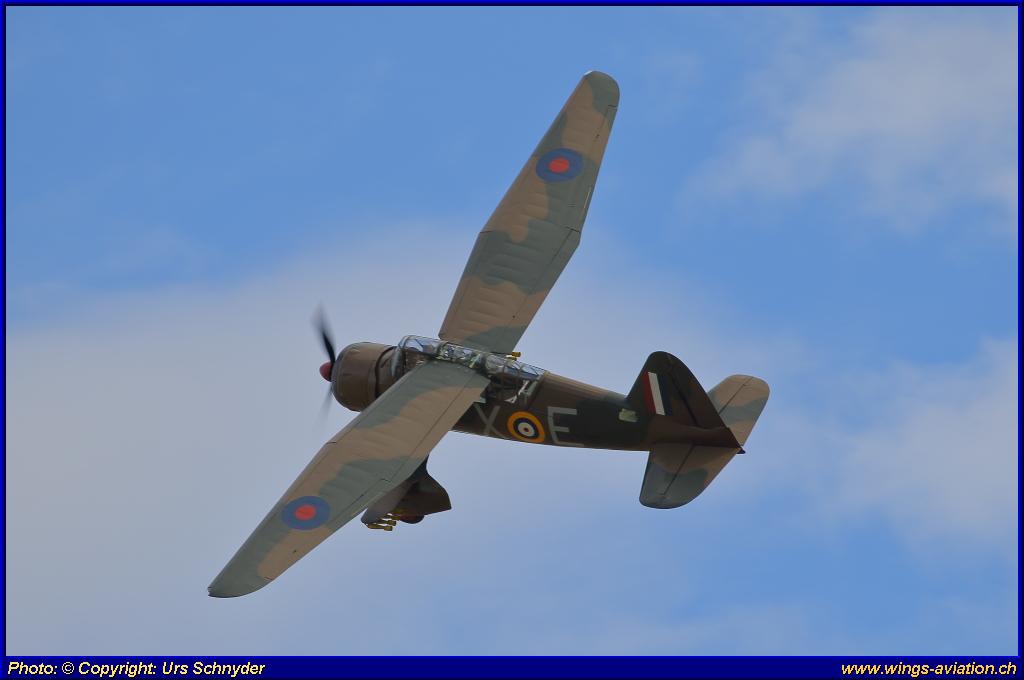
The Lysander in its original role as Army co-operation aircraft was found too vulnerable, so it was withdrawn from the frontline early in the war. It found a new role carrying agents into occupied Europe, a task for which it was well suited due to its short take off and slow flying ability.
(Picture courtesy Urs Schnyder)
(Picture courtesy Michael E. Fader)
(Picture courtesy Urs Schnyder)
(Picture courtesy Urs Schnyder)
(Picture courtesy Urs Schnyder)
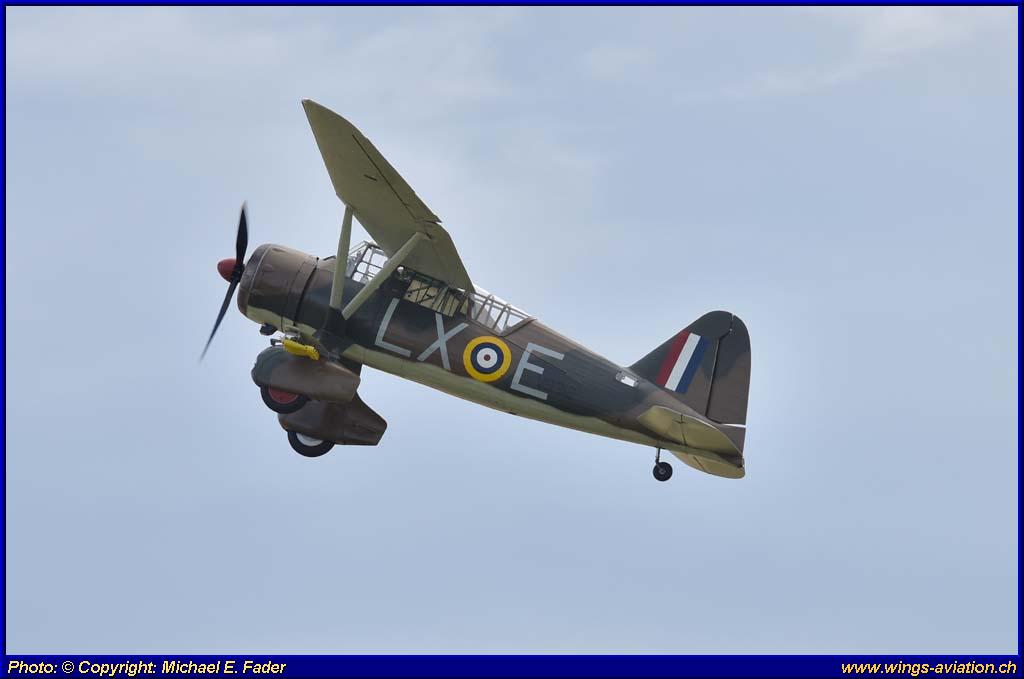
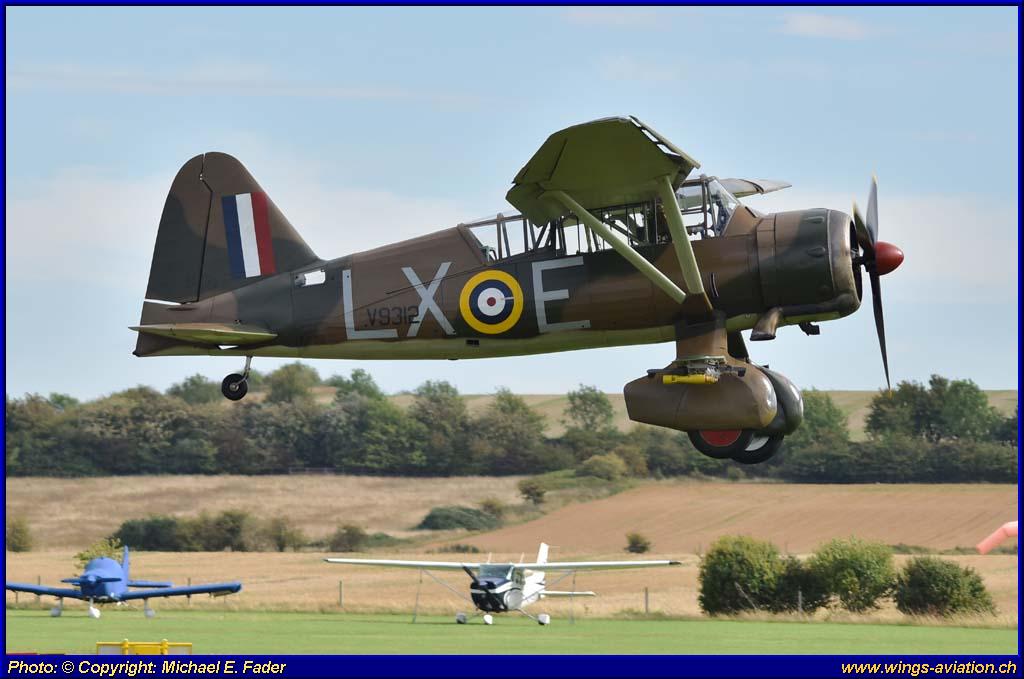
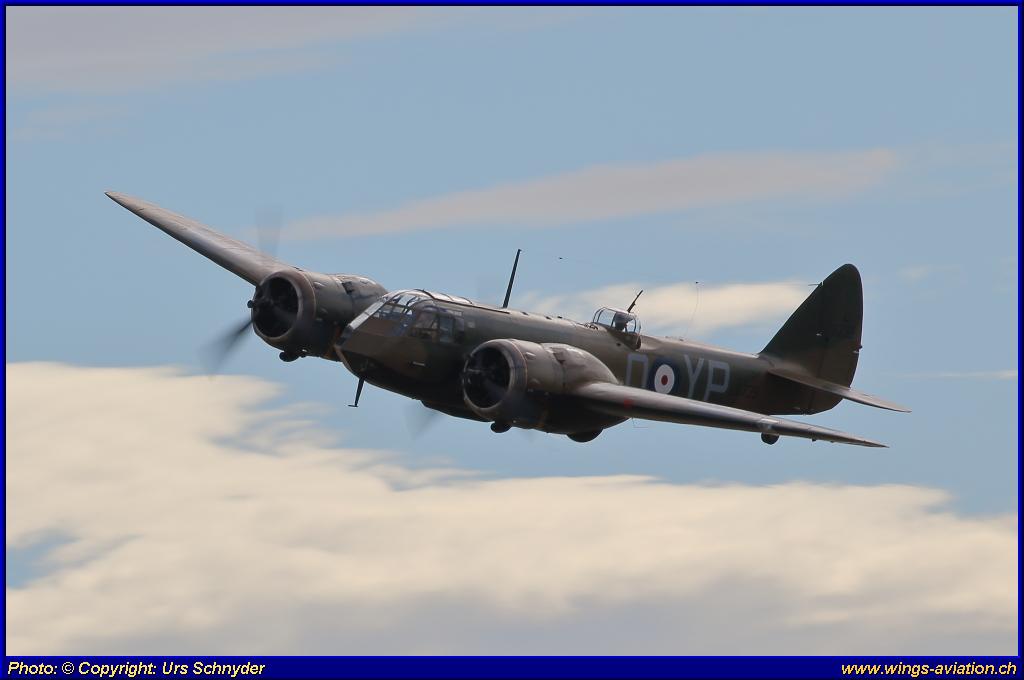
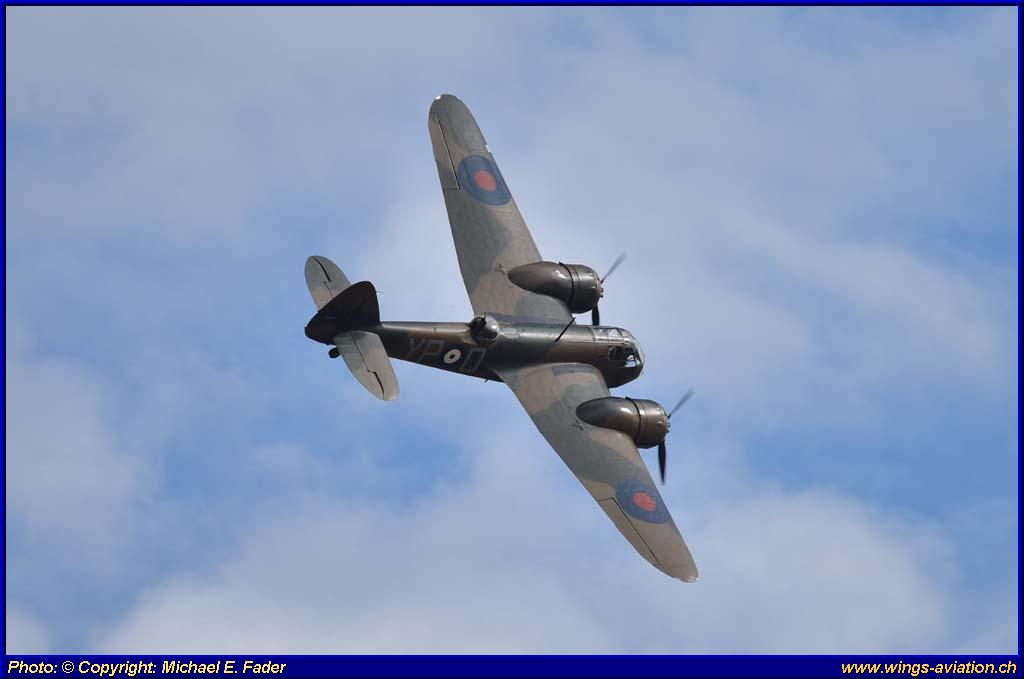
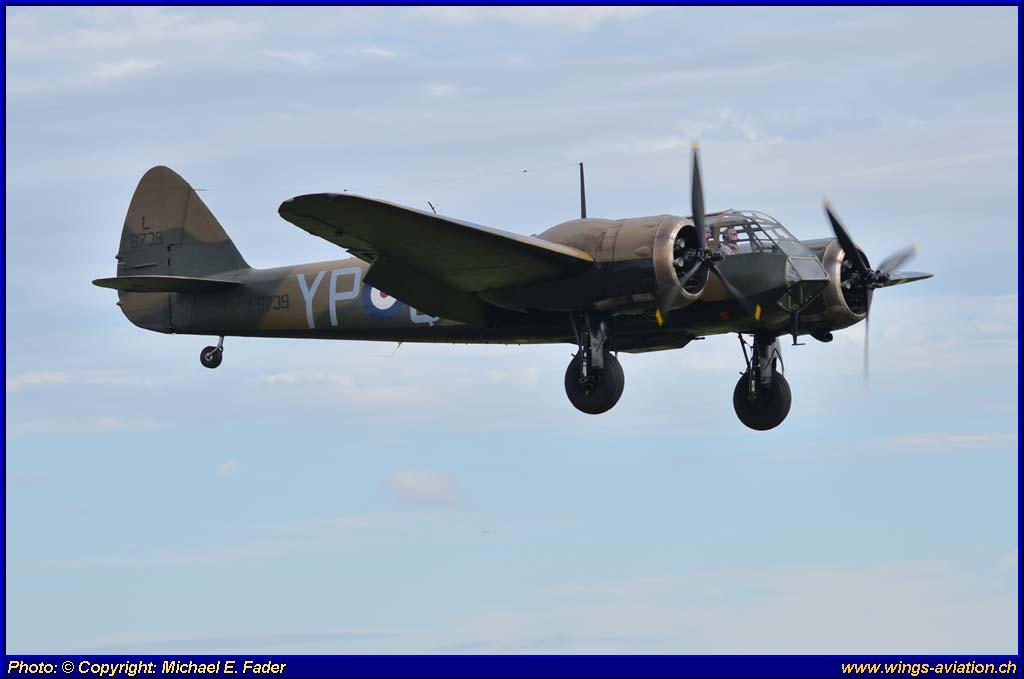
(Picture courtesy Michael E. Fader)
(Picture courtesy Michael E. Fader)
(Picture courtesy Urs Schnyder)
(Picture courtesy Michael E. Fader)
(Picture courtesy Michael E. Fader)
Battle of Britain
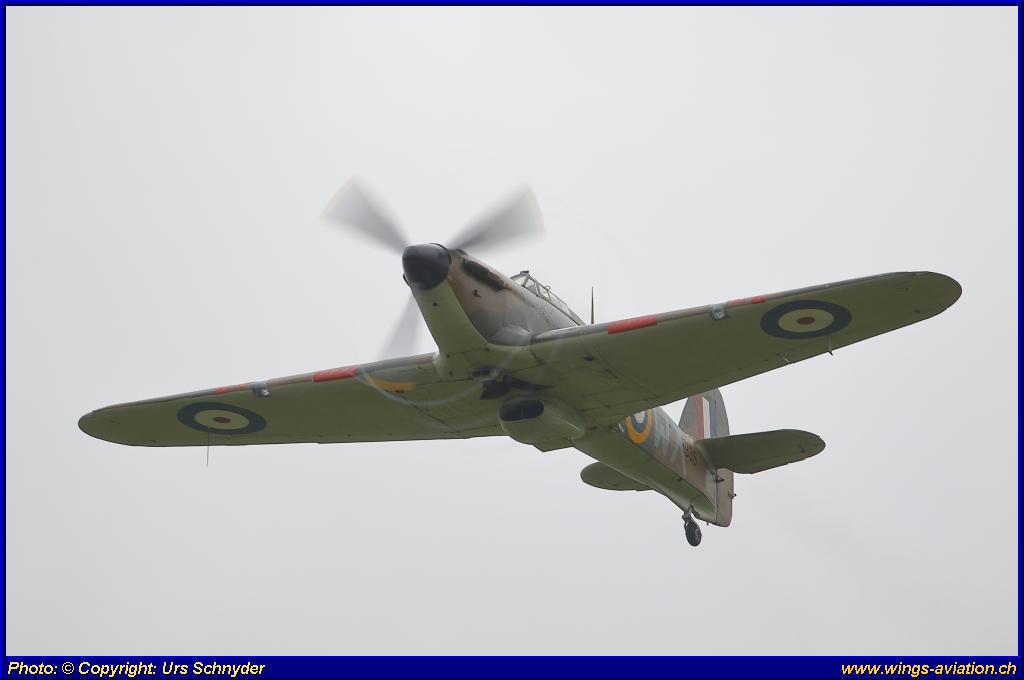
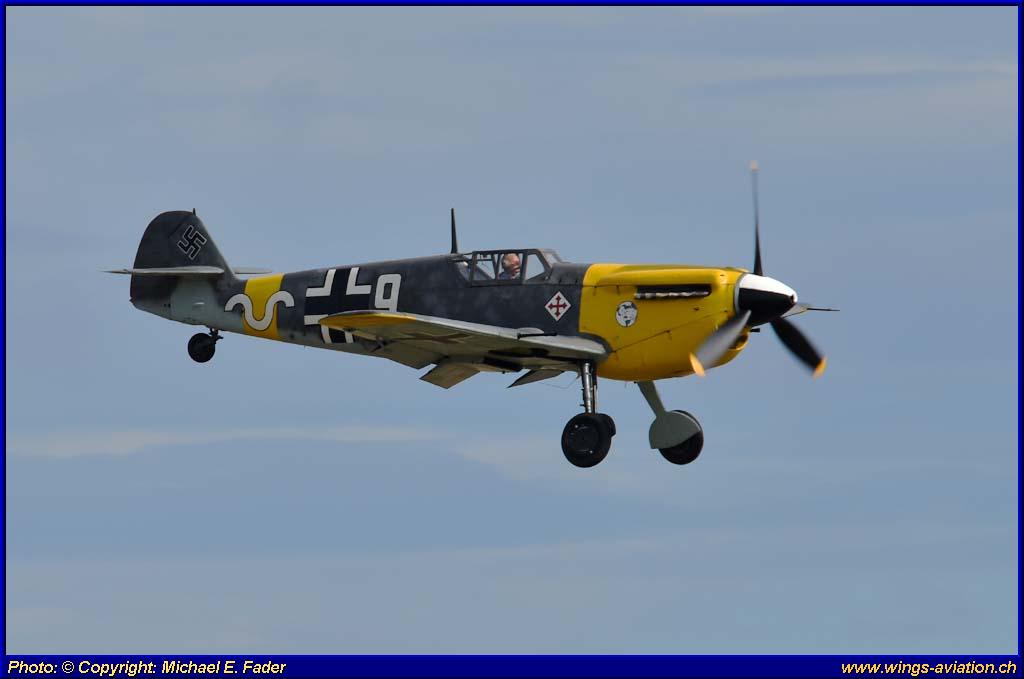
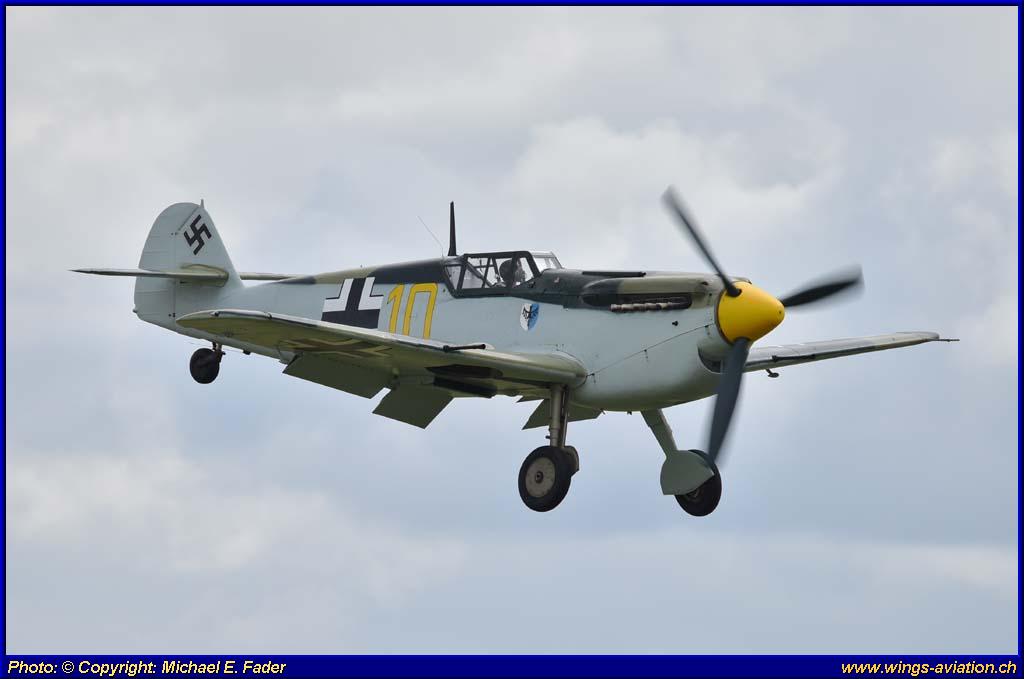
Two Hispano Buchons dressed as Messerschmitts against a lonely Hurricane. These odds were quite realistic as the defenders in the Battle of Britain were regularly outnumbered by their German opponents. It was quite fitting for a Hurricane to take the part of the British fighter as in reality they outnumbered Spitfires. A big influence on how the Battle of Britain is perceived was of course the Film “Battle of Britain”. Since at that time there existed more flyable Spitfires then Hurricanes this resulted in their dominating the public’s mind. Incidentally the film was also a great push for the Warbird movement.
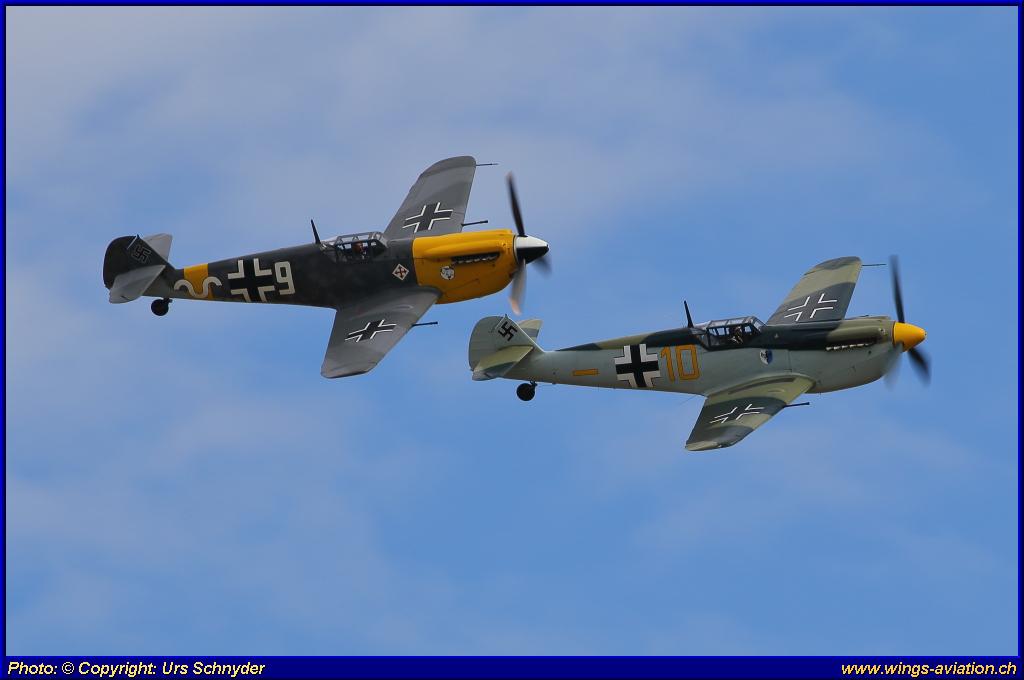
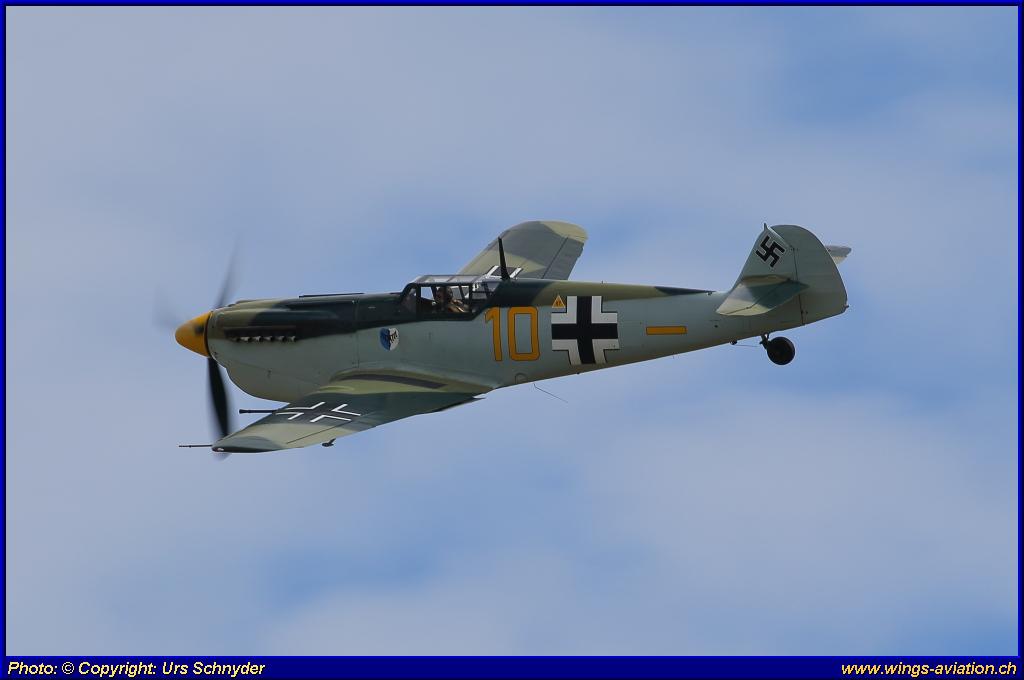
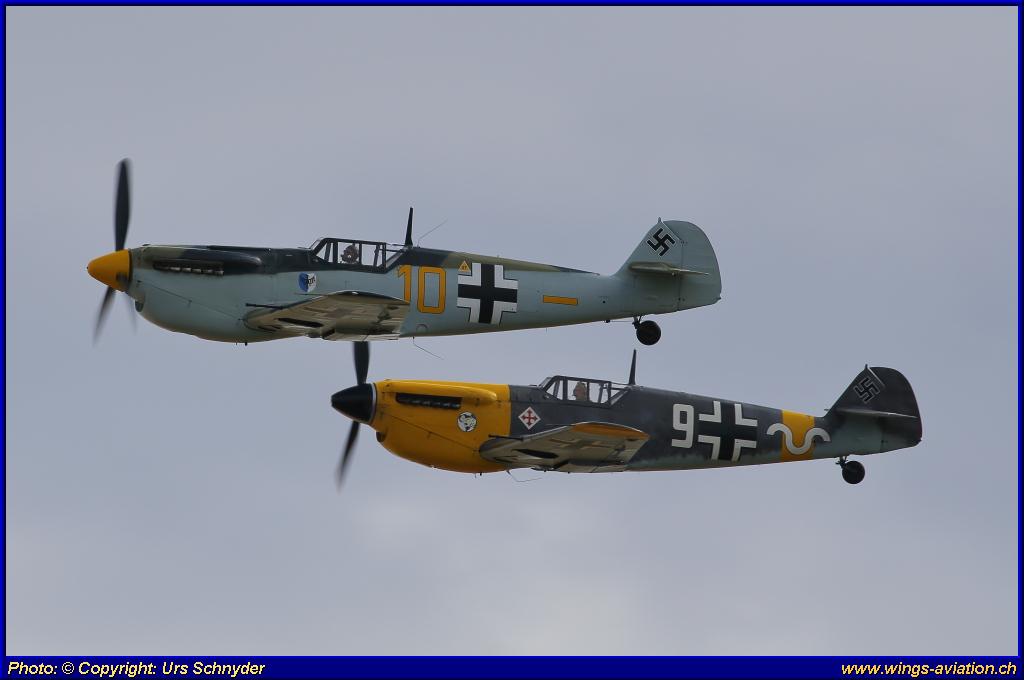
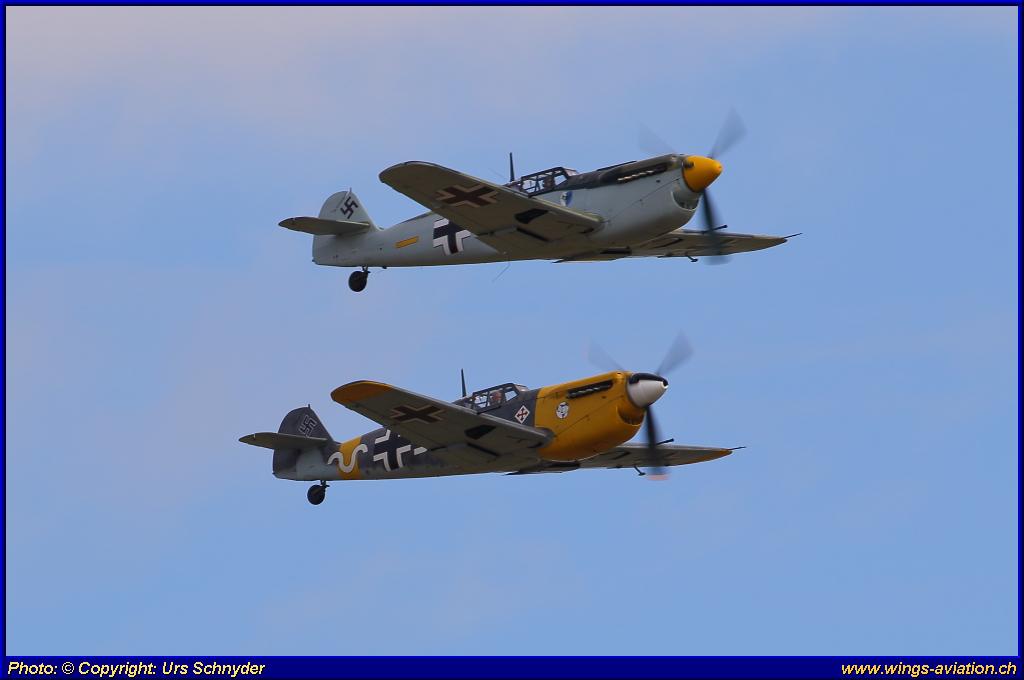
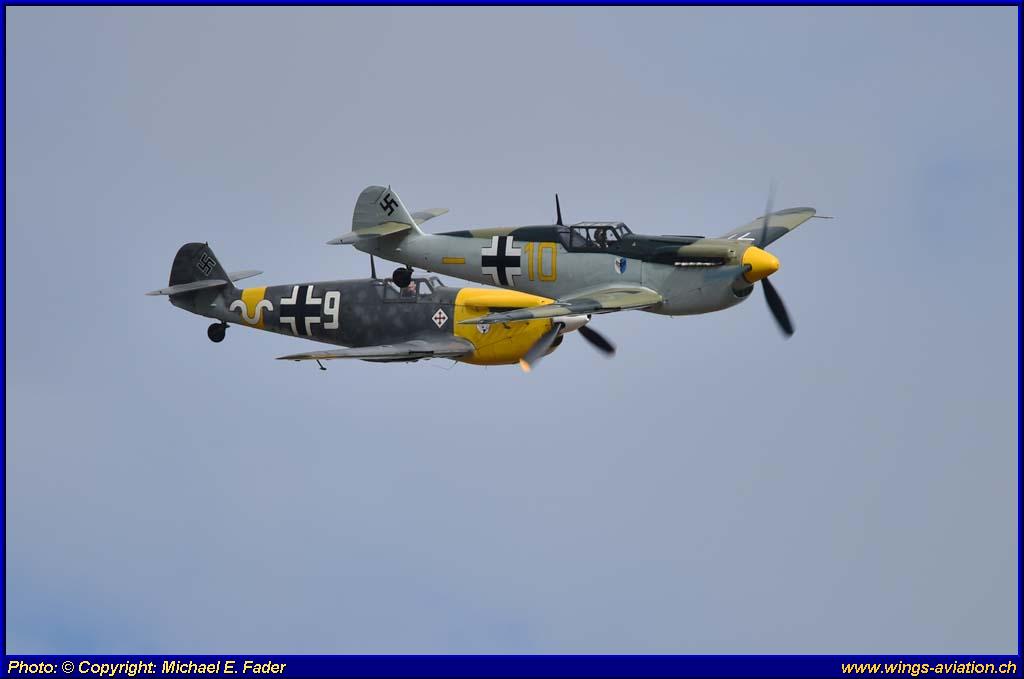
(Picture courtesy Urs Schnyder)
(Picture courtesy Urs Schnyder)
(Picture courtesy Urs Schnyder)
(Picture courtesy Urs Schnyder)
(Picture courtesy Michael E. Fader)
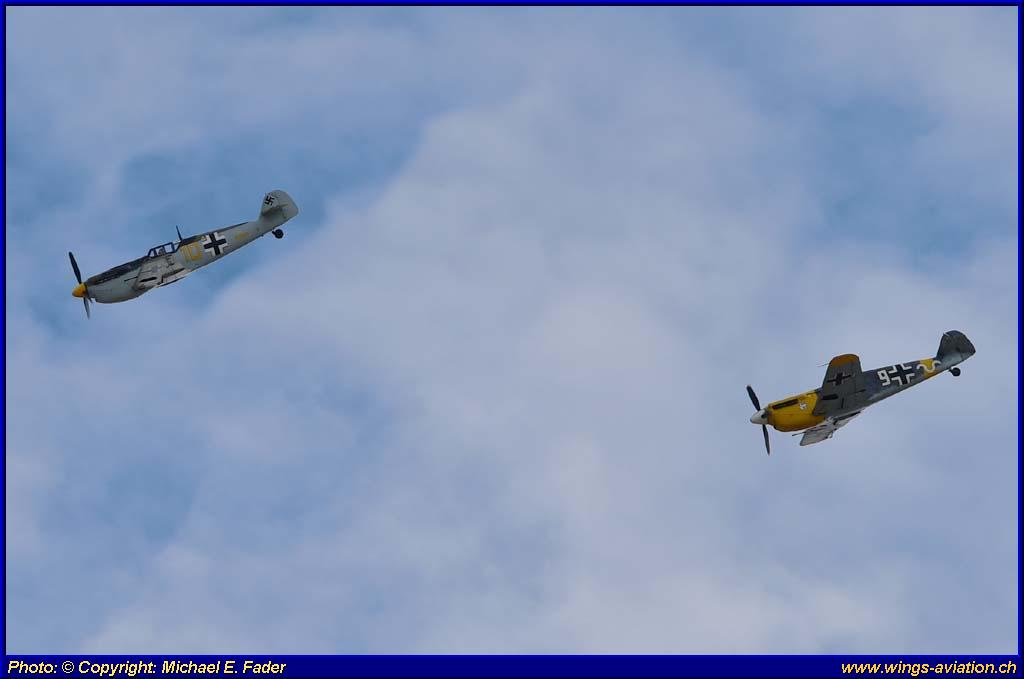
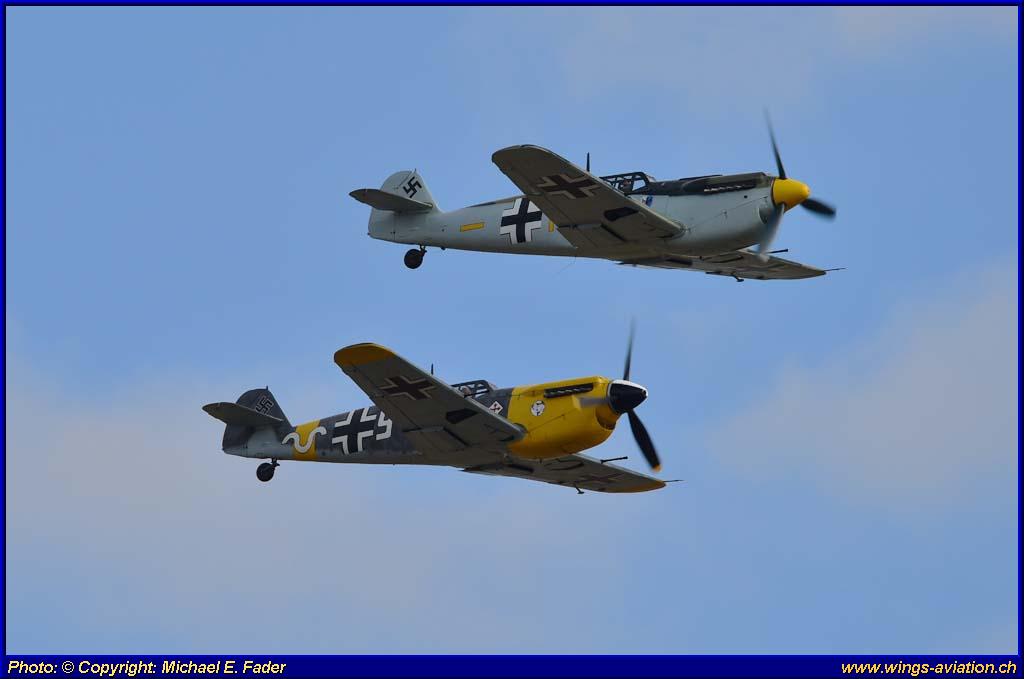
(Picture courtesy Michael E. Fader)
(Picture courtesy Michael E. Fader)
(Picture courtesy Urs Schnyder)
(Picture courtesy Michael E. Fader)
(Picture courtesy Michael E. Fader)
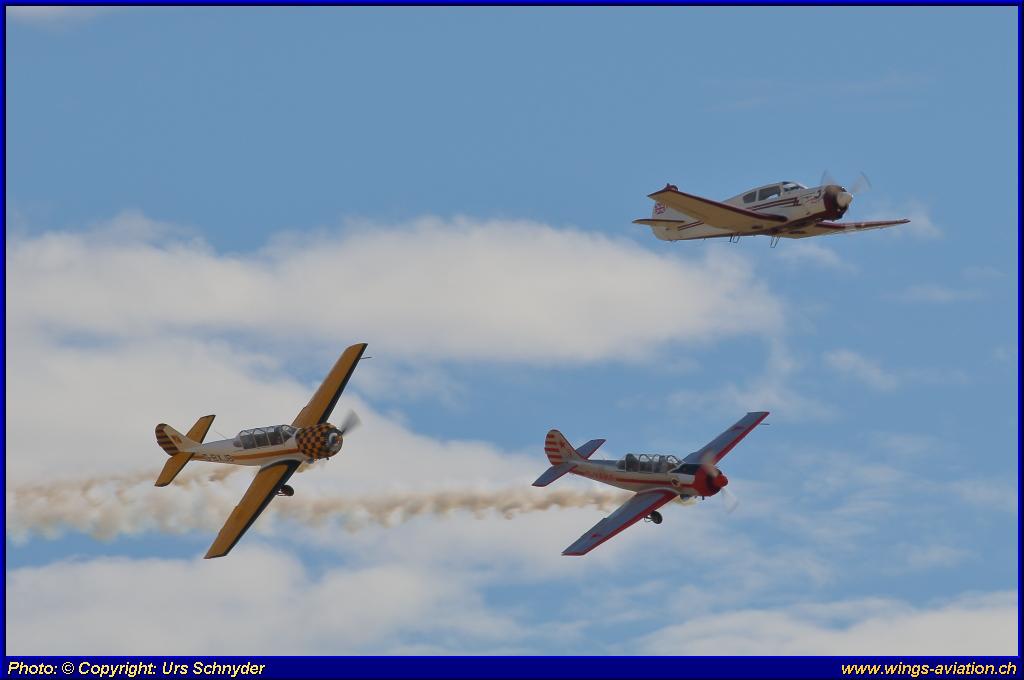
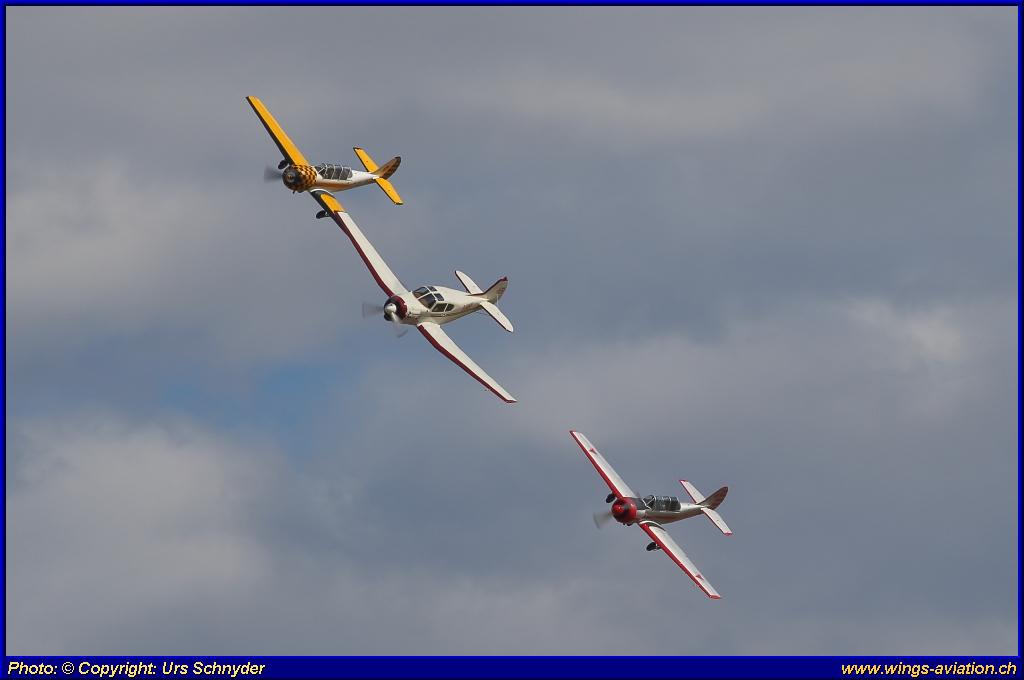
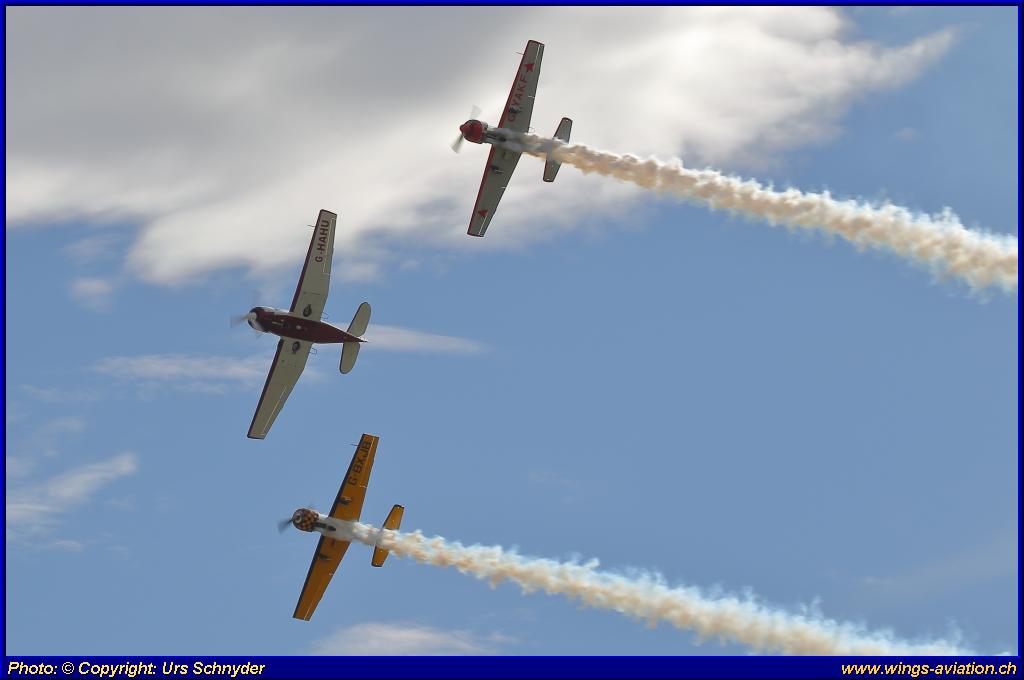
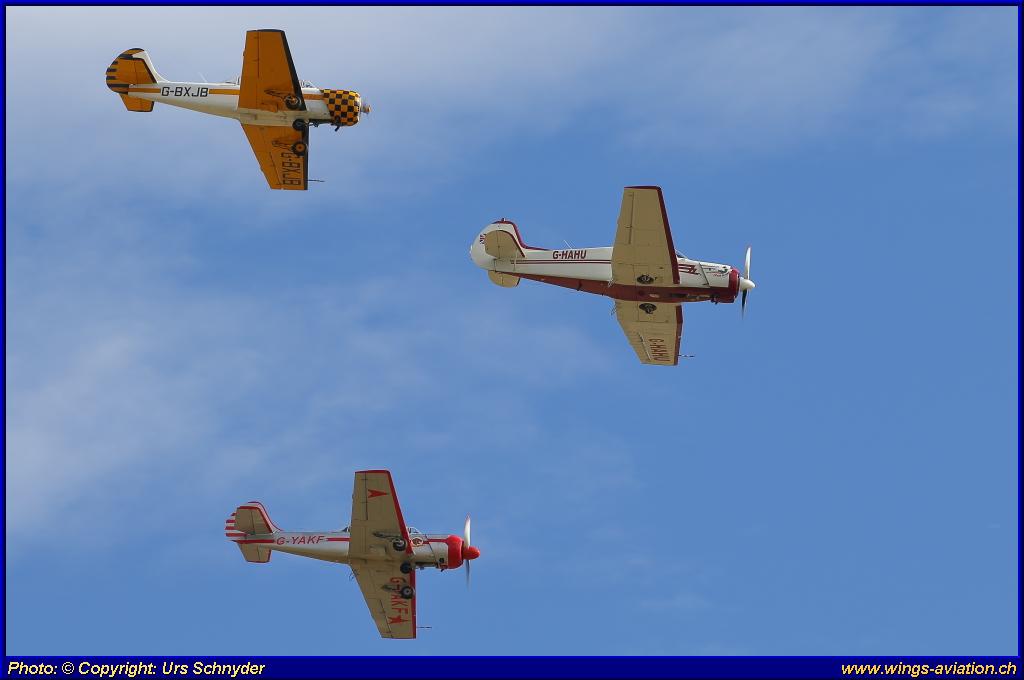
The flying Comrades
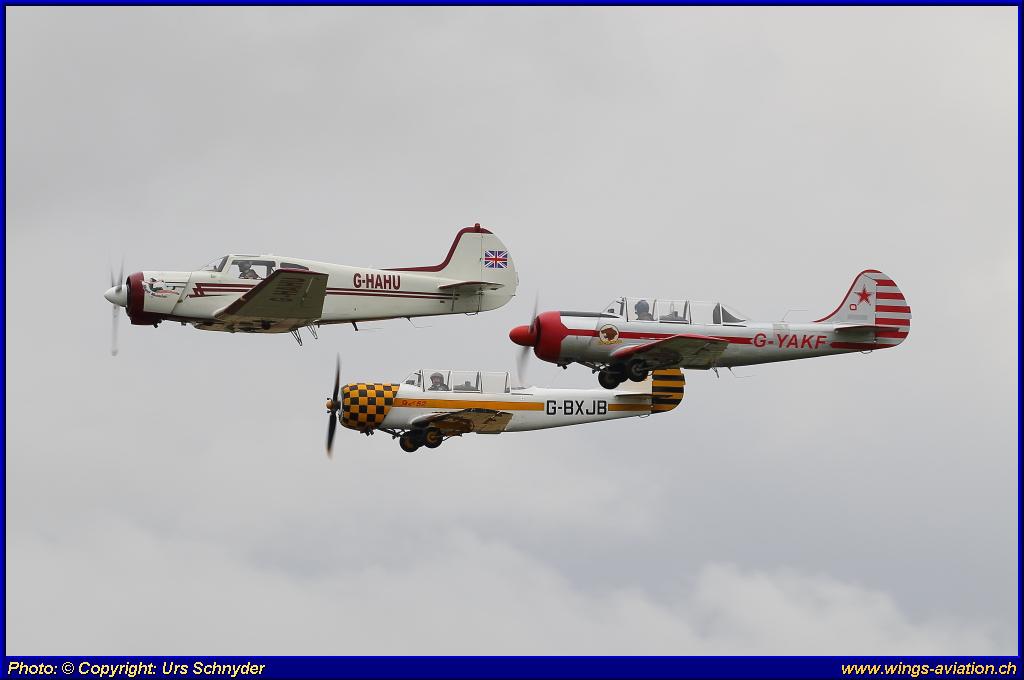
The flying comrades with their Yaks have appeared at Duxfords Airshows before. Their Yaks are probably belonging to the more affordable mounts for an aerobatic team. The two Yak-52 are based at Duxford, so in a way they were displaying at home. Their display is not spectacular, but in a way attractive. The rather bigger size of their aircraft also make them more visible and easier to photograph.
(Picture courtesy Urs Schnyder)
(Picture courtesy Urs Schnyder)
(Picture courtesy Urs Schnyder)
(Picture courtesy Urs Schnyder)
(Picture courtesy Urs Schnyder)
Maritime
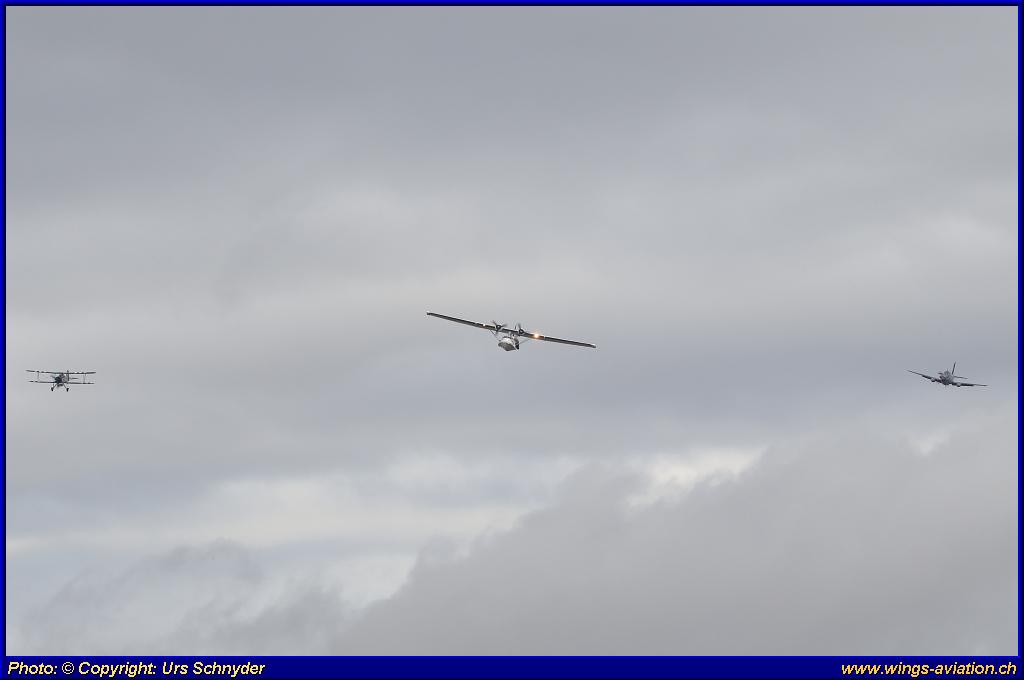
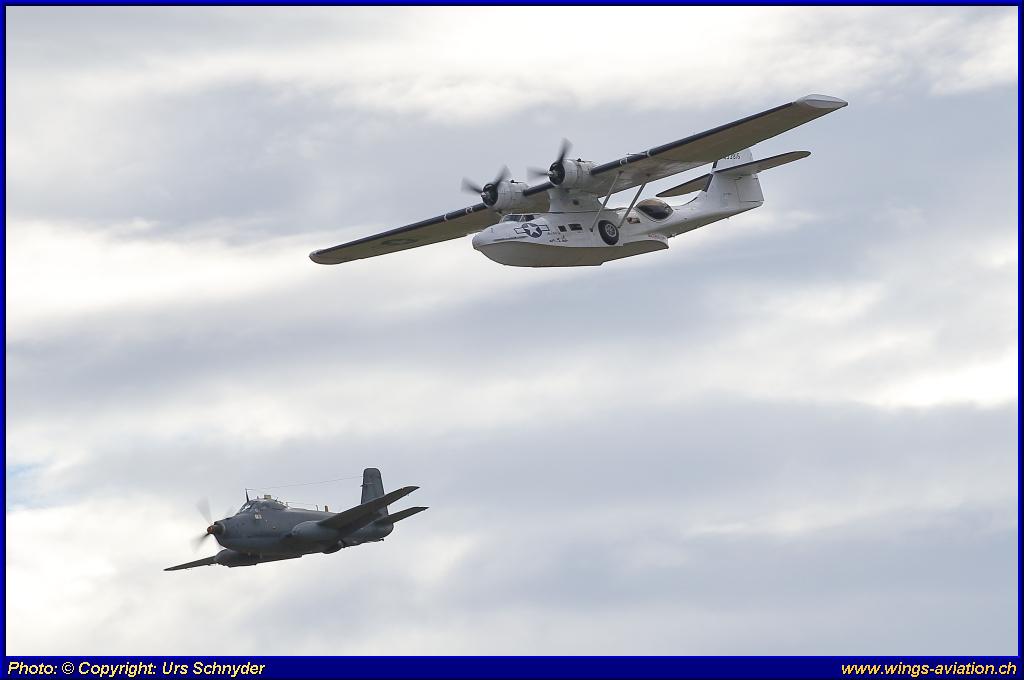
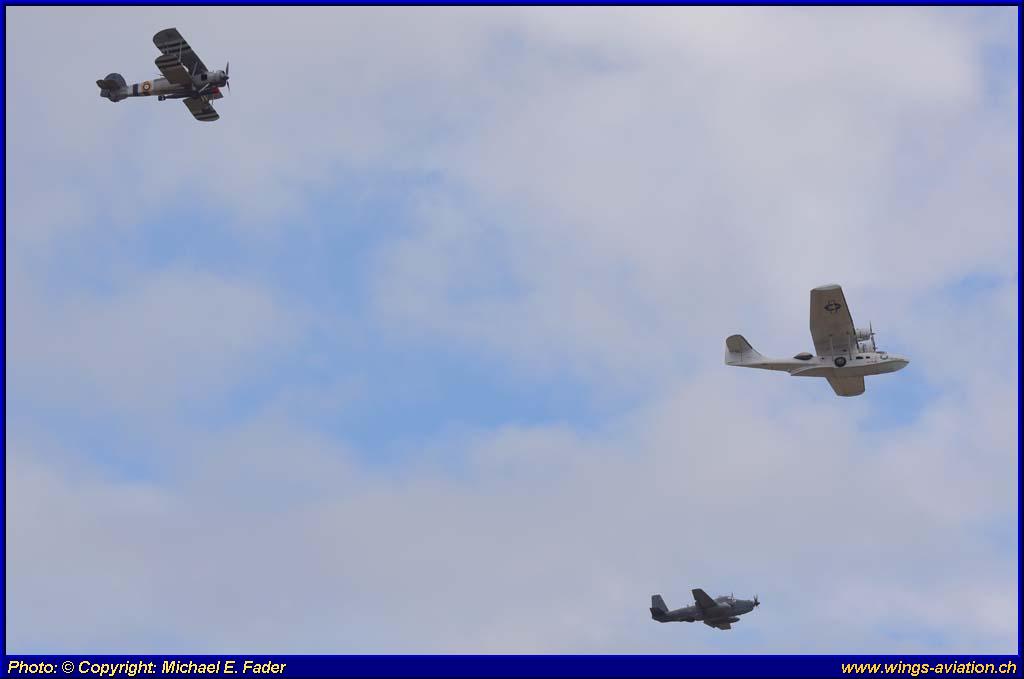
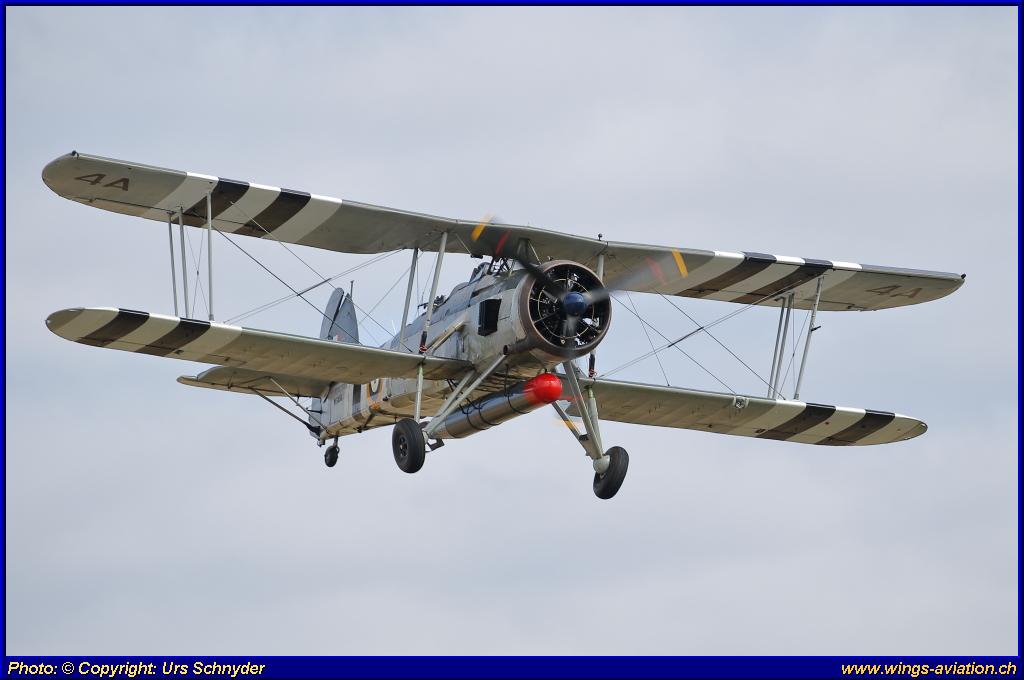
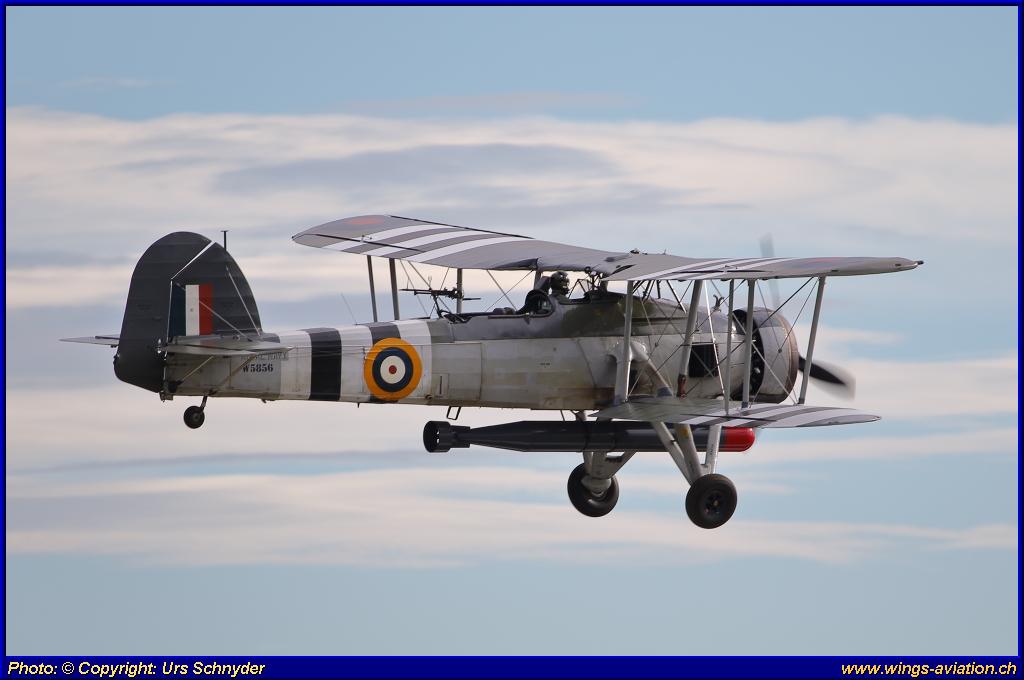
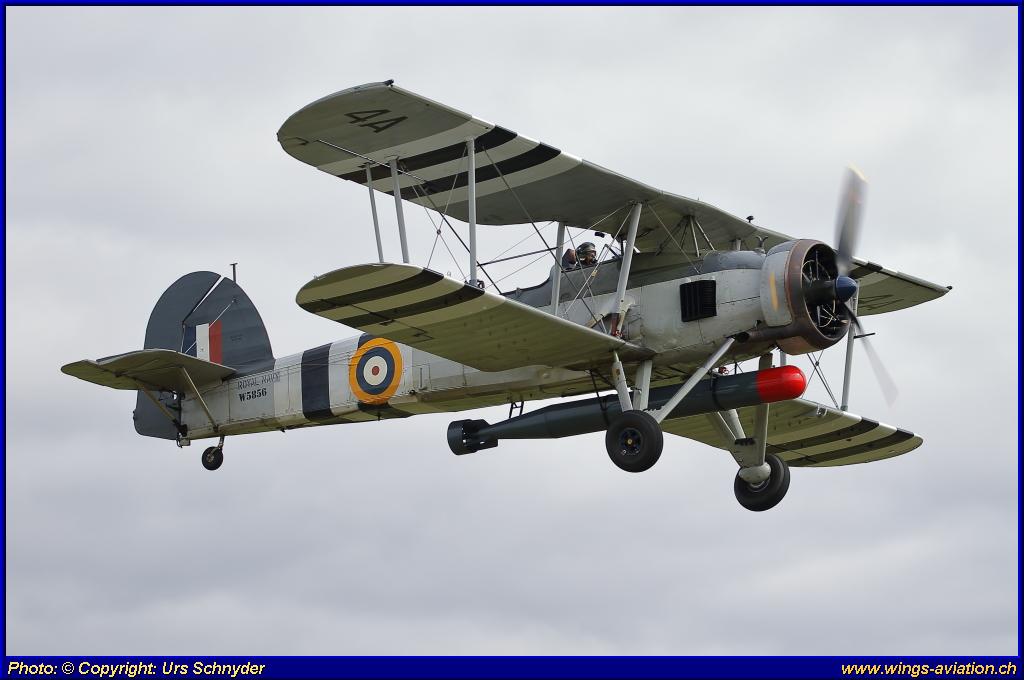
The three aircraft in this slot couldn’t be more different despite fulfilling similar tasks at one time or another. It was good to see the Swordfish once again, this time only with a two member crew, reflecting that it is no longer flown by the Royal Navy but by Navy Wings, the Trust which operates the aircraft of the former Royal Navy Historic flight. The Swordfish will of course forever be associated with the attack on Taranto 85 years ago this November.
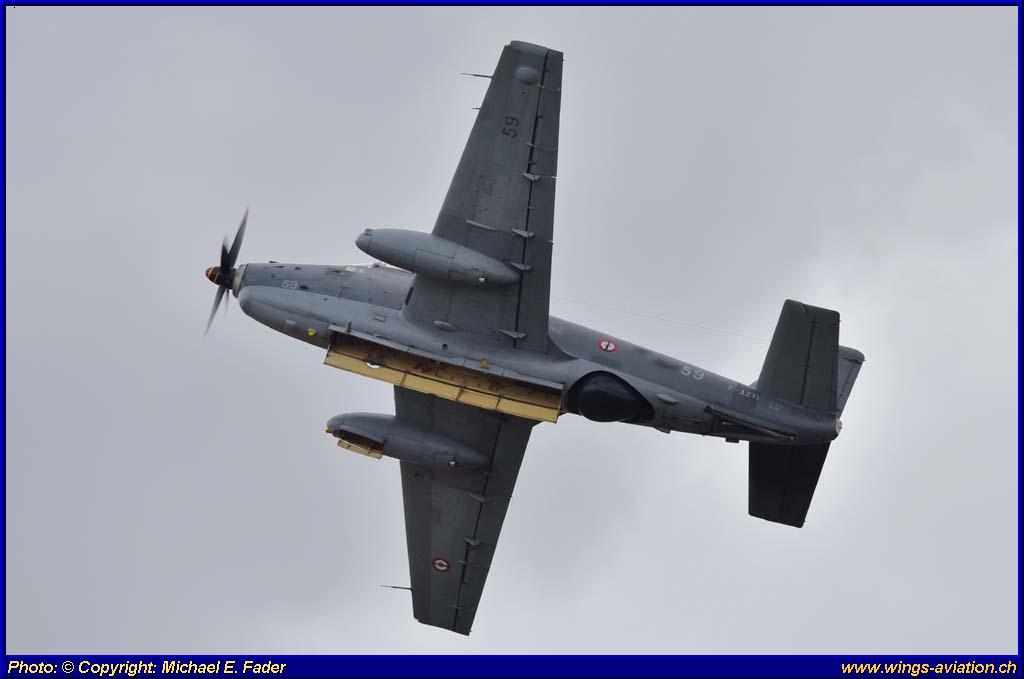
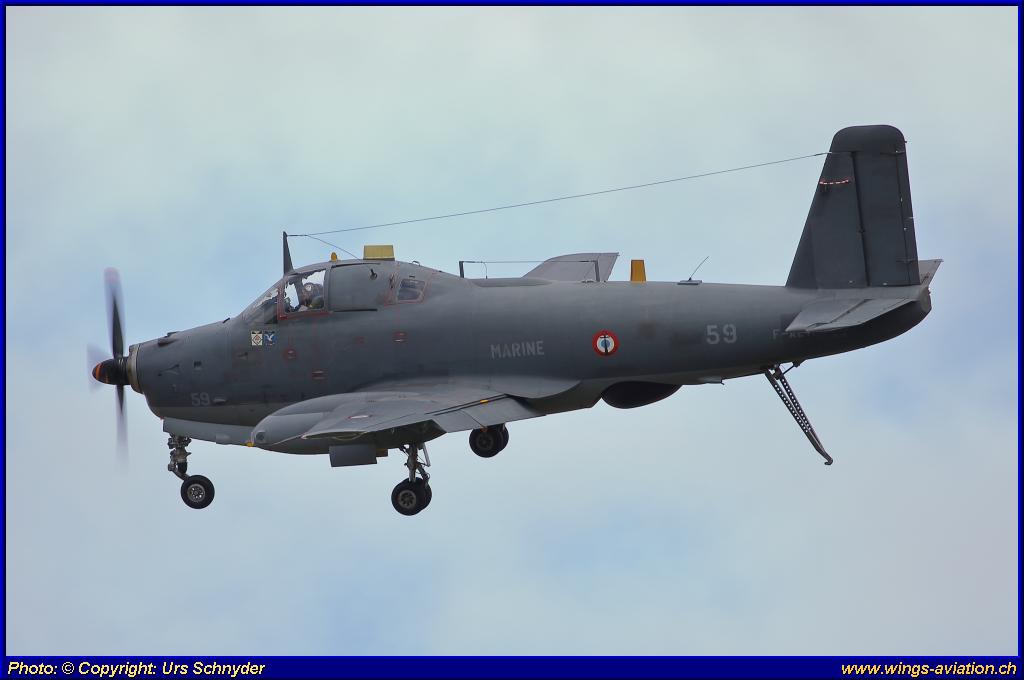
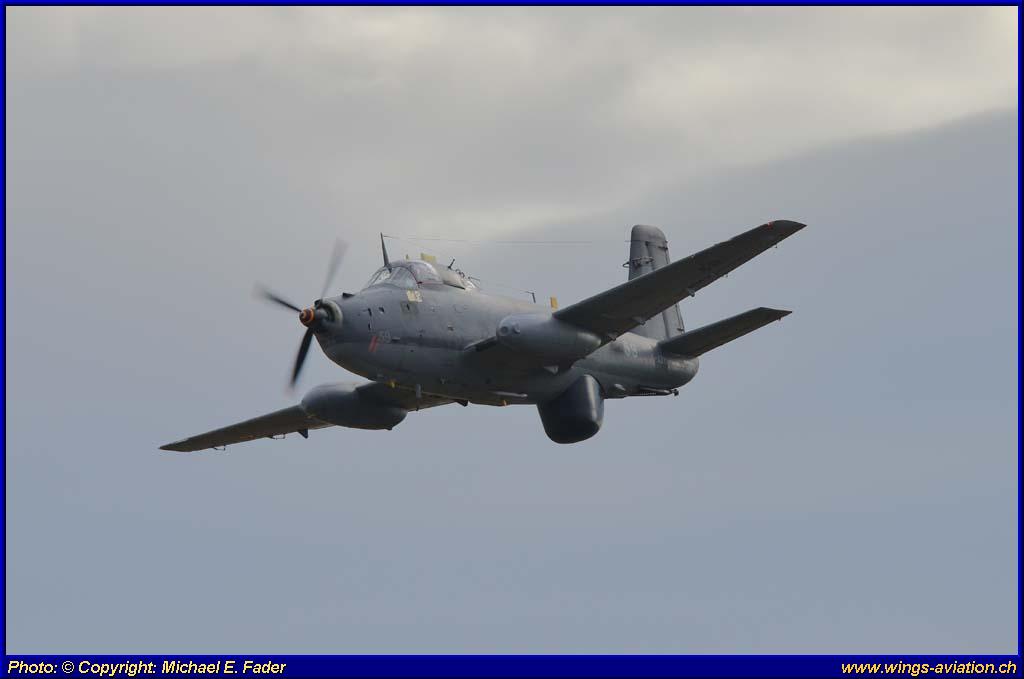
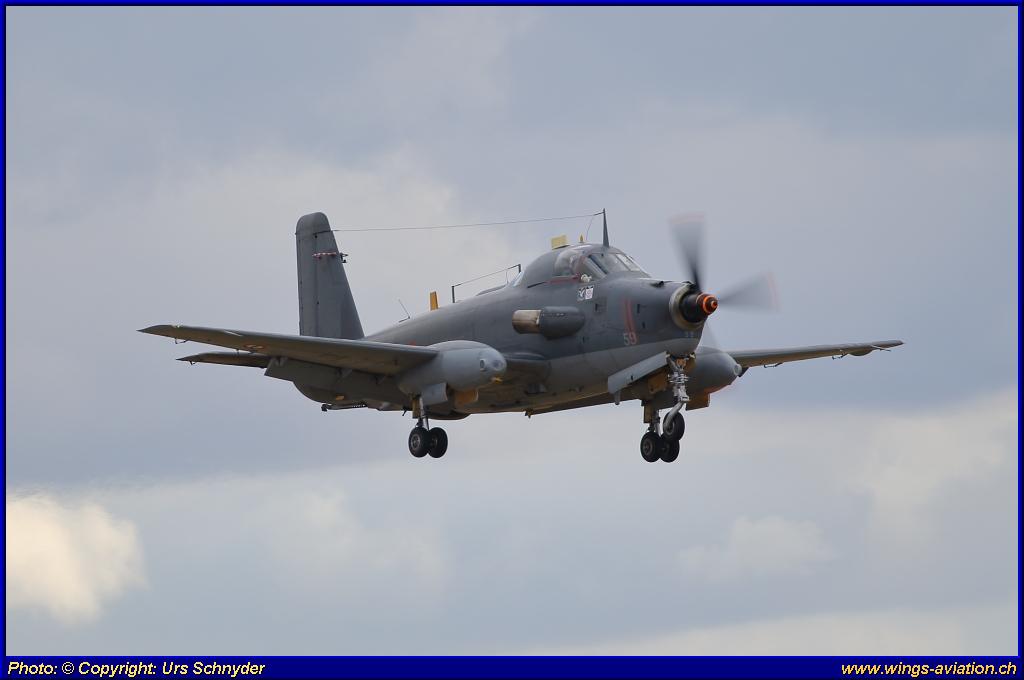
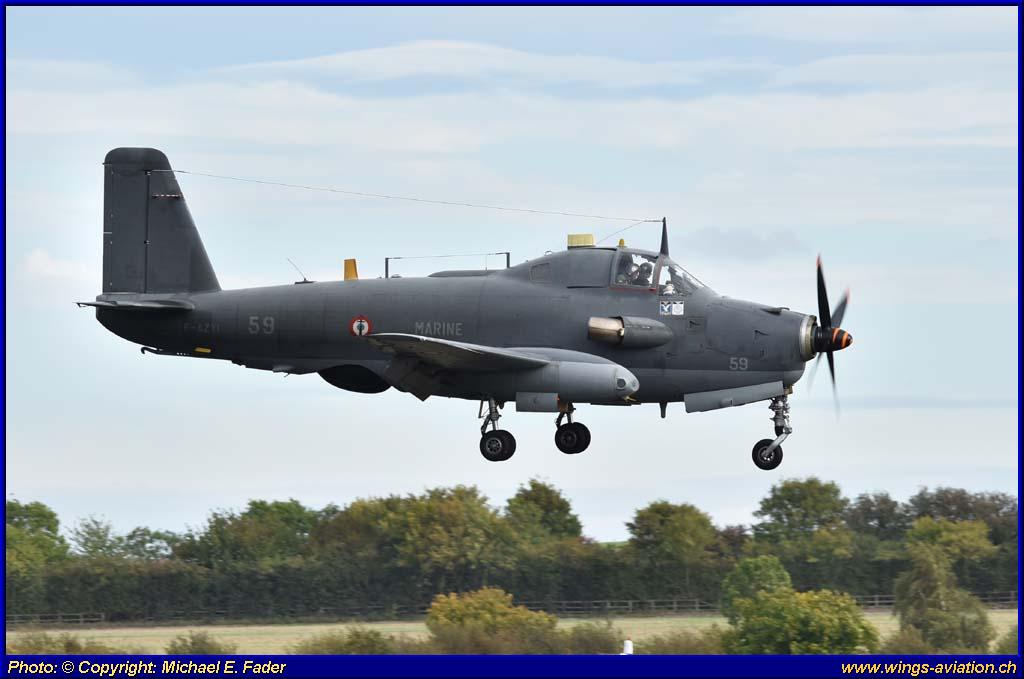
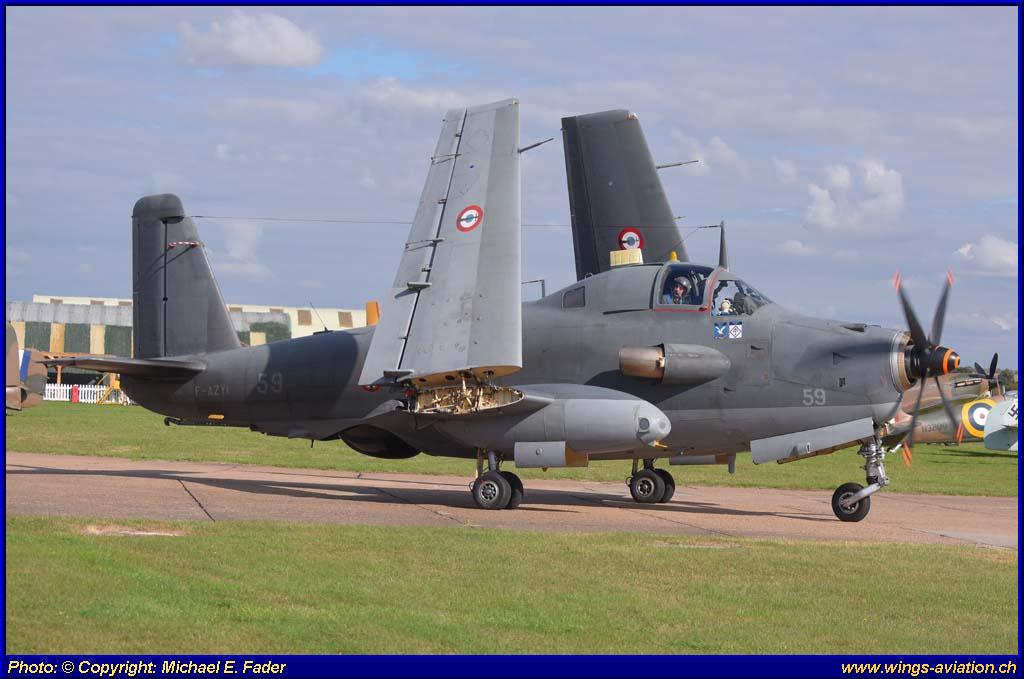
The Breguet Alizé is now also a veritable Oldtimer, having made
its first flight already 70 years ago. With a crew of three, it was used
for anti submarine work and Radar surveillance. They were in service
with the French Aeronavale until the year 2000 when they were retired.
This is the only aircraft still flying. India was the only other country
using
it, having bought 12 examples for its Navy.
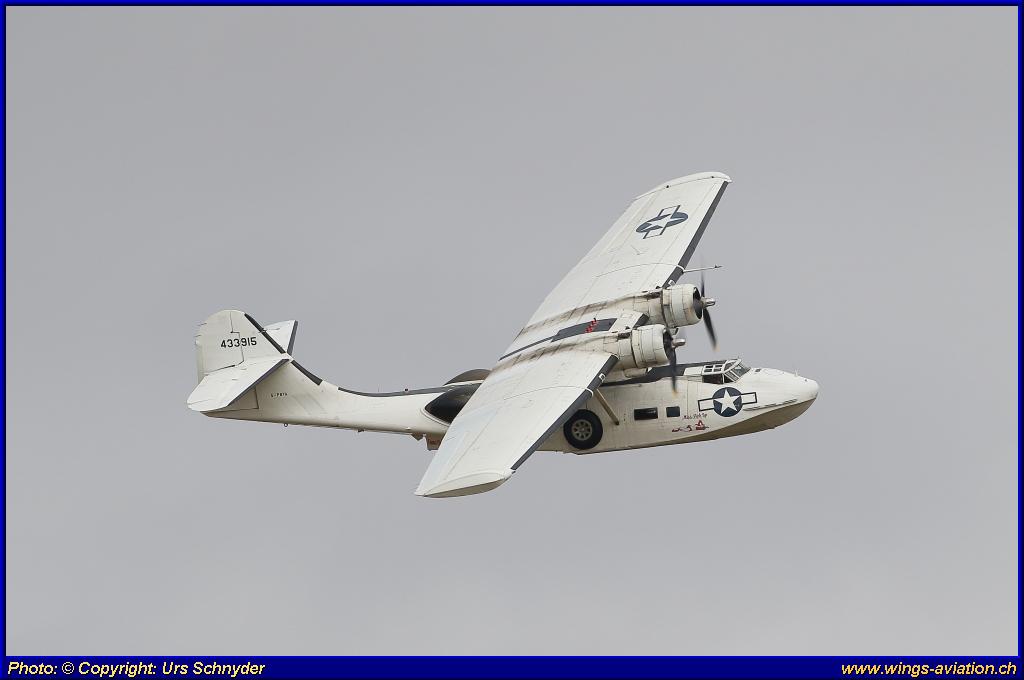
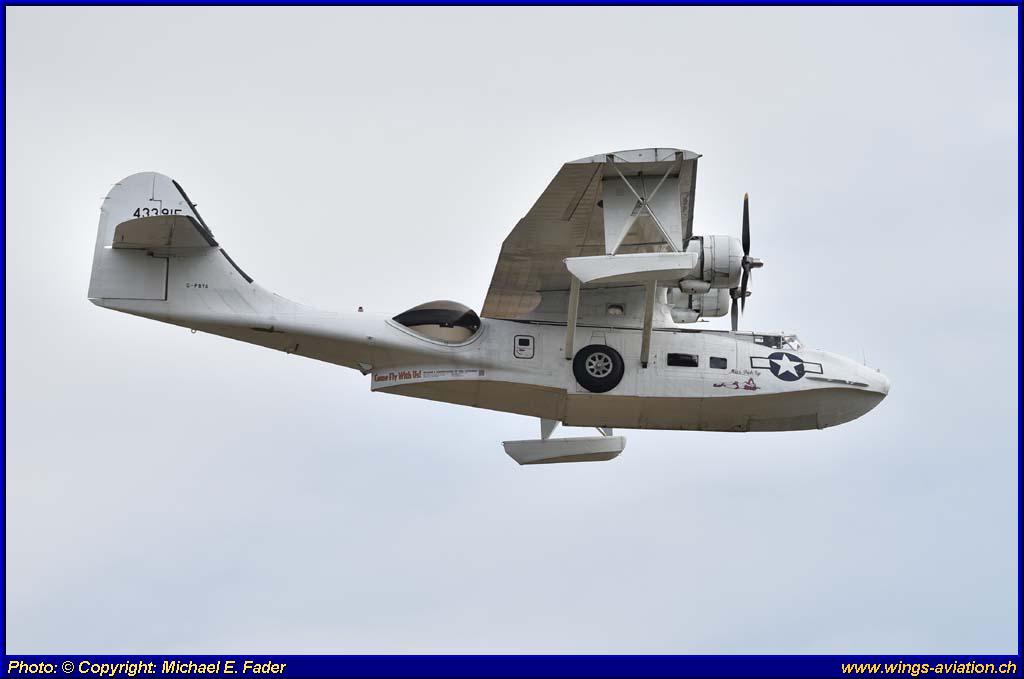
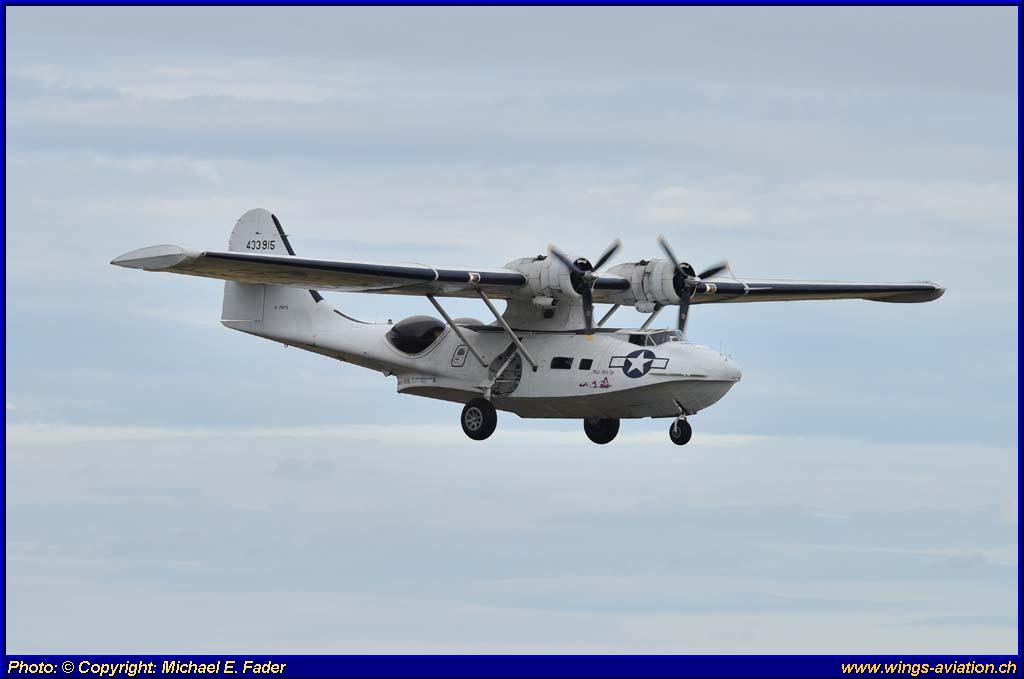
The Catalina is of course the Duxford based aircraft owned by Plane Sailing. Although wearing the colours of the USAAF 5th Emergency Rescue Squadron, it is in Britain more famous as the aircraft that discovered the German Bismark when it broke out into the Atlantic. This example was built in Canada in 1943 and used on anti submarine patrols. The three aircraft even formed a very wide abreast formation.
(Picture courtesy Urs Schnyder)
(Picture courtesy Urs Schnyder)
(Picture courtesy Michael E. Fader)
(Picture courtesy Urs Schnyder)
(Picture courtesy Urs Schnyder)
(Picture courtesy Urs Schnyder)
(Picture courtesy Urs Schnyder)
(Picture courtesy Michael E. Fader)
(Picture courtesy Michael E. Fader)
(Picture courtesy Michael E. Fader)
(Picture courtesy Urs Schnyder)
(Picture courtesy Michael E. Fader)
(Picture courtesy Urs Schnyder)
(Picture courtesy Michael E. Fader)
(Picture courtesy Michael E. Fader)
Mustangs
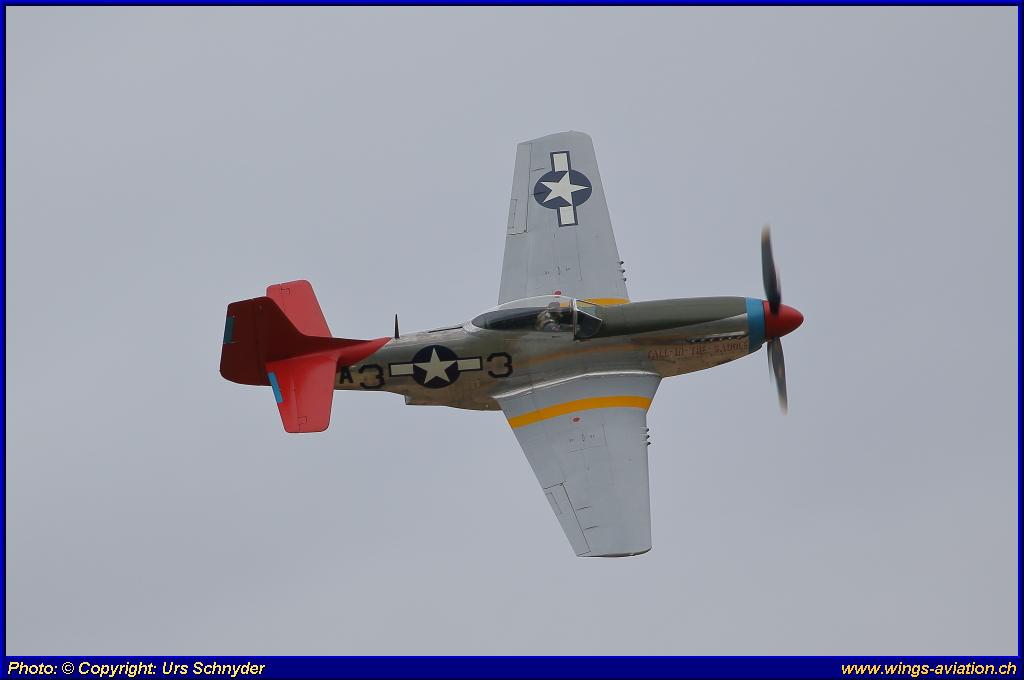
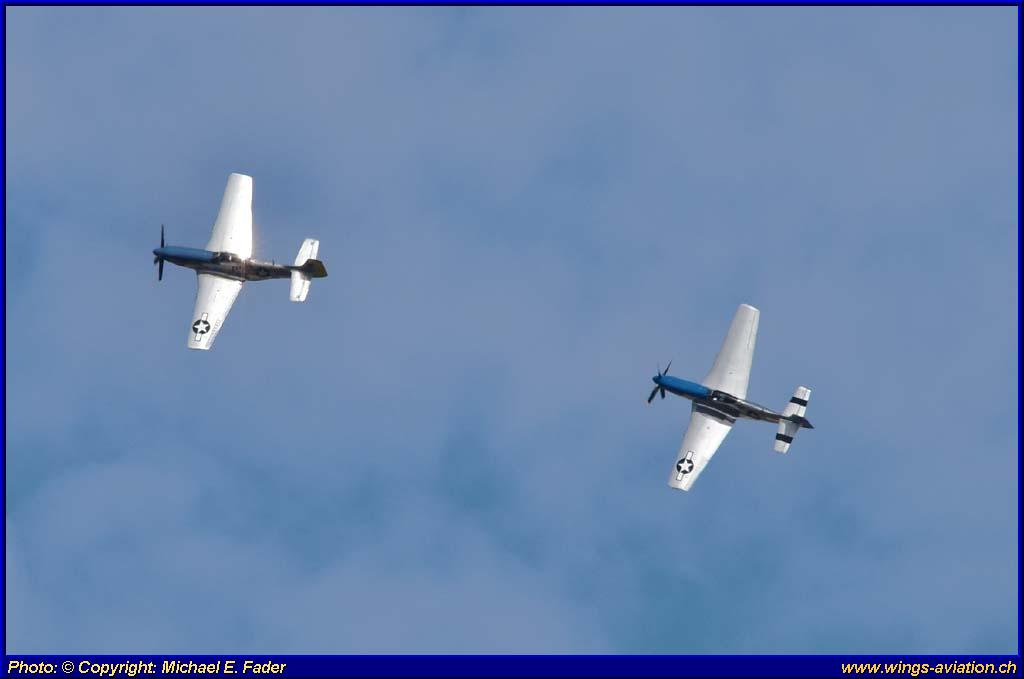
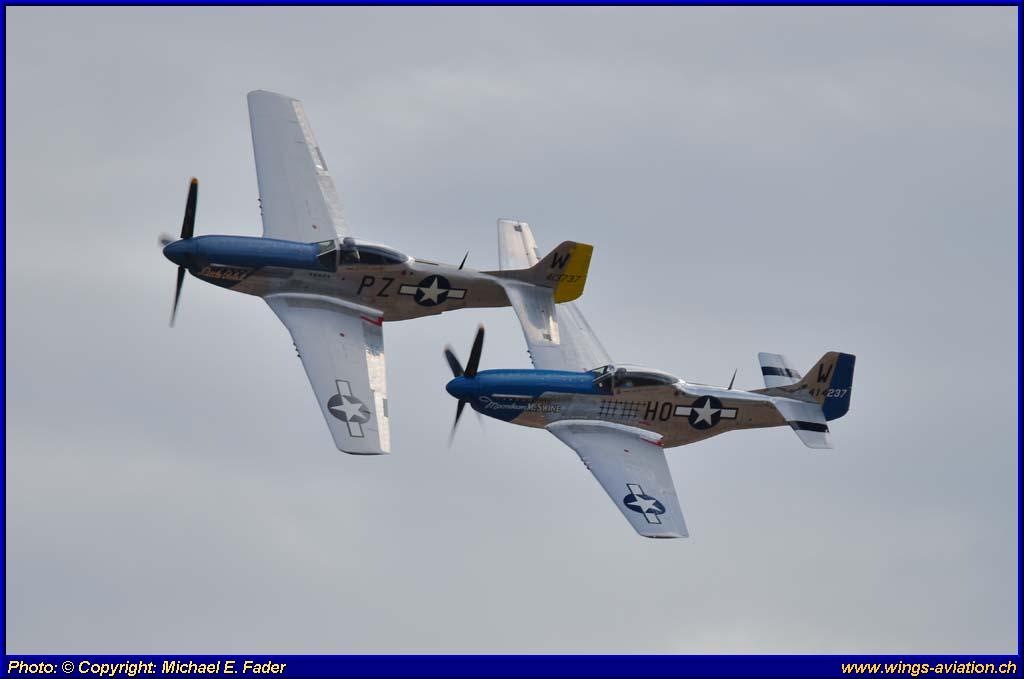
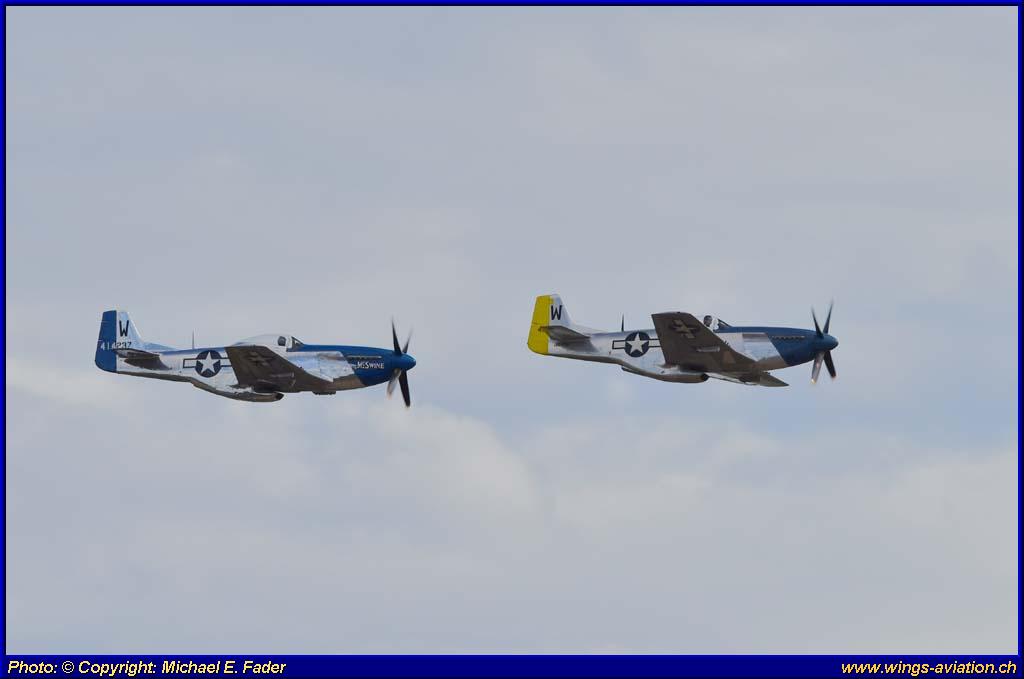
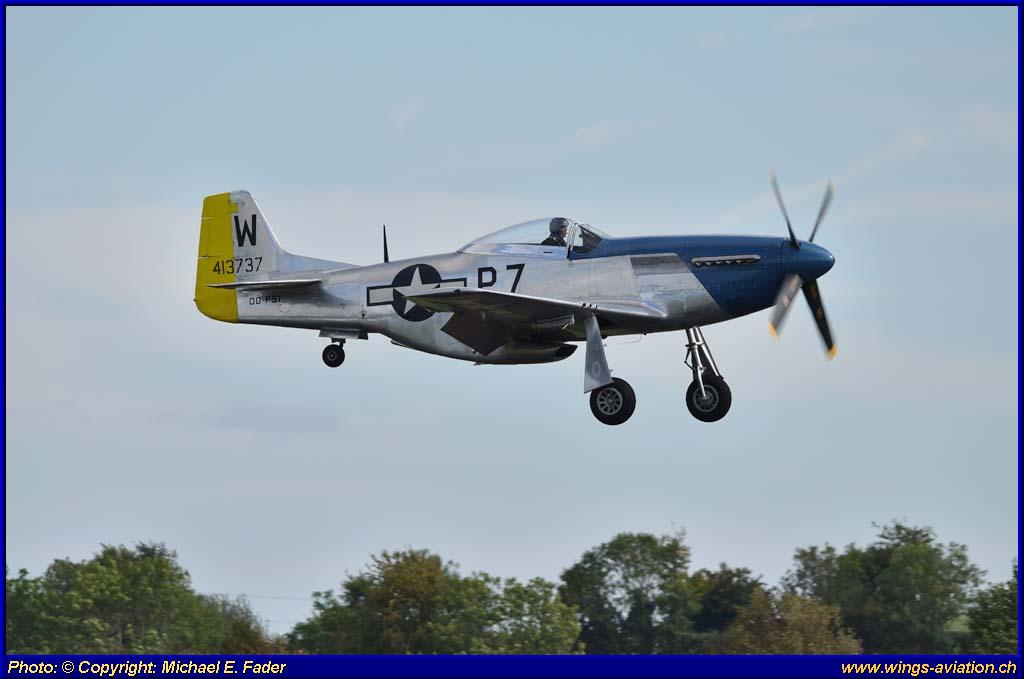
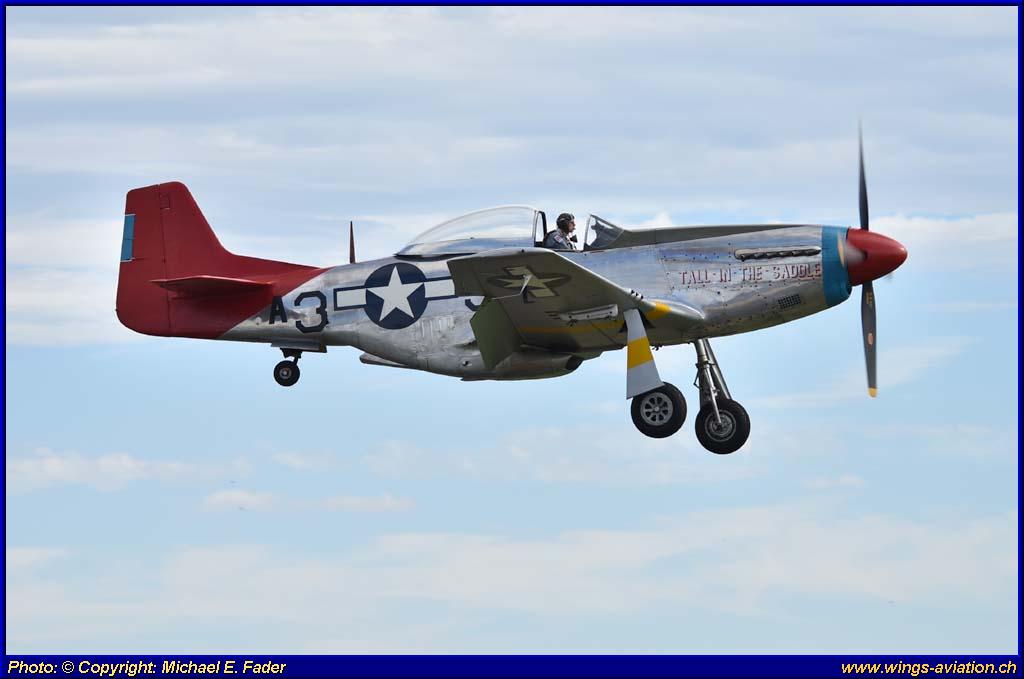
Instead of the announced four, there were only two Mustangs taking to the air together. These were the P-51D of the Aircraft Restoration Company, a real combat veteran of the US 99th Fighter Squadron, 332nd Fighter Group based in Italy. They painted the tails of their Aircraft red so that the escorted Bombers should know who protected them. Theirs is quite an interesting story, as they didn’t just have to fight the enemy but also against discrimination from their own country.
The other Mustang, also a P-51D arrived in England just too late to take part in operations. Sold as surplus, it saw operations as part of the El Salvador Air Force in the conflict with Honduras during 1968 to 1974. Like many Central American Aircraft it went back to the US after their service ended. After several American owners it ended up with Biggin Hill based Warbird Experiences. It is painted as the aircraft of Captain William Whisner of the 487th Fighter Squadron.
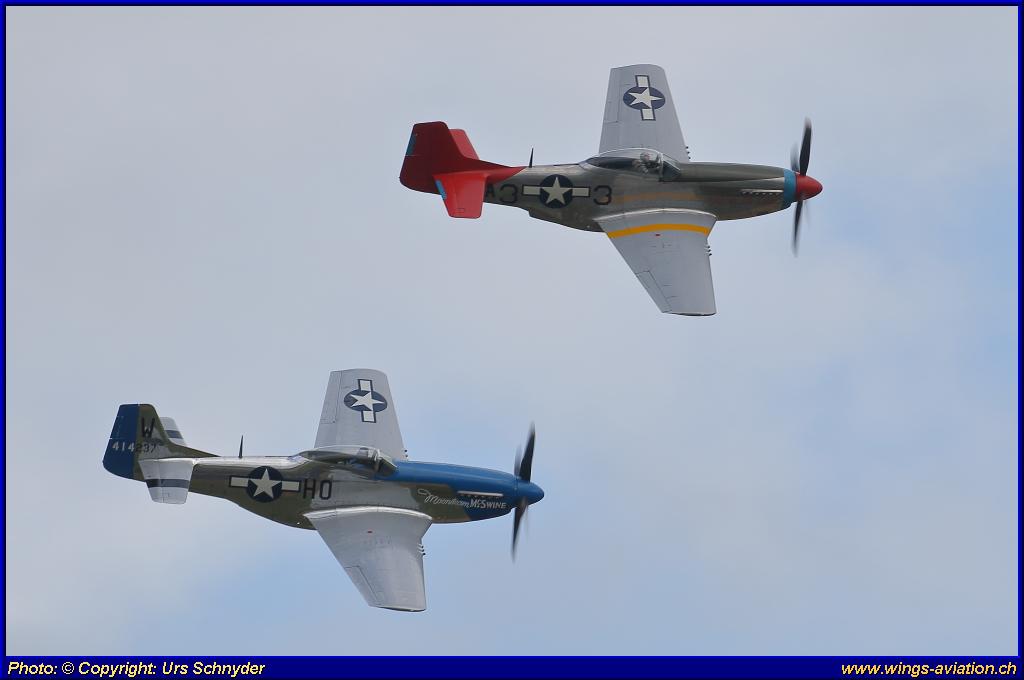
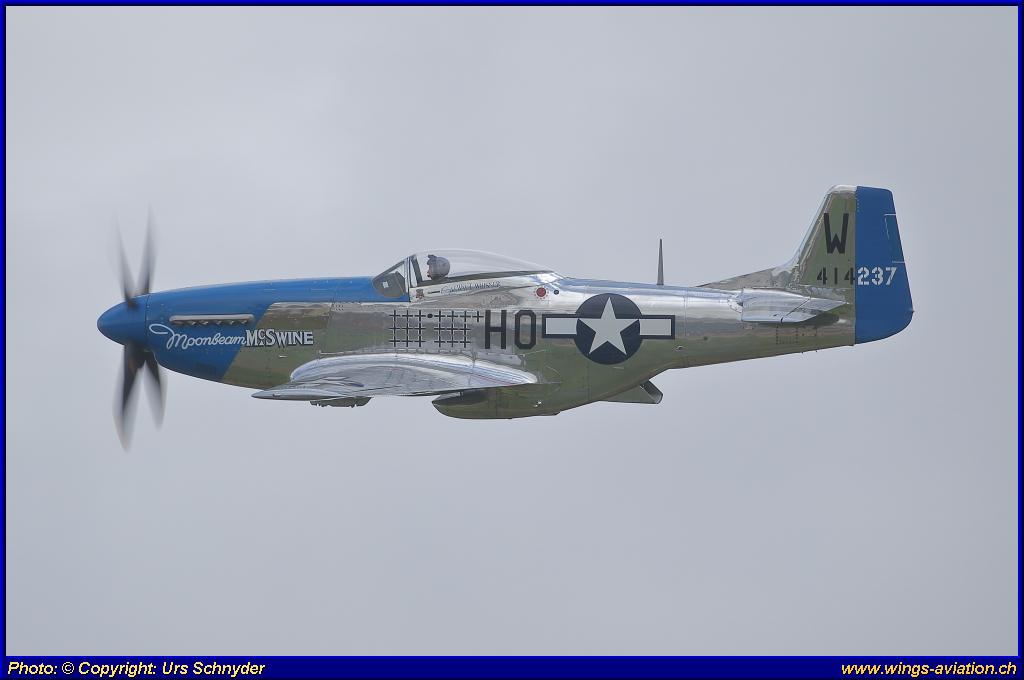
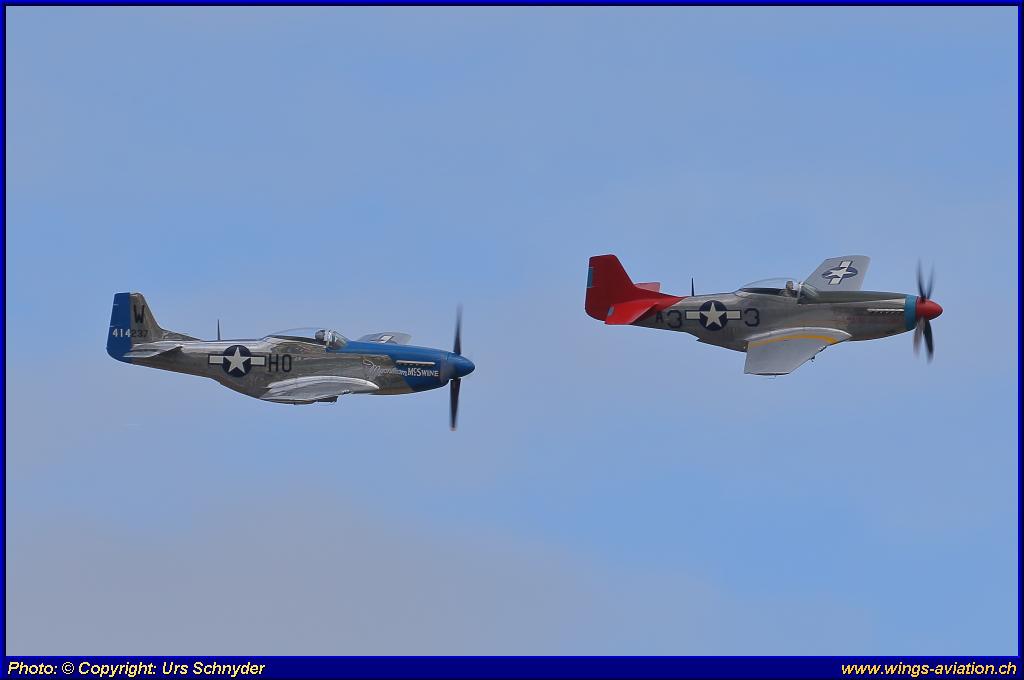
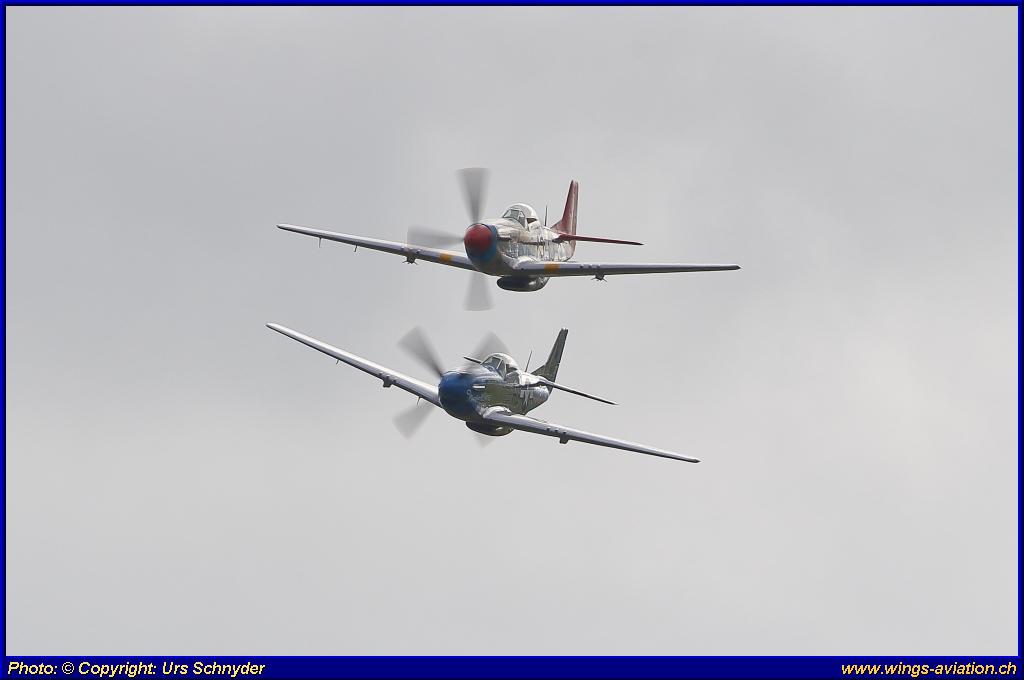
(Picture courtesy Urs Schnyder)
(Picture courtesy Urs Schnyder)
(Picture courtesy Urs Schnyder)
(Picture courtesy Urs Schnyder)
(Picture courtesy Urs Schnyder)
(Picture courtesy Michael E. Fader)
(Picture courtesy Michael E. Fader)
(Picture courtesy Michael E. Fader)
(Picture courtesy Michael E. Fader)
(Picture courtesy Michael E. Fader)
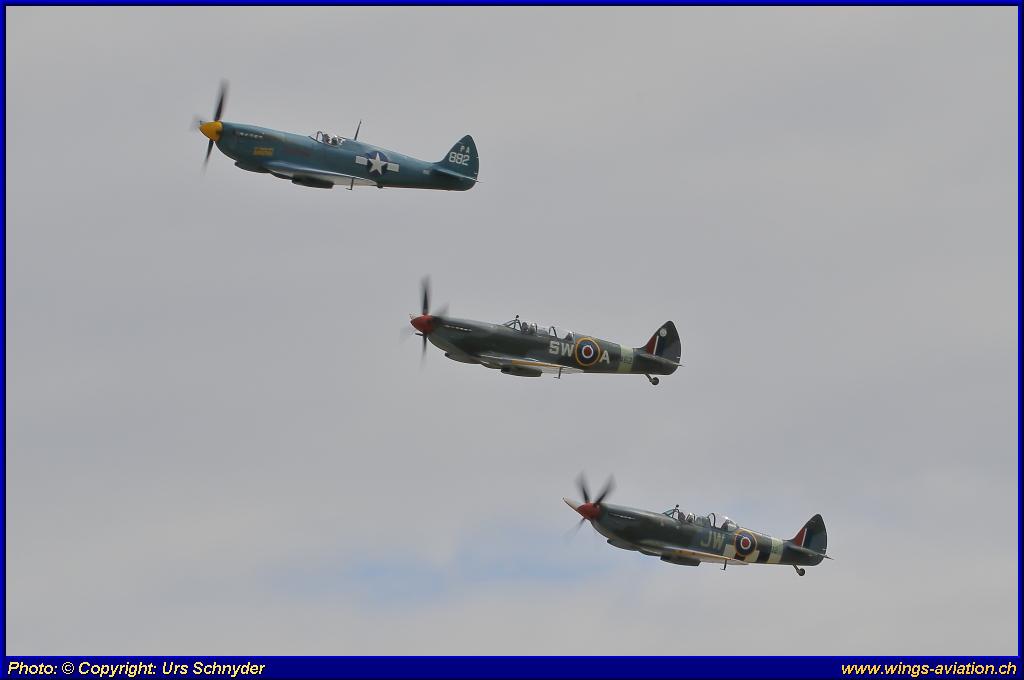
The magnificent three
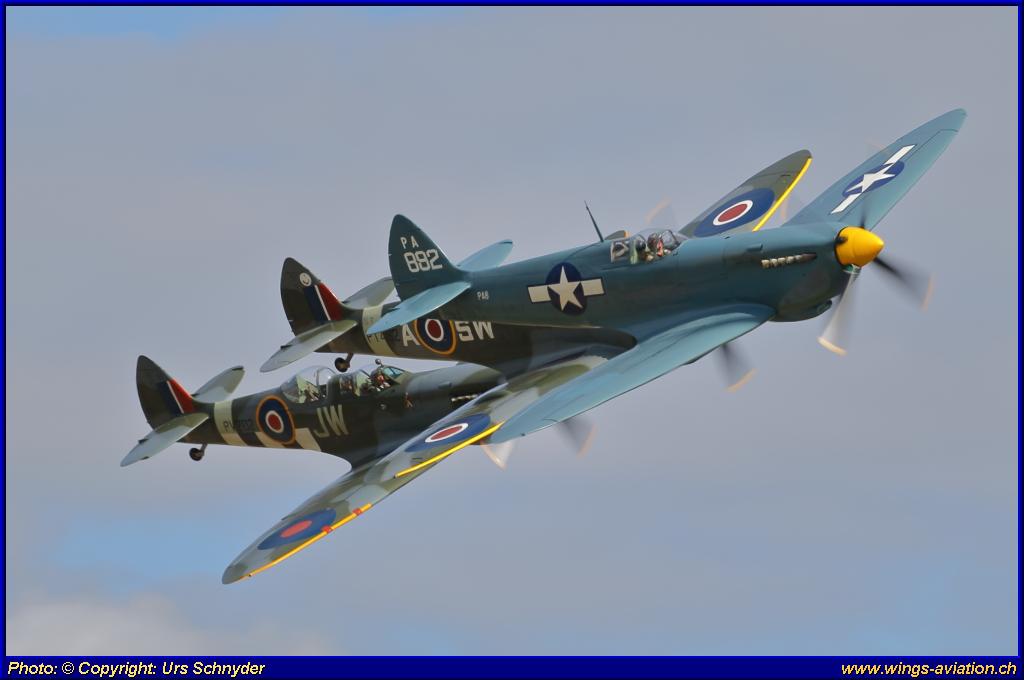
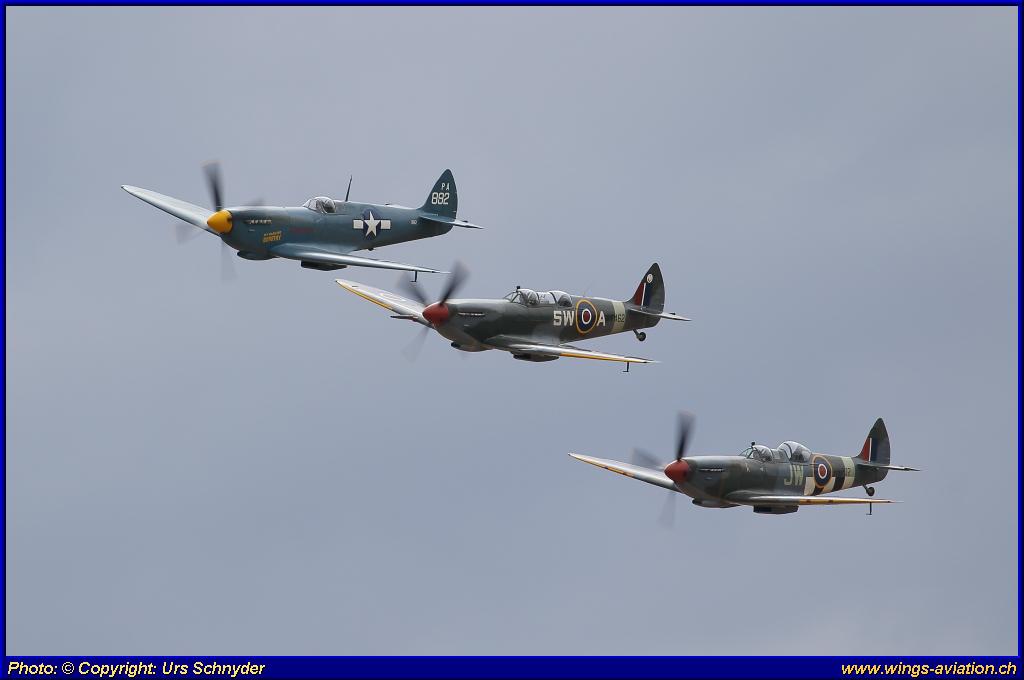
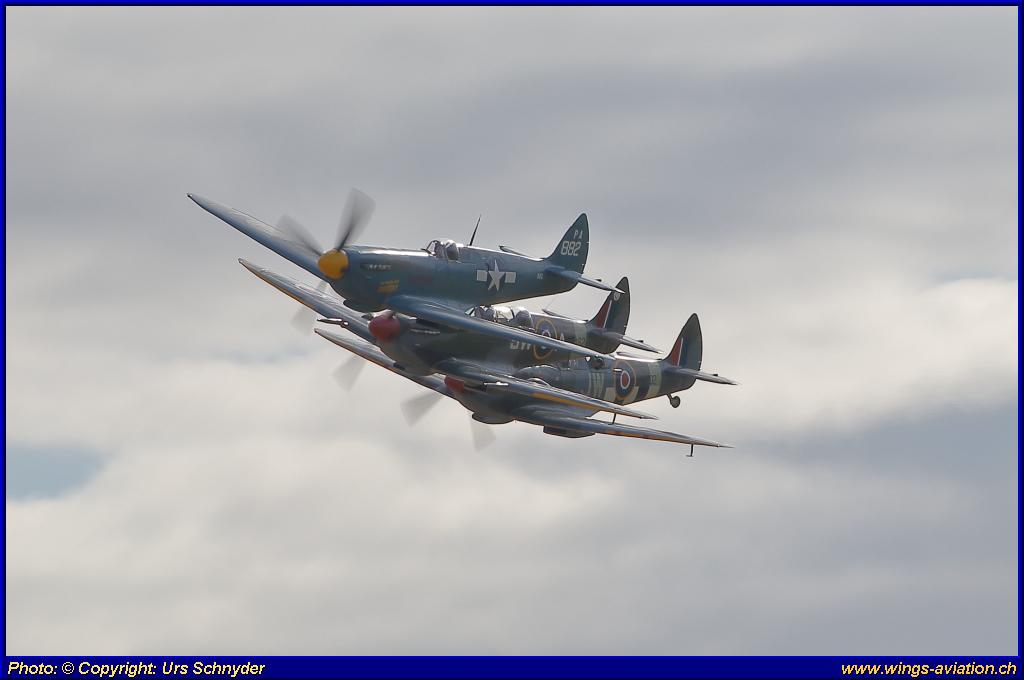
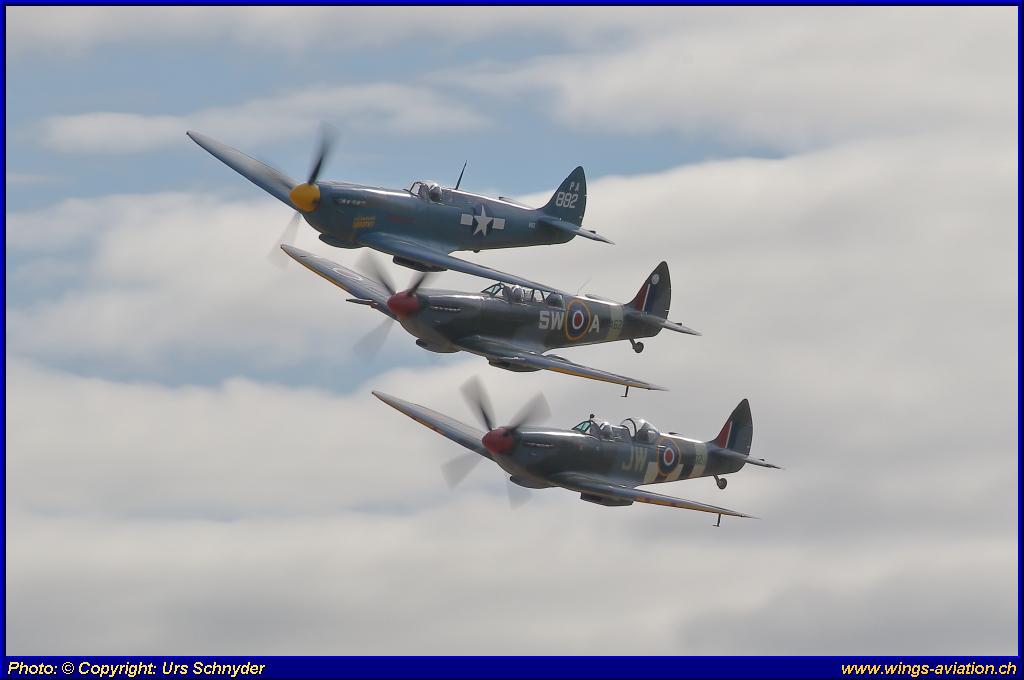
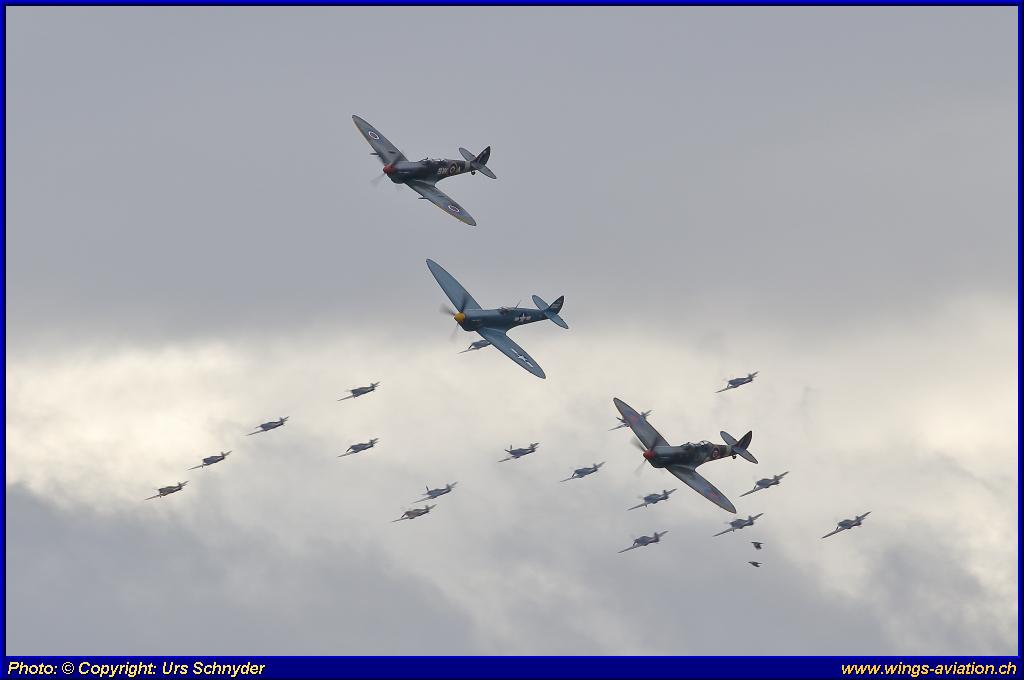
For me, this formation of three Spitfires from the Aircraft Restoration Company was the highlight of the Airshow, despite the bad weather letting the act down. Sometimes the clouds were so low that the three Spitfires disappeared in them while doing a loop. Nevertheless, they kept a tight formation despite the strong wind on Saturday. As they displayed during the time the big wing got into formation, they had to give way once the formation approached the airfield only to continue their performance after it passed. It is of course difficult to compare jets and propeller driven teams, but for me they came close to eclipsing the Red Arrows. They would have deserved blue skies!
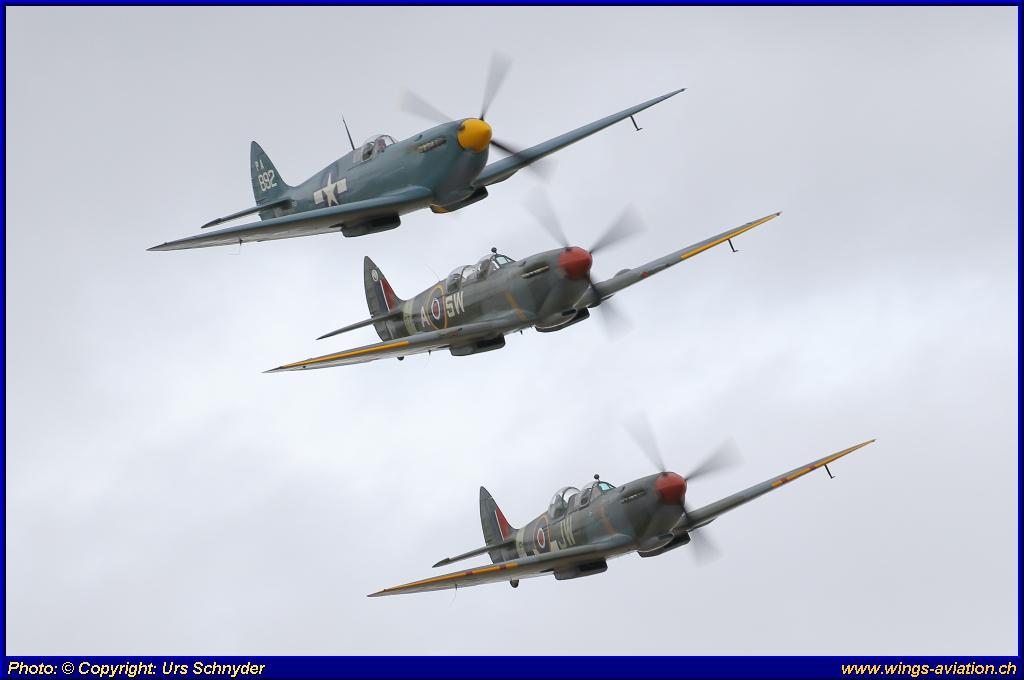
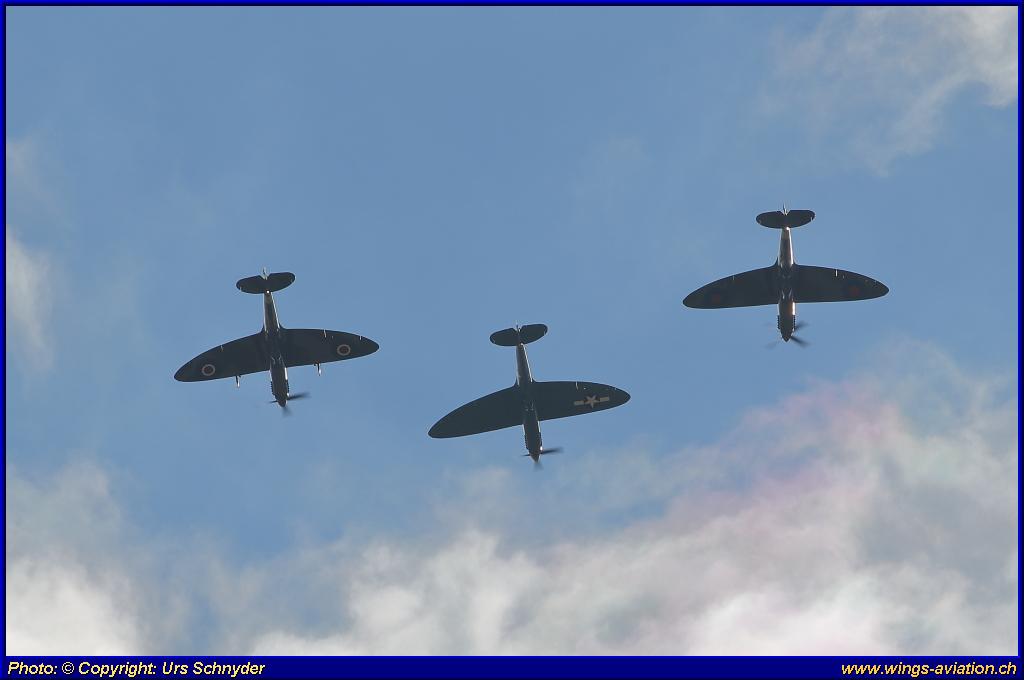
(Picture courtesy Urs Schnyder)
(Picture courtesy Urs Schnyder)
(Picture courtesy Urs Schnyder)
(Picture courtesy Urs Schnyder)
(Picture courtesy Urs Schnyder)
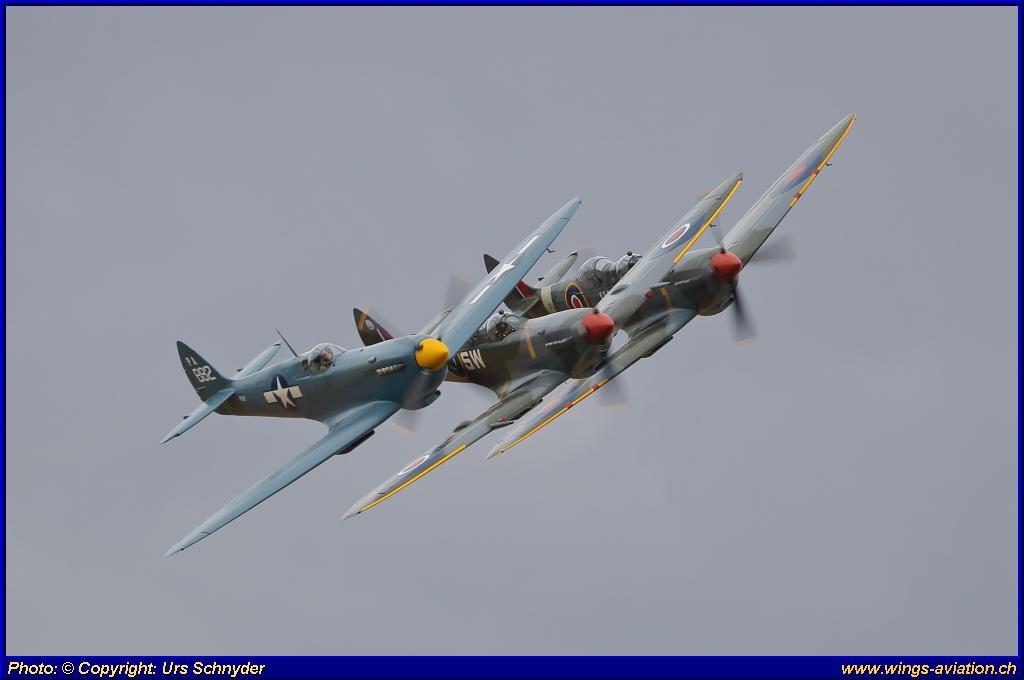
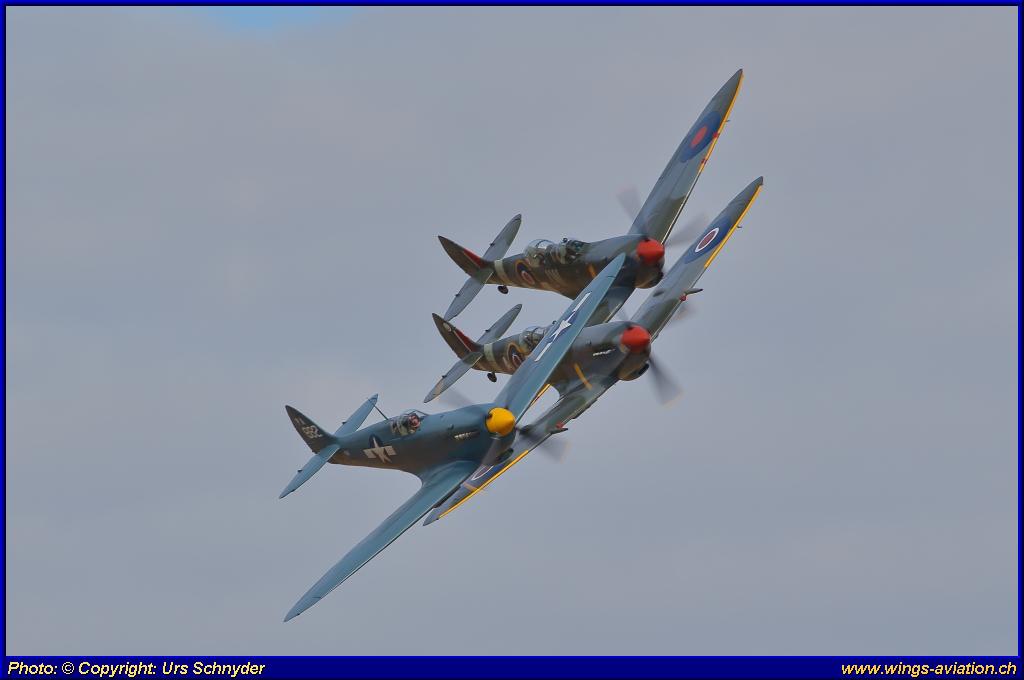
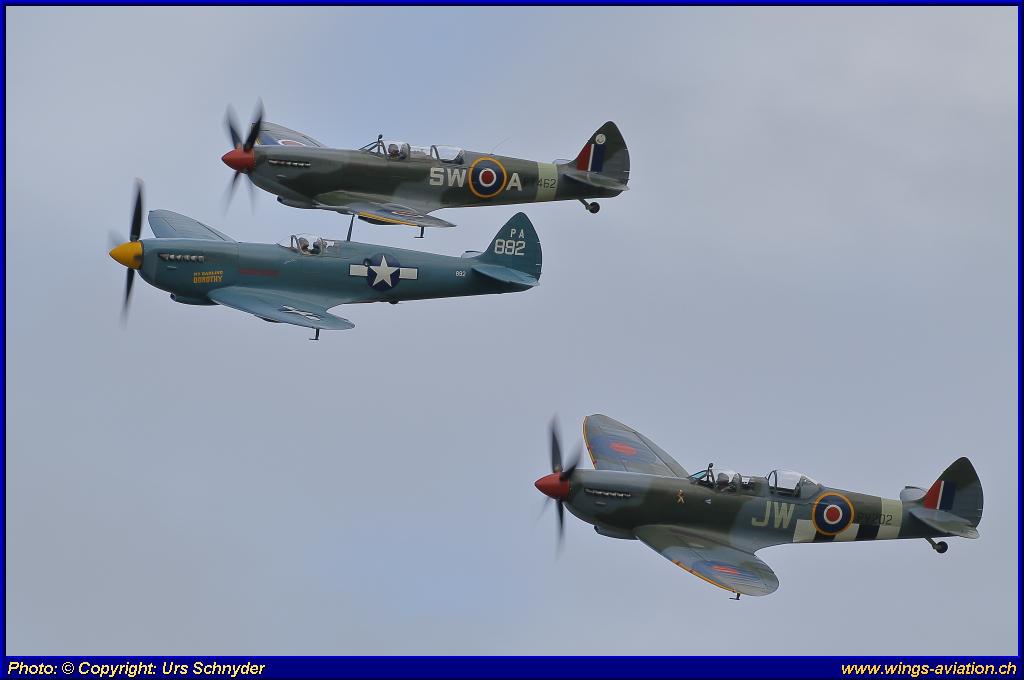
(Picture courtesy Urs Schnyder)
(Picture courtesy Urs Schnyder)
(Picture courtesy Urs Schnyder)
(Picture courtesy Urs Schnyder)
(Picture courtesy Urs Schnyder)
The Spirit of 1940!
With dark clouds hanging over Europe in 1940, a group of young men prevented the continent from dropping into the abyss of a new dark ages as Winston Churchill so aptly described it. Today, three flyers in their Spitfires showed us what is possible to achieve when you cooperate and are determined to succeed, in this case holding a formation despite of the inclement weather. They could therefore serve as an example of what is needed to combat the dark clouds which are once again gathering over Europe. Wil we be able to emulate them
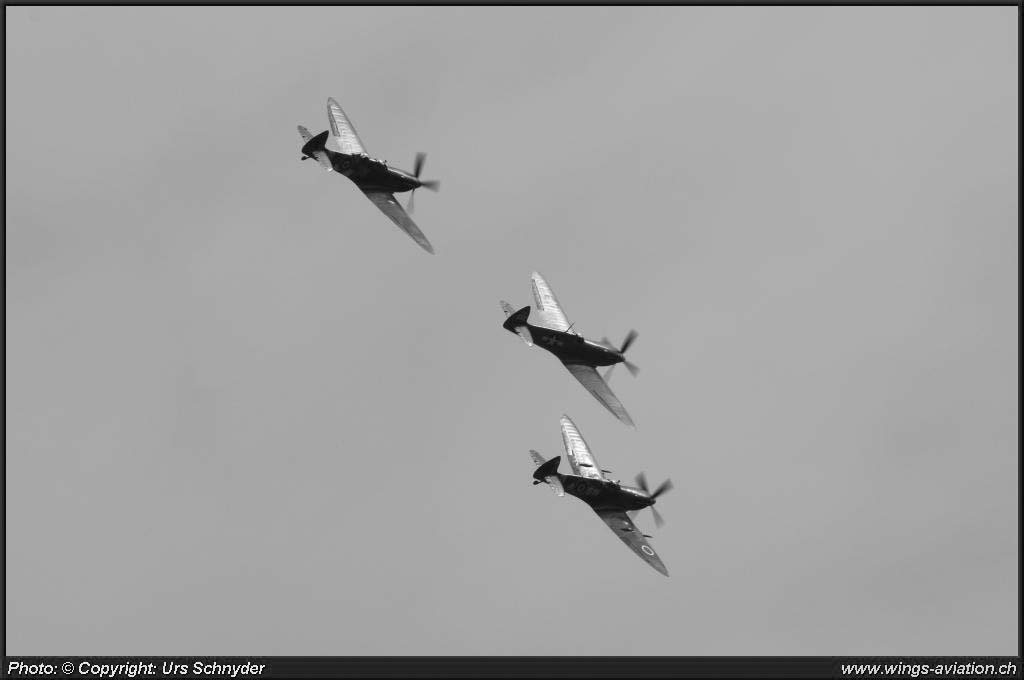
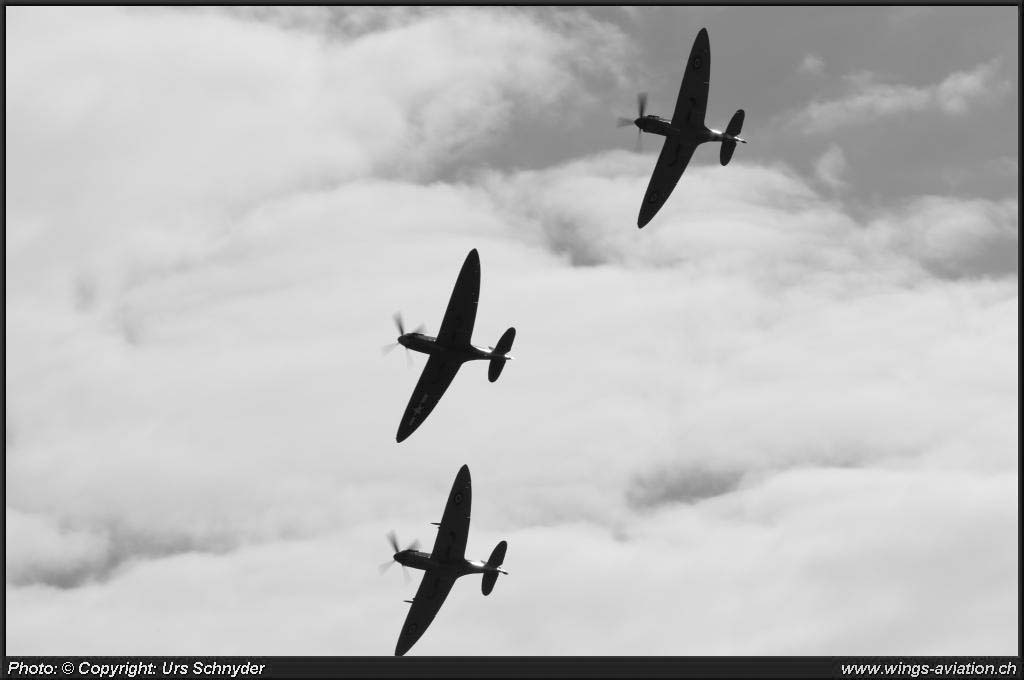
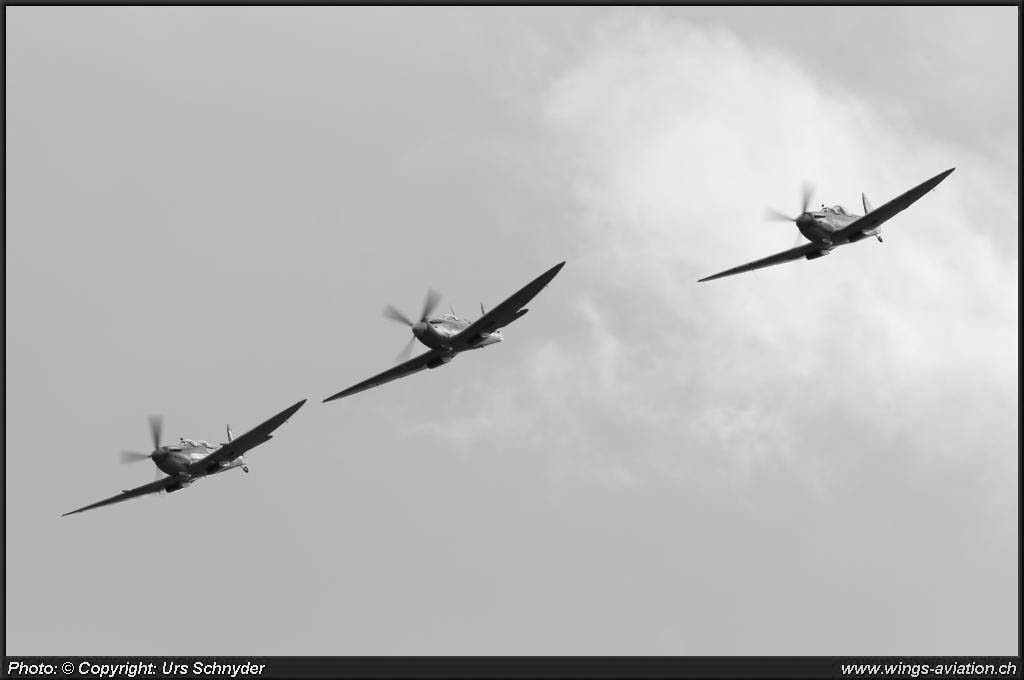
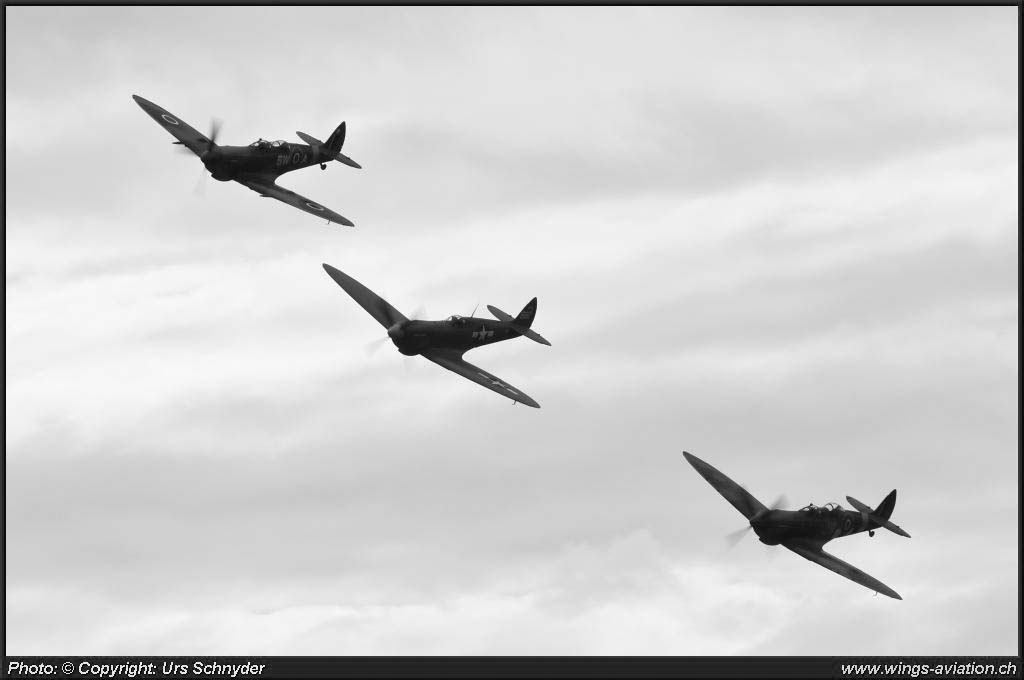
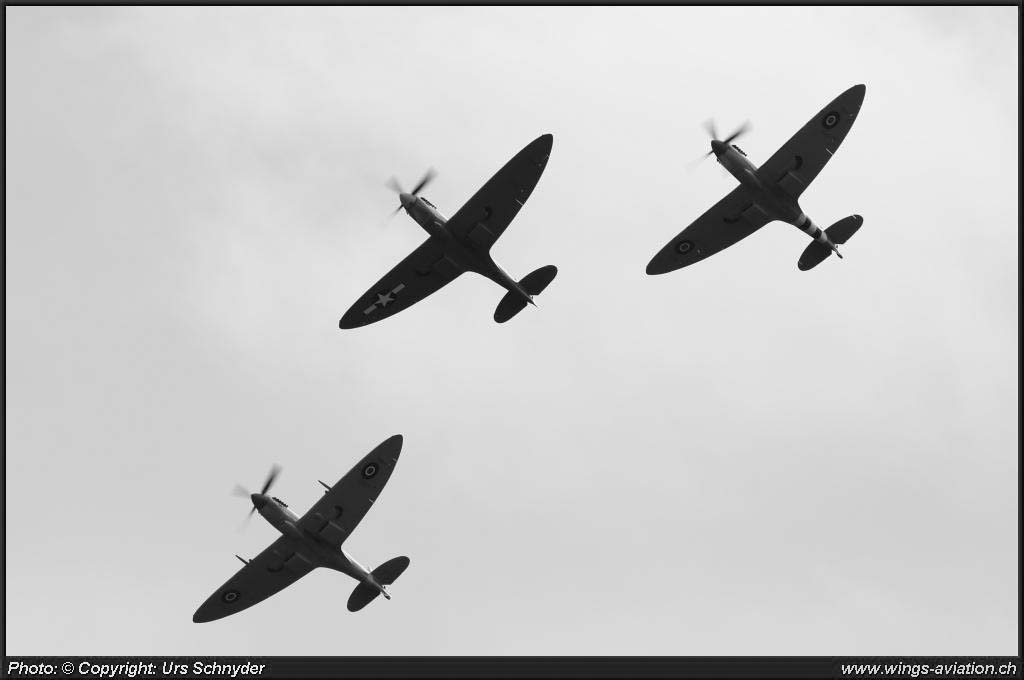
(Picture courtesy Urs Schnyder)
(Picture courtesy Urs Schnyder)
(Picture courtesy Urs Schnyder)
(Picture courtesy Urs Schnyder)
(Picture courtesy Urs Schnyder)
Big Wing
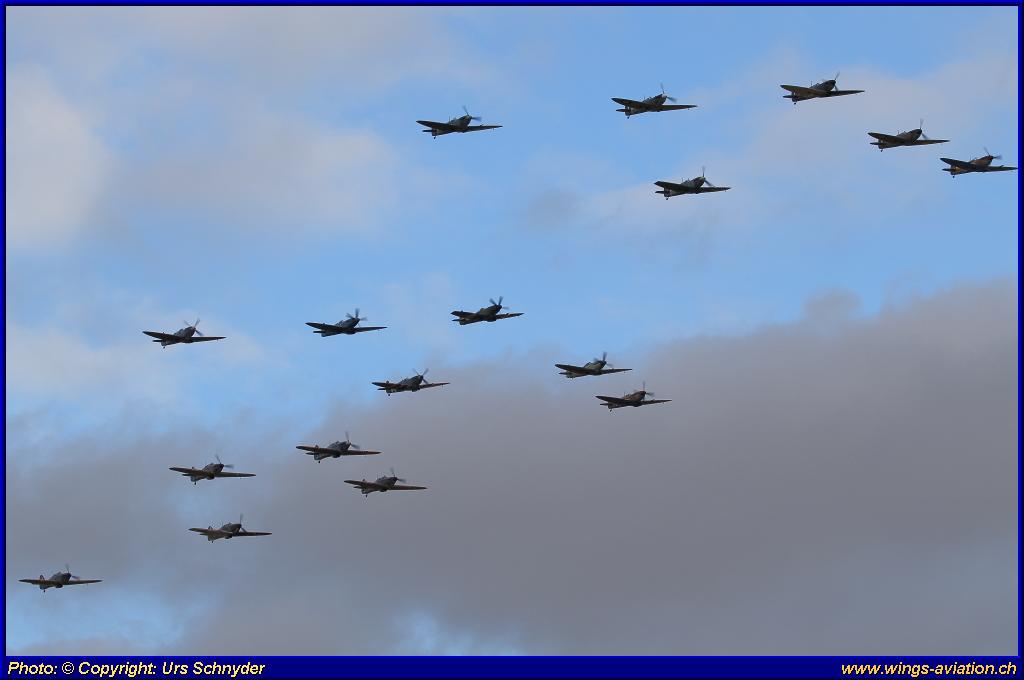
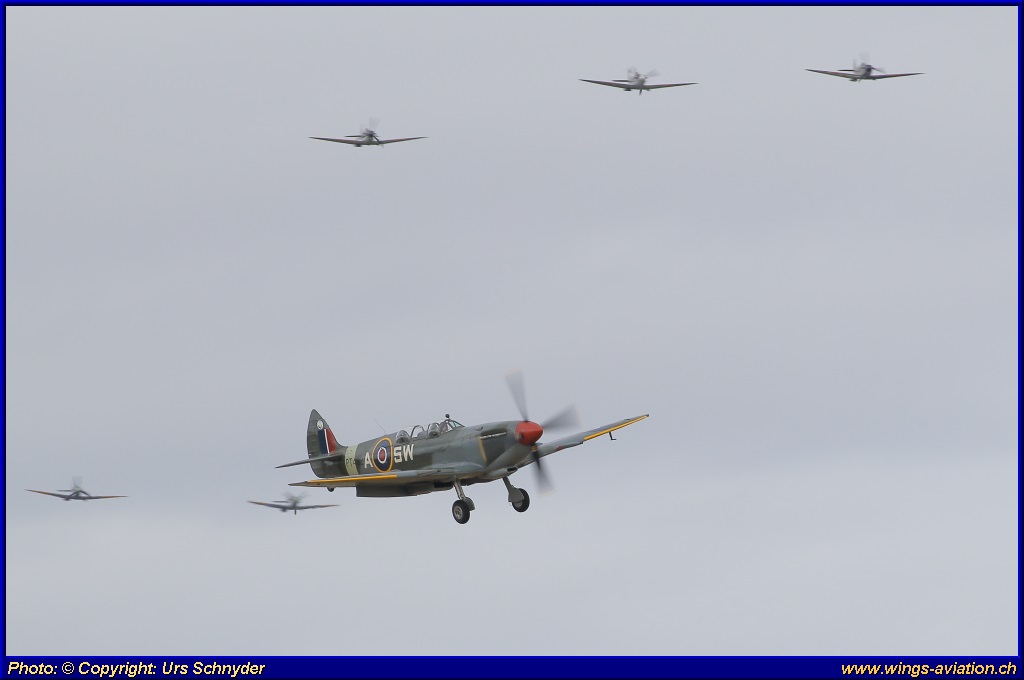
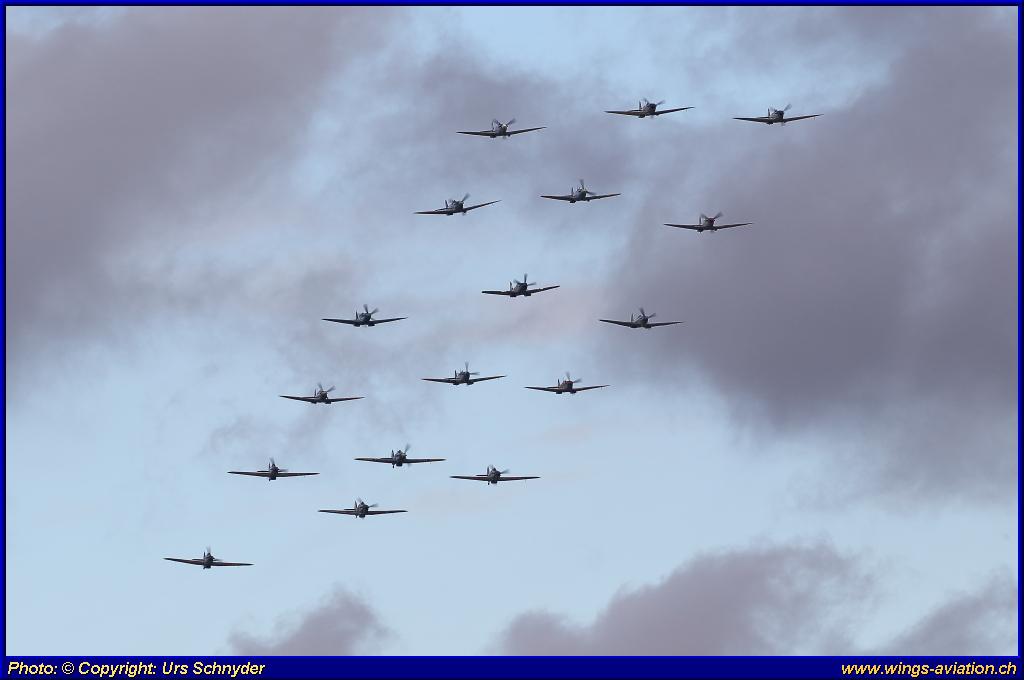
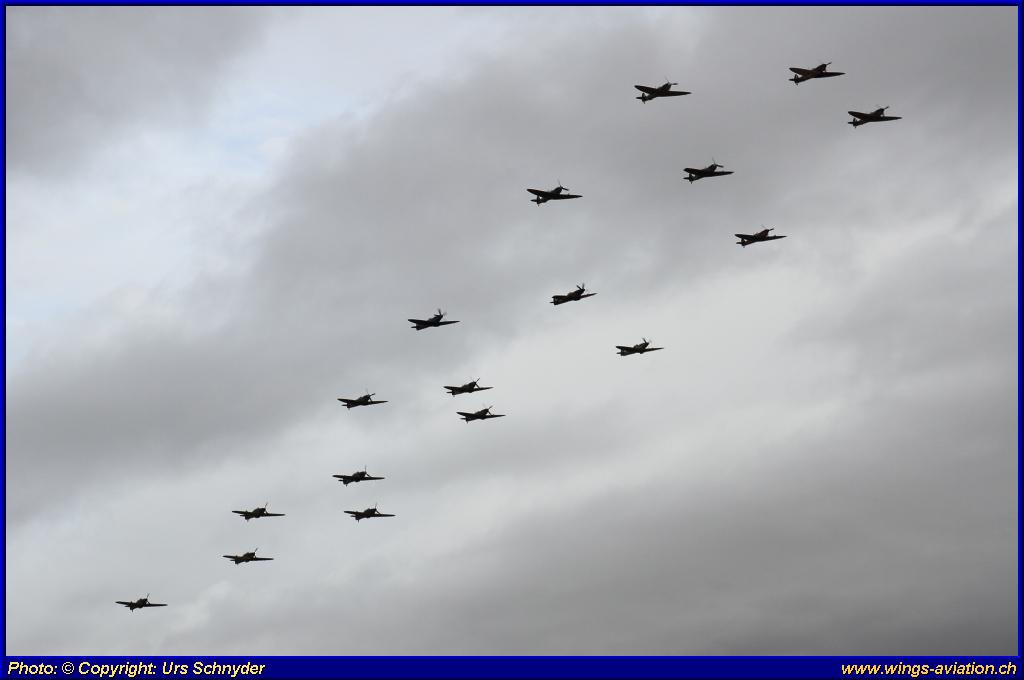
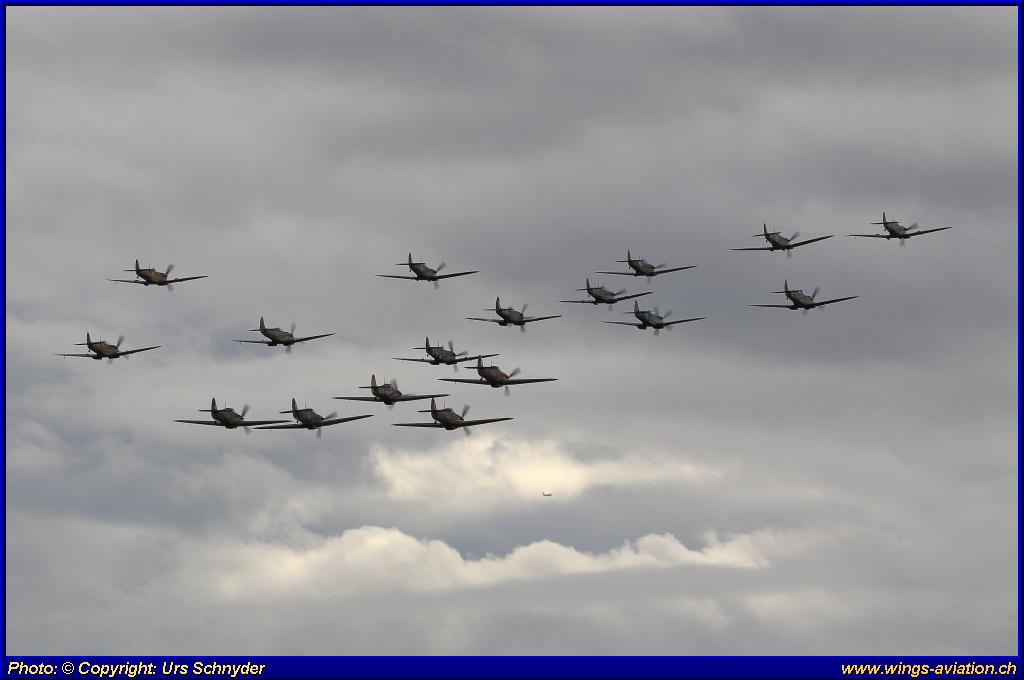
As the 17 aircraft of the Big Wing formation took off into a dark sky, everybody hoped that the rain would wait until the end of the Airshow, which it actually did. After flying a big circle around Duxford, the formation approached from the east for its first flypast over the airfield. This was followed by another pass, after which the formation split into sections which came in for a break and landing. With all aircraft save on the ground, the program ended.
(Picture courtesy Urs Schnyder)
(Picture courtesy Urs Schnyder)
(Picture courtesy Urs Schnyder)
(Picture courtesy Urs Schnyder)
(Picture courtesy Urs Schnyder)
Our thanks go to Sandy Davidson from IWM for providing press facilities


